

During our visit to Hangzhou 杭州, we wanted to escape West Lake’s (西湖, Xīhú) noisy, crowded shores for a more peaceful experience. To find it, we went to see the famous terraced tea farms on the ridge of Wengjiashan (翁家山, Wēngjiāshān) in Longjing Village (龍井村, Lóngjǐng Cūn).
Enjoy some music while browsing
Terroir and Agricultural Artistry
Longjing Village occupies a horseshoe-shaped valley southwest of the lake. Flanked by the protective peaks of Shifeng (狮峰, Shīfēng), Wengjiashan, and Toupai (投排, Tóupái), this valley is sheltered from severe weather. The surrounding topography effectively blocks frigid northern winter winds while capturing the warm, moist air rising from West Lake. This microclimate provides the ideal conditions for tea plants (Camellia sinensis) to thrive, sustaining the valley’s reputation for over a millennium.
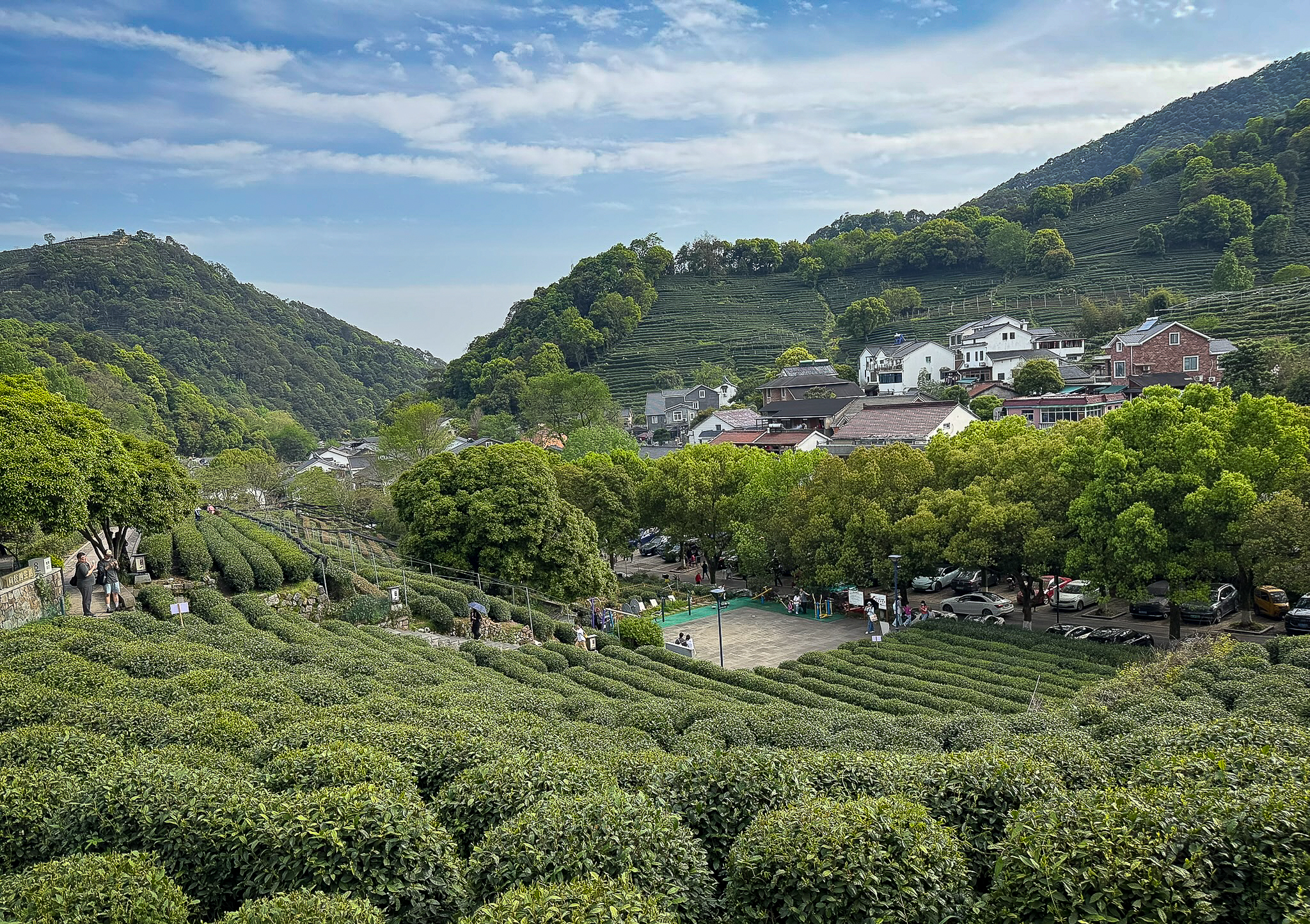
The tea bushes grow in acidic, quartz-rich sandy soil (baishatu, 白砂土) under a heavy mountain mist. This unique terroir slows leaf growth, concentrating amino acids to produce the signature umami sweetness of authentic West Lake Longjing tea (西湖龙井, Xīhú Lóngjǐng).
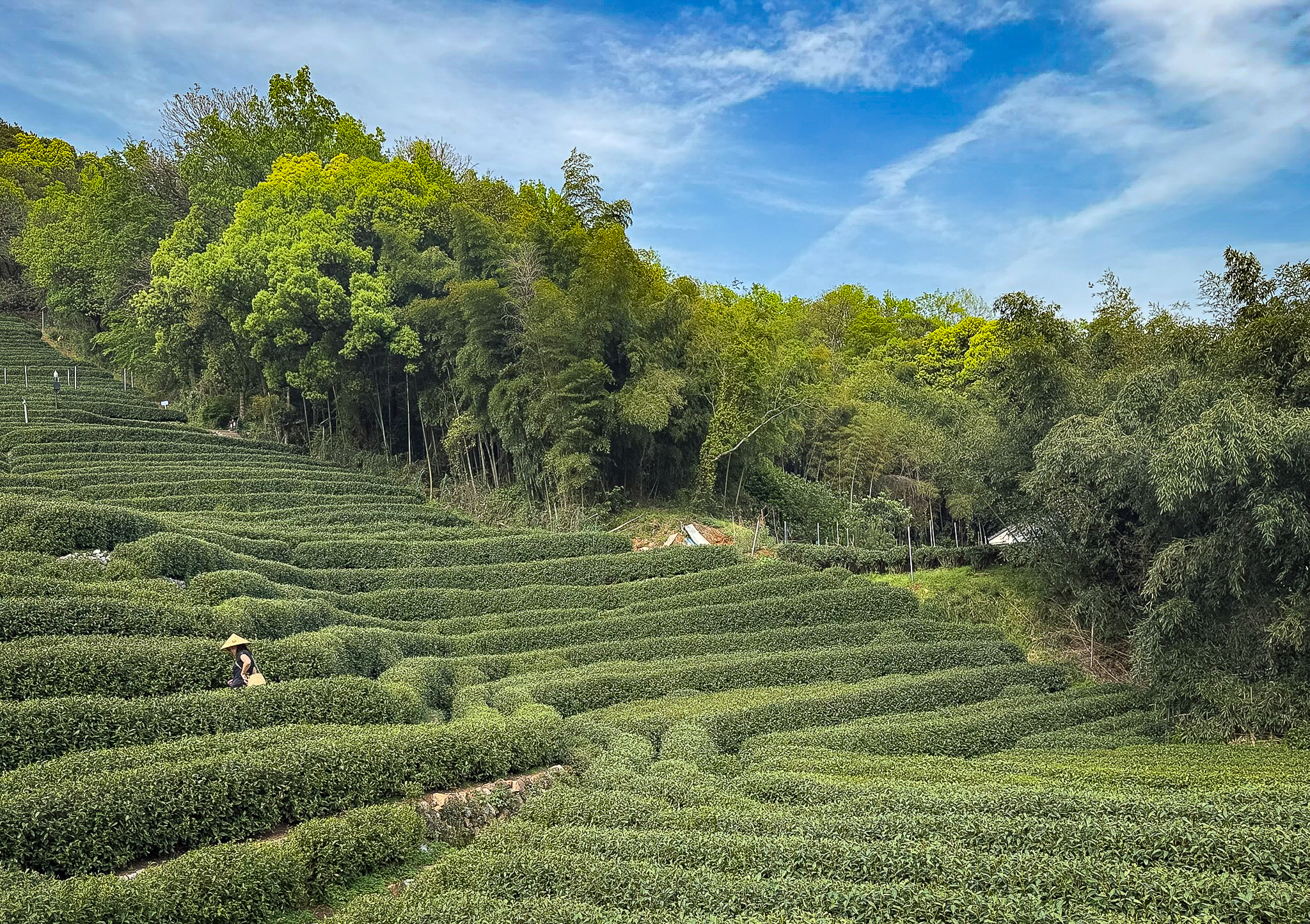
Farming these gradients is a manual, generational craft. During the critical vernal equinox (Chunfen, 春分), families harvest every bud by hand, shaping the rugged slopes into terraces that become living land art. We were lucky to be there around Qingming festival 清明節 (15 days after Chunfen).
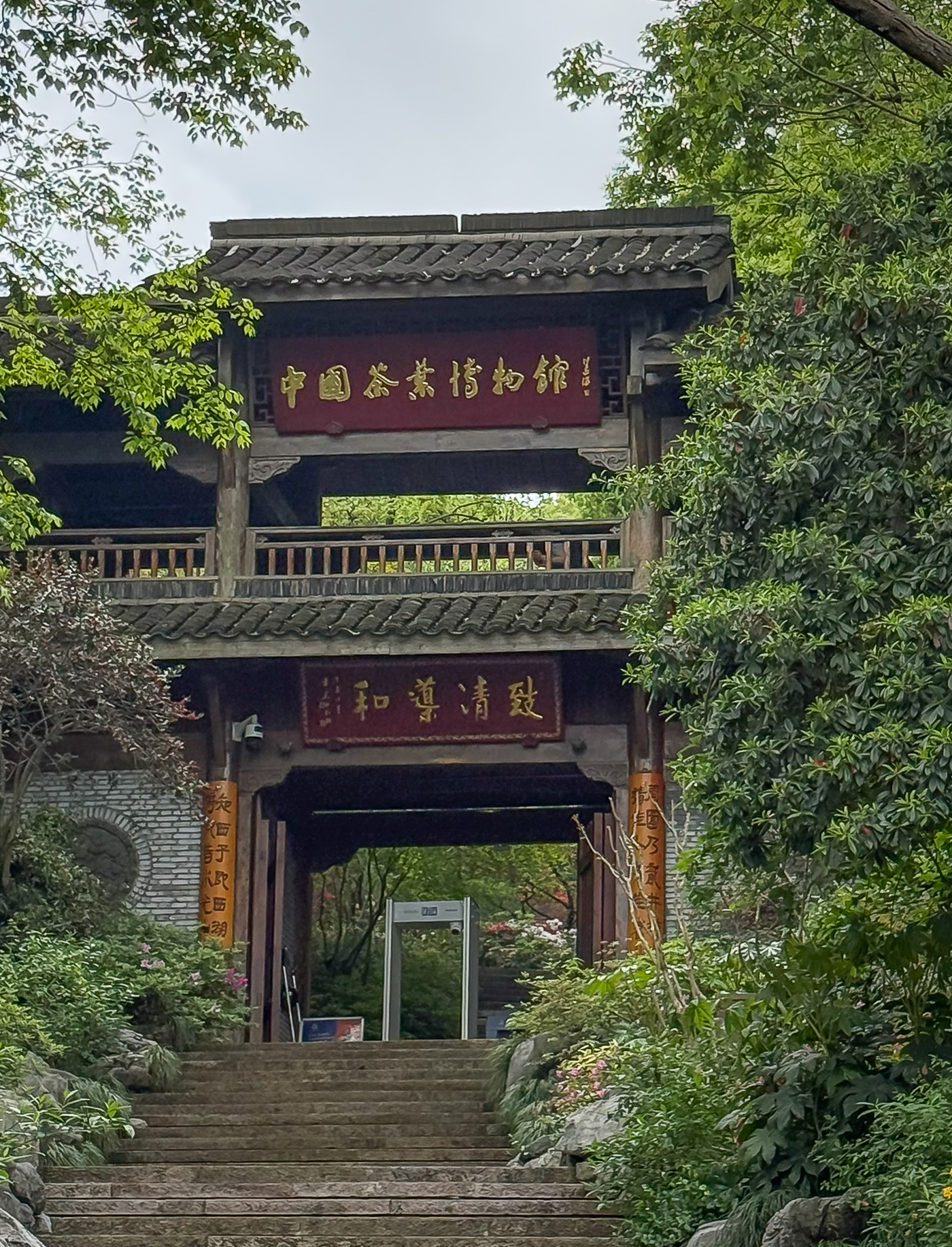
The China National Tea Museum (中国茶叶博物馆, Zhōngguó Cháyè Bówùguǎn) established in 1991, operates across two distinct sites: the classical Shuangfeng (双峰馆区) branch and the contemporary Longjing branch. The Shuangfeng facility serves as a traditional research repository.
We went up the slopes of Wengjiashan to see the museum’s second iteration: the less crowded Longjing branch (龙井馆区), completed in 2015. Here, the curatorial focus shifts toward global tea cultures and an architectural integration with the natural topography.
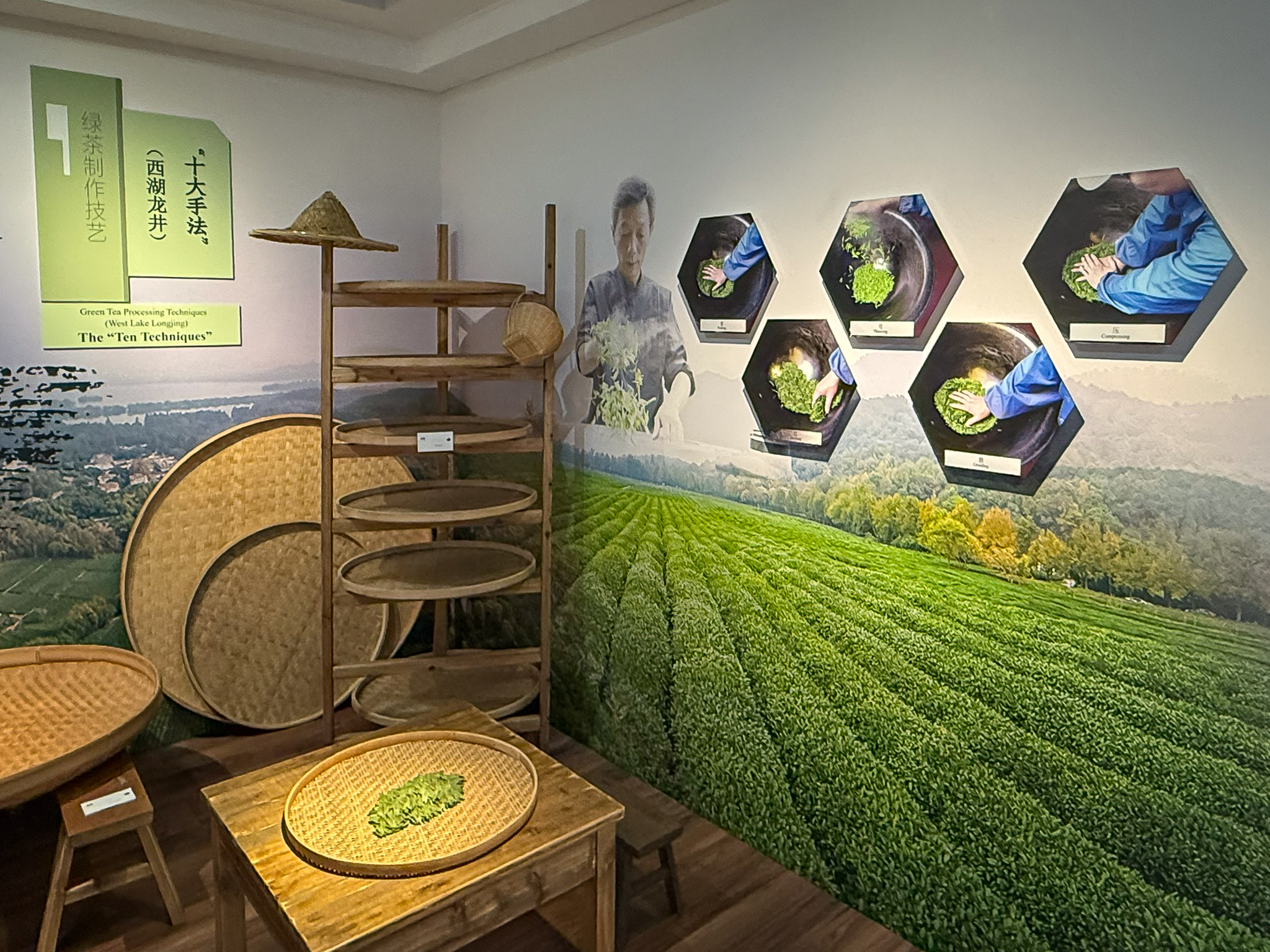
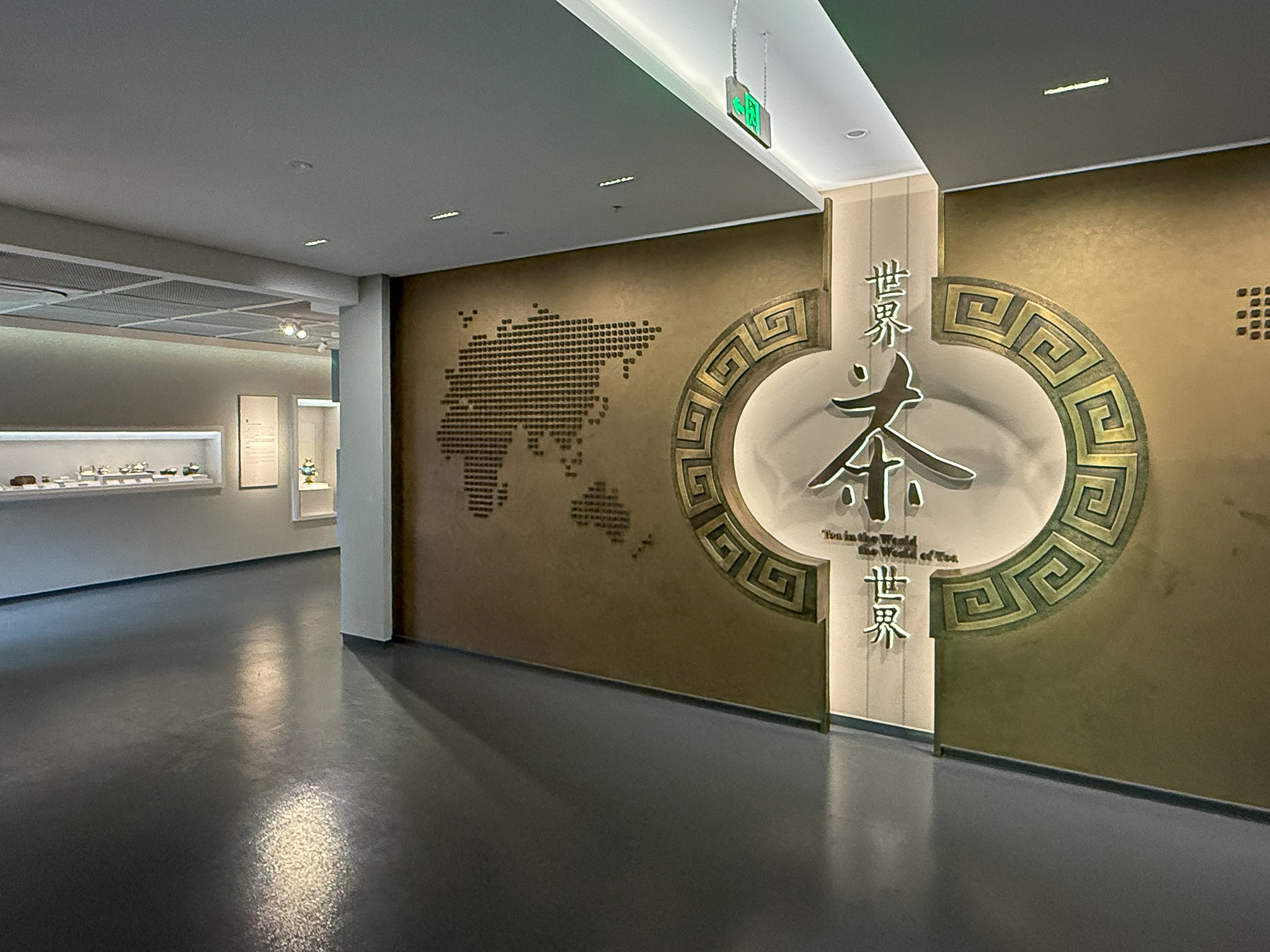
Inside the Longjing branch, contemporary spaces like the “Tea in the World” exhibition hall map out the historic journey of tea leaf cultivation around the world. To preserve and codify the tea culture heritage, the museum displays equipment and techniques that turn raw leaves to tea.
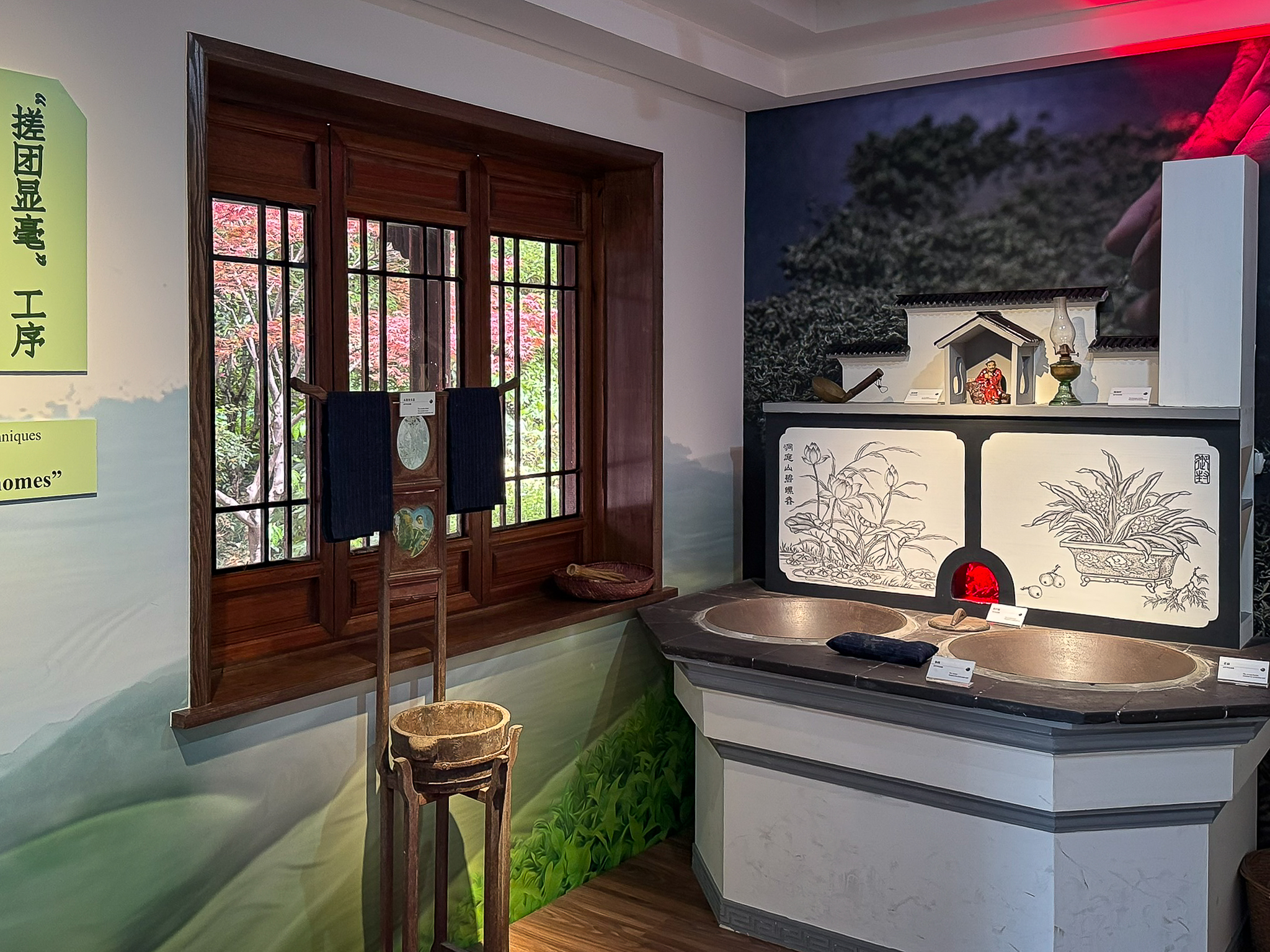
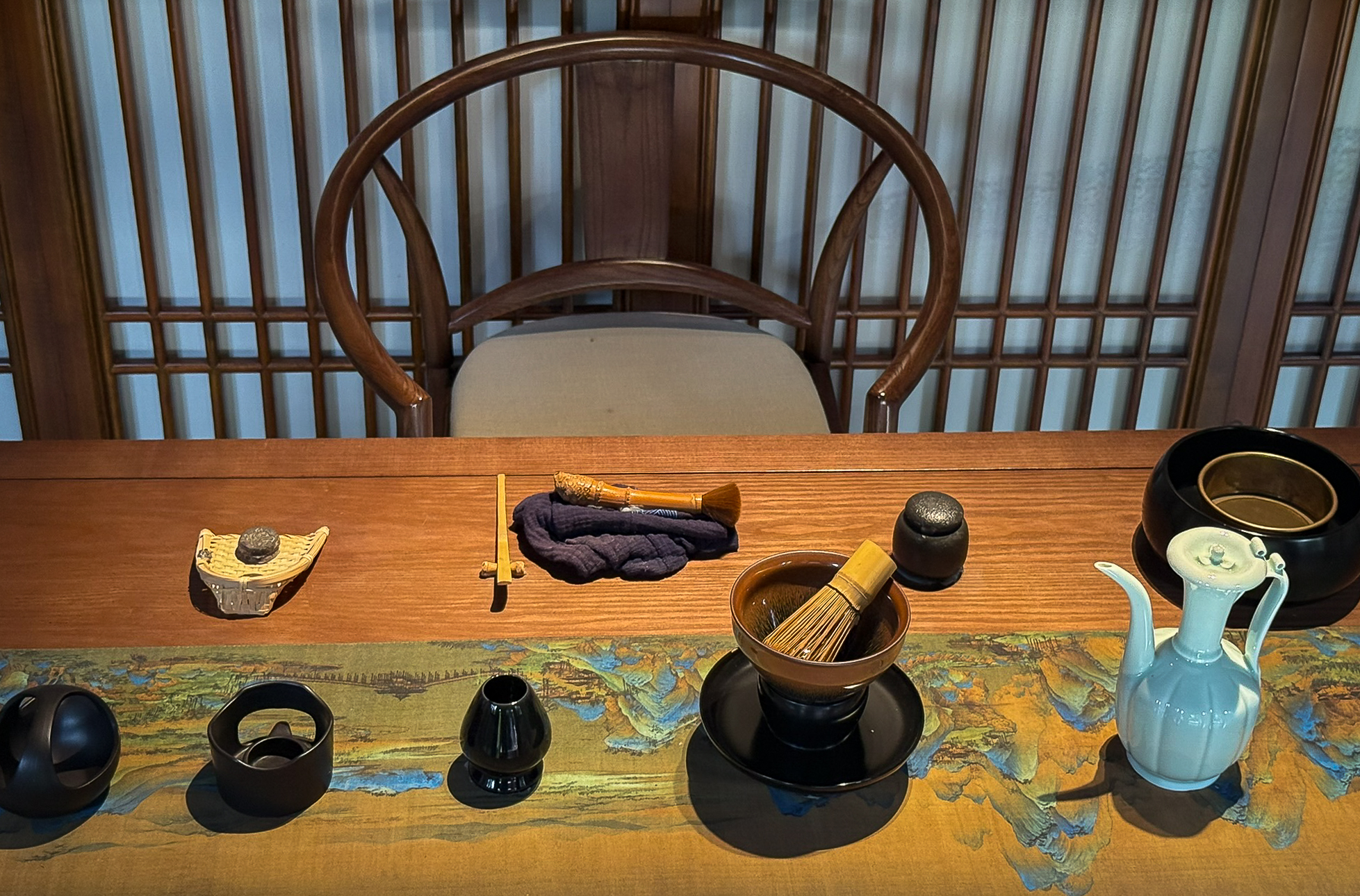
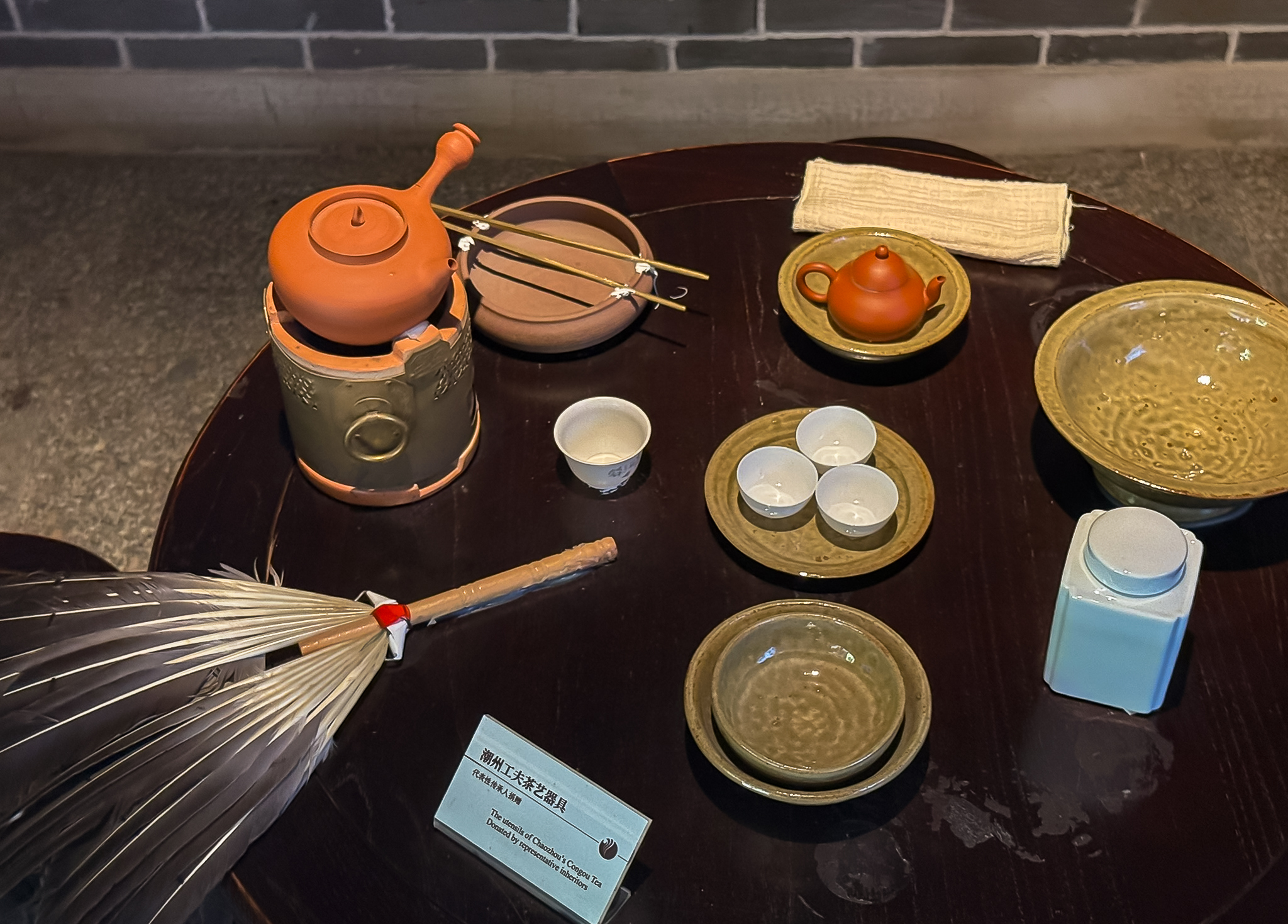
The museum also displays the highly detailed brewing implements used in different regional styles.
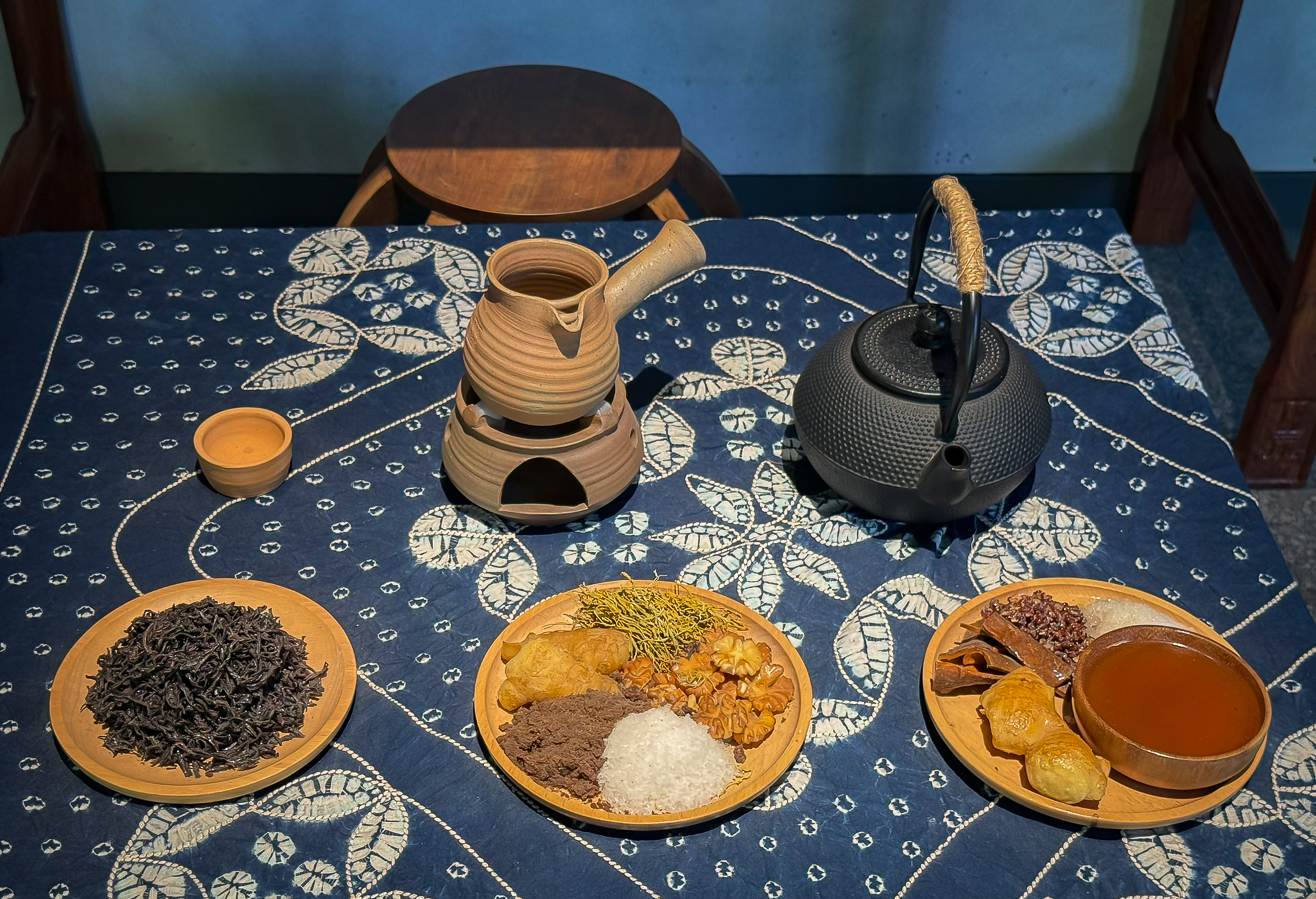
Eschewing the conventional singular museum volume, the architects adopted a decentralized, open-air master plan. They distributed low-slung pavilions across the forested hillside, encouraging visitors to traverse the native woodland between exhibitions.
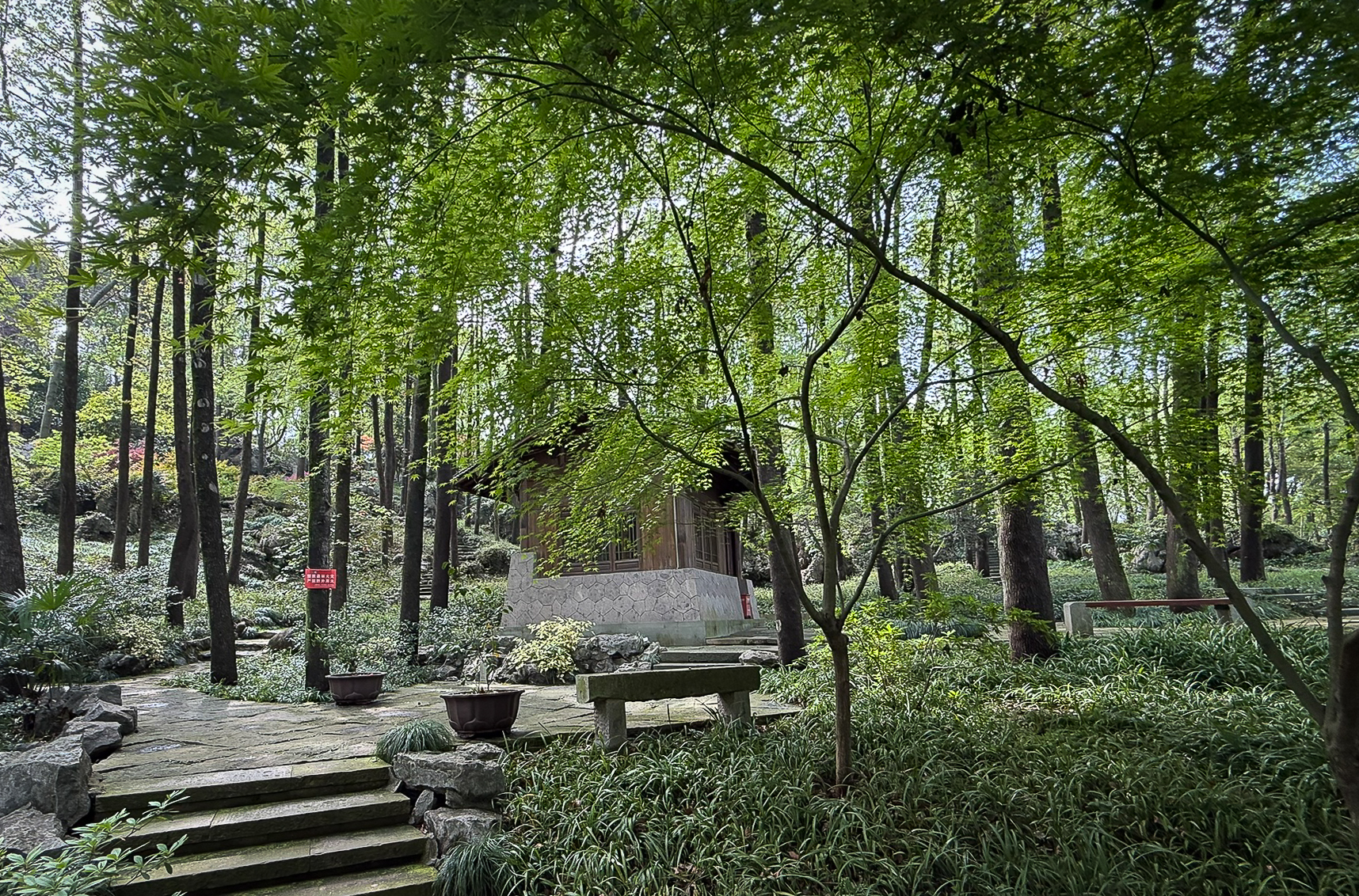
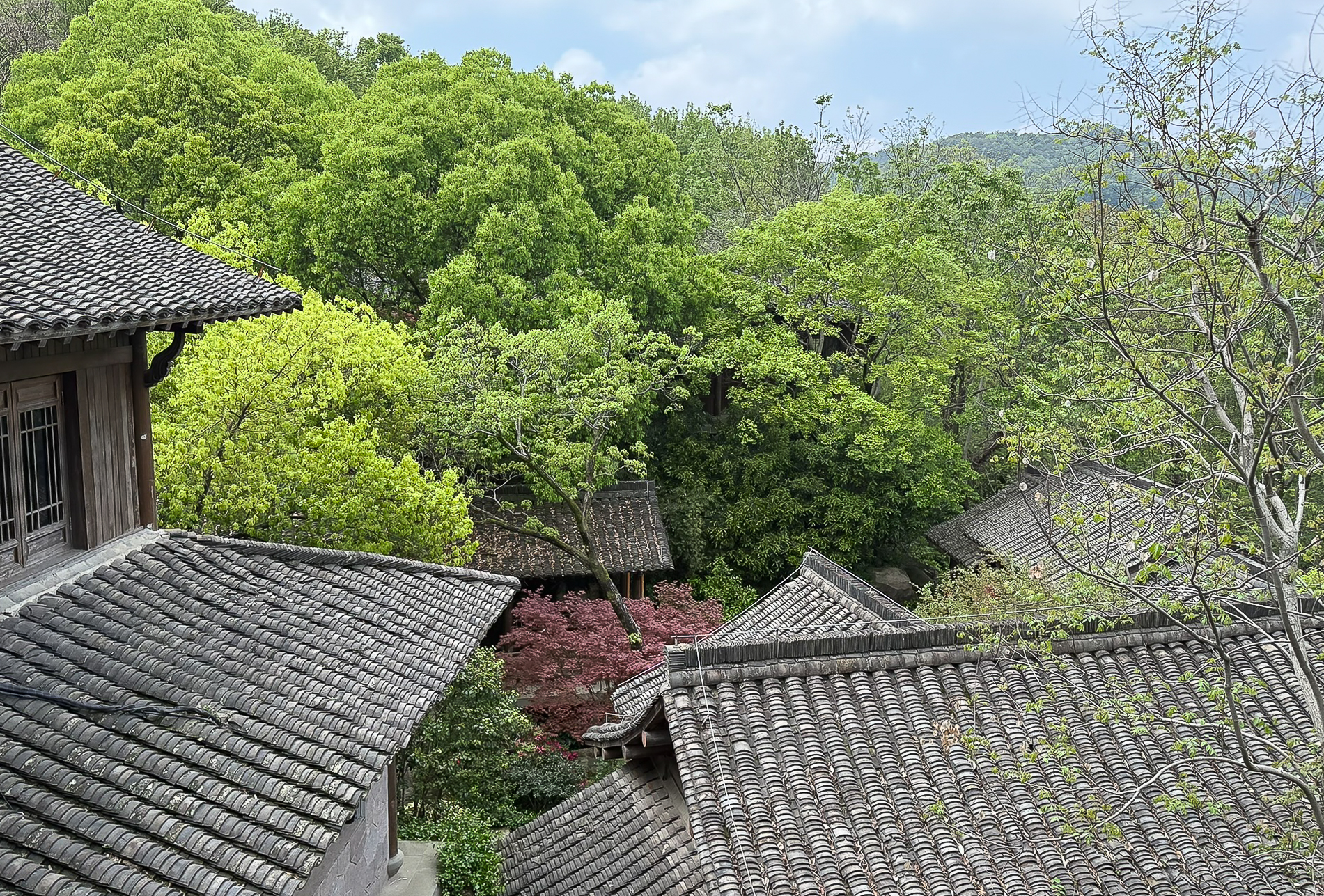
Stone pathways wind through dense maple and bamboo groves, offering an unhurried, self-directed exploration. The pace of the visit is dictated not by signage, but by the physical grade of the hillside and the rhythm of the terraced contours.
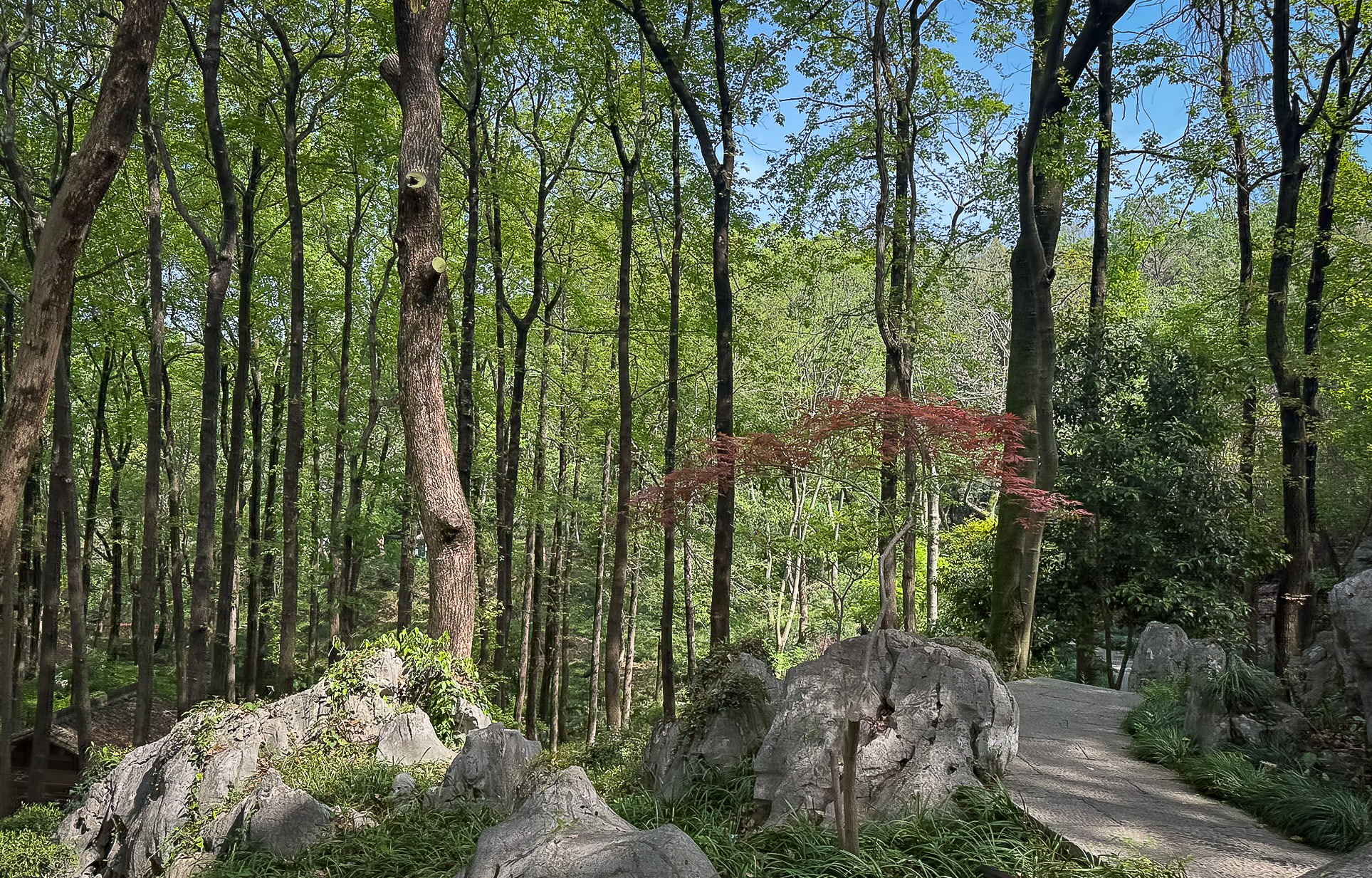
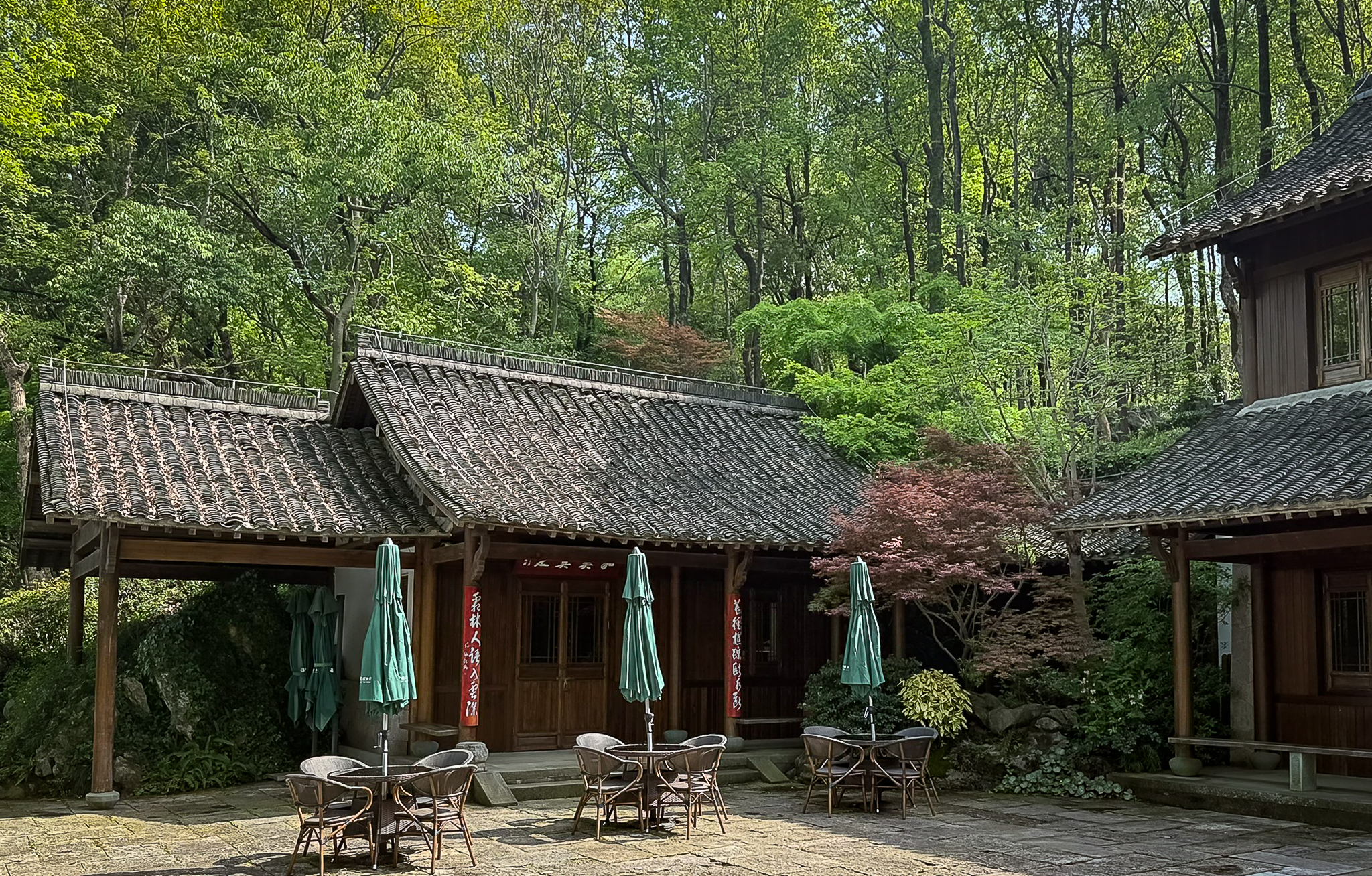
Reclaiming Southern Song Minimalism
Visitors often mistake this minimalist, dark-timber style for Japanese design, comparing it to Kyoto (京都, Kyōto) in Japan. However, these unadorned frames and shingled roofs actually model Southern Song Dynasty (南宋, Nánsòng, 1127–1279) architecture, known for structural restraint and natural materials. The “Yi Xiu Ju” (颐秀居, Yíxiù Jū) pavilion demonstrates an organic harmony of dark-grained timber, stone courtyards, and bamboo.
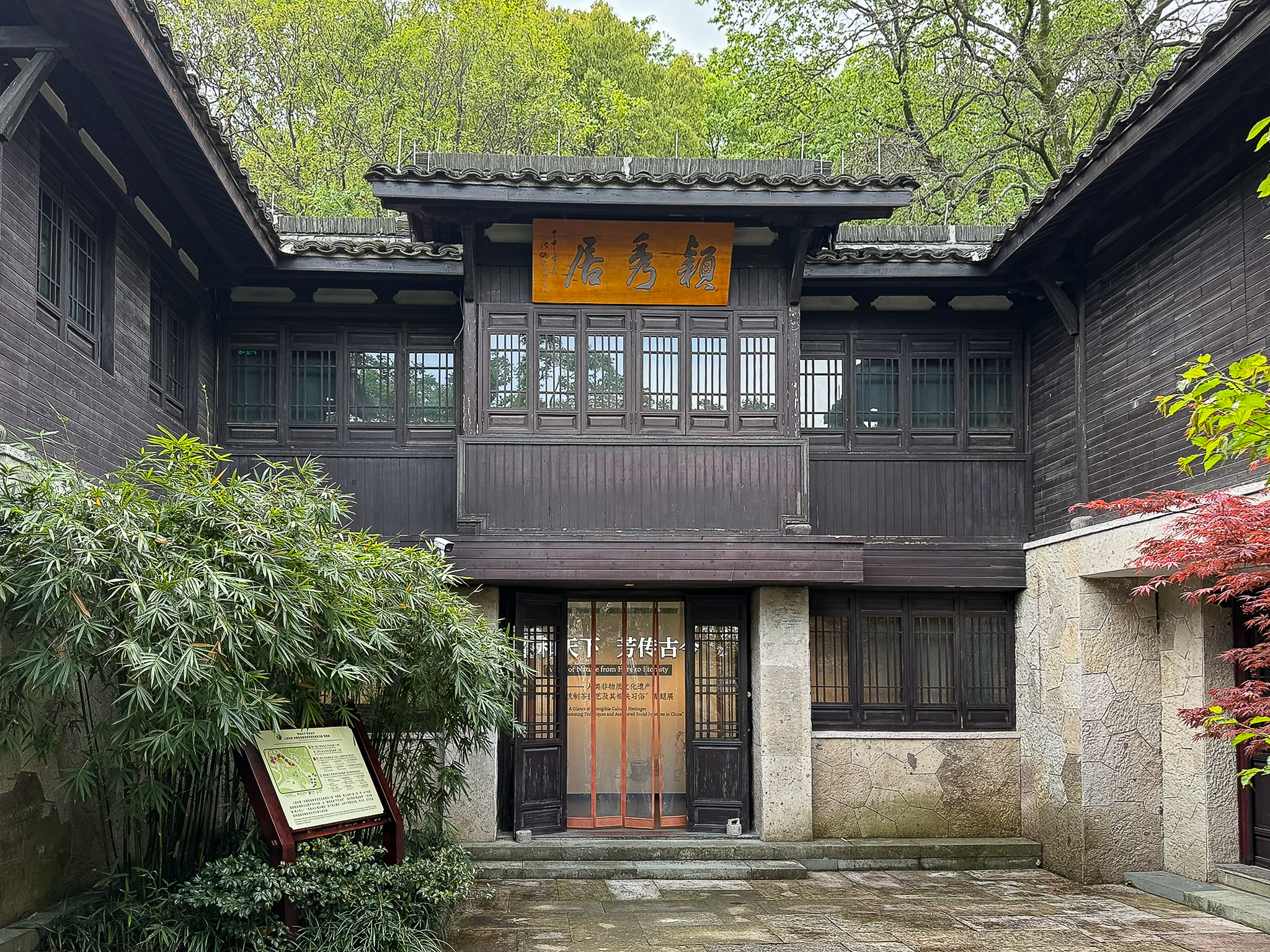
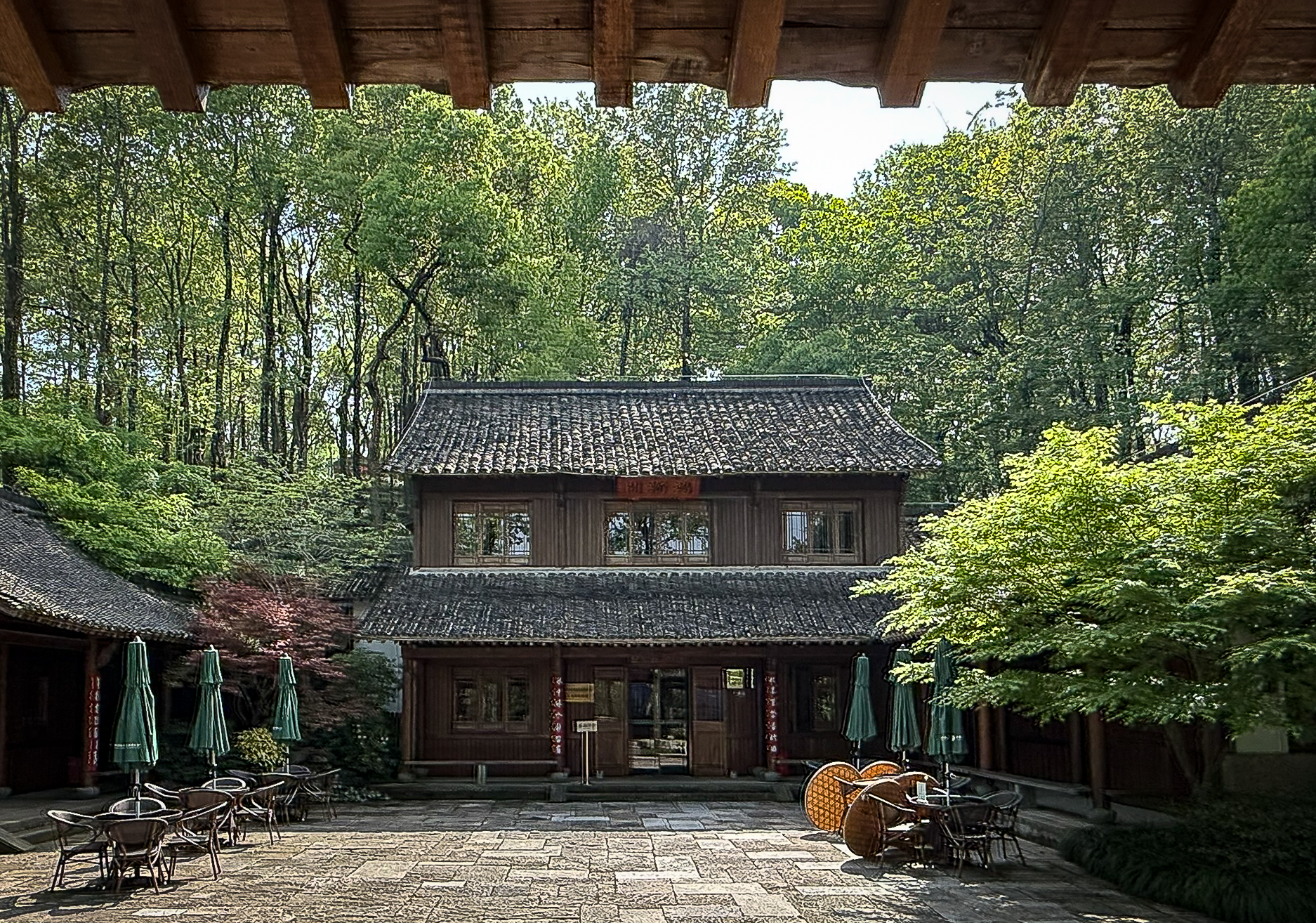
When Hangzhou (then Lin’an, 临安) was the Southern Song capital, Japanese monks studied Chan/Zen (禅) Buddhism and tea preparation here. They returned to Japan with the spiritual and architectural frameworks that shaped the Japanese tea ceremony (chanoyu, 茶の汤), recalling a style born in these very hills.
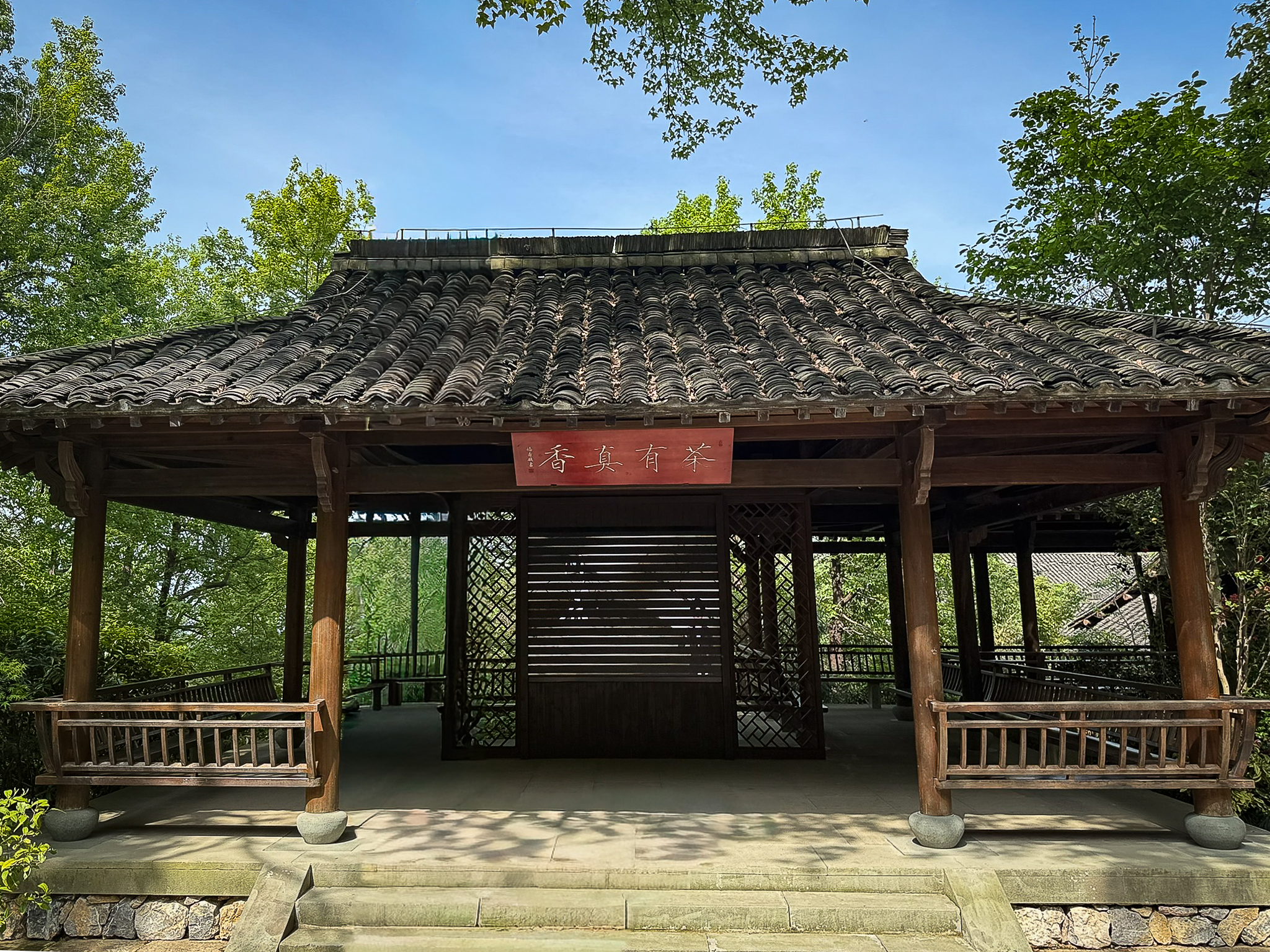
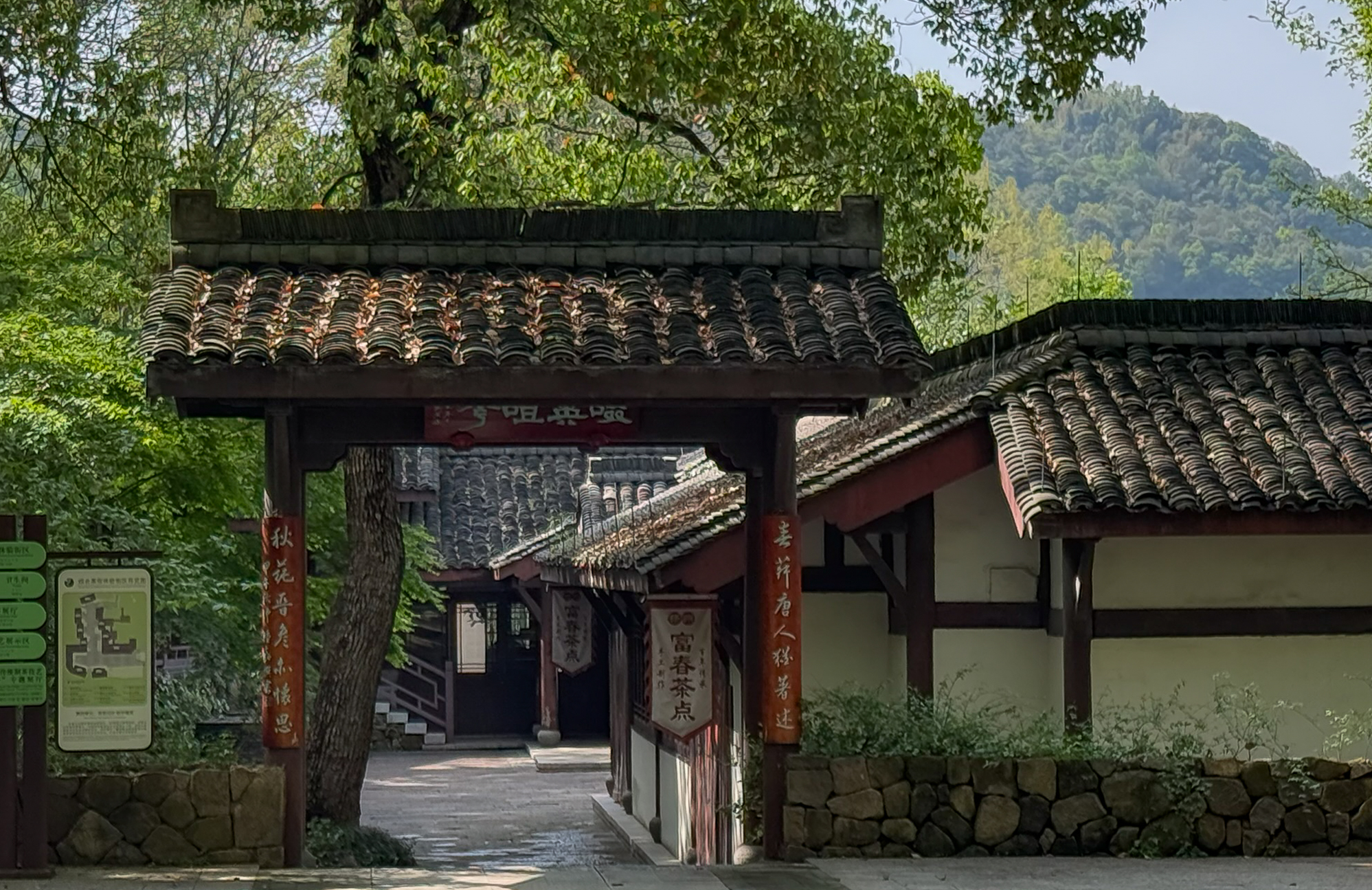
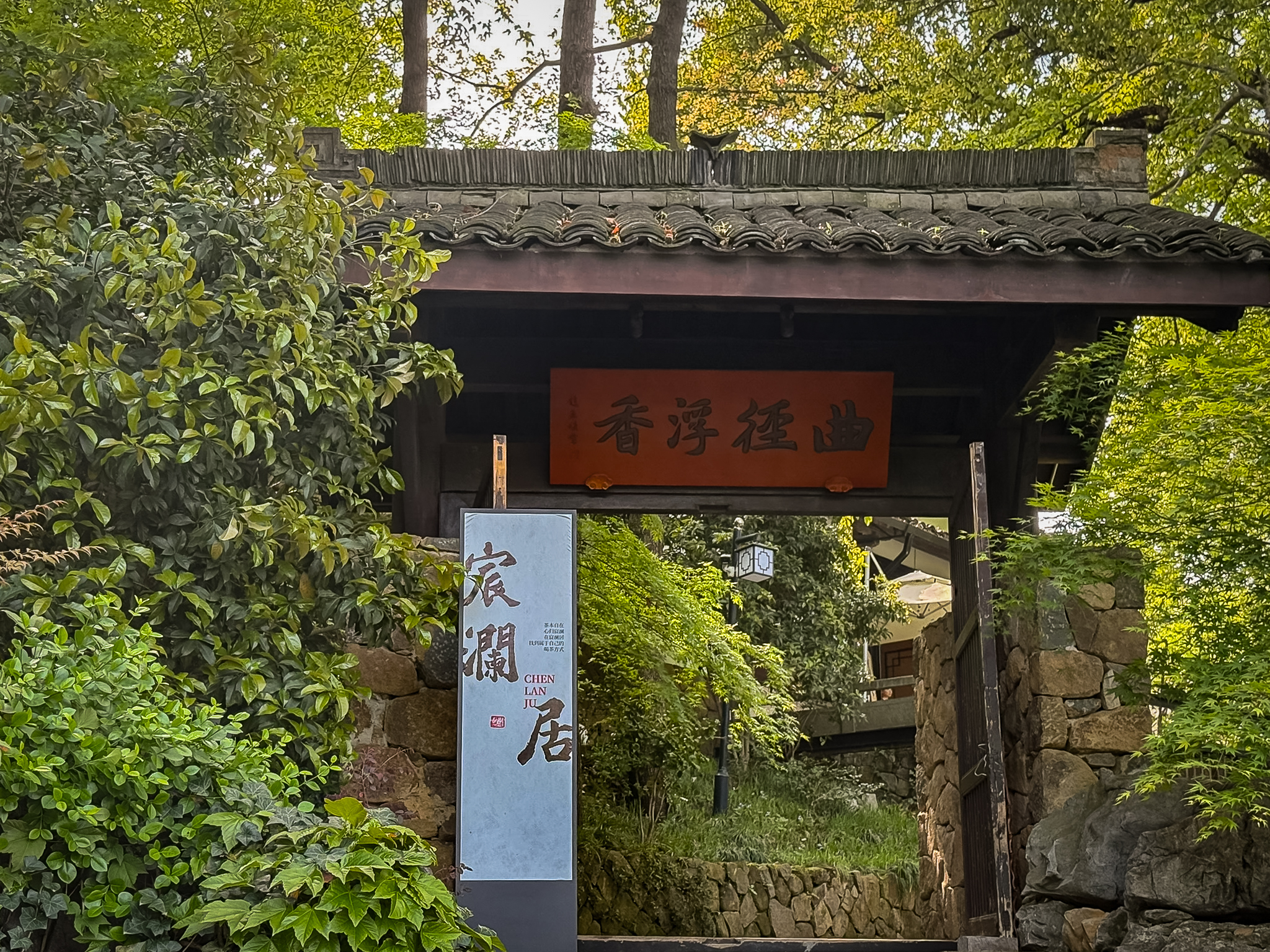
Passing under a wooden gateway inscribed with “Qu Jing Tong You” (曲径浮香, qū jìng fú xiang – a winding path leads to floating fragrance), visitors cross into a series of secluded tea tasting pavilions .
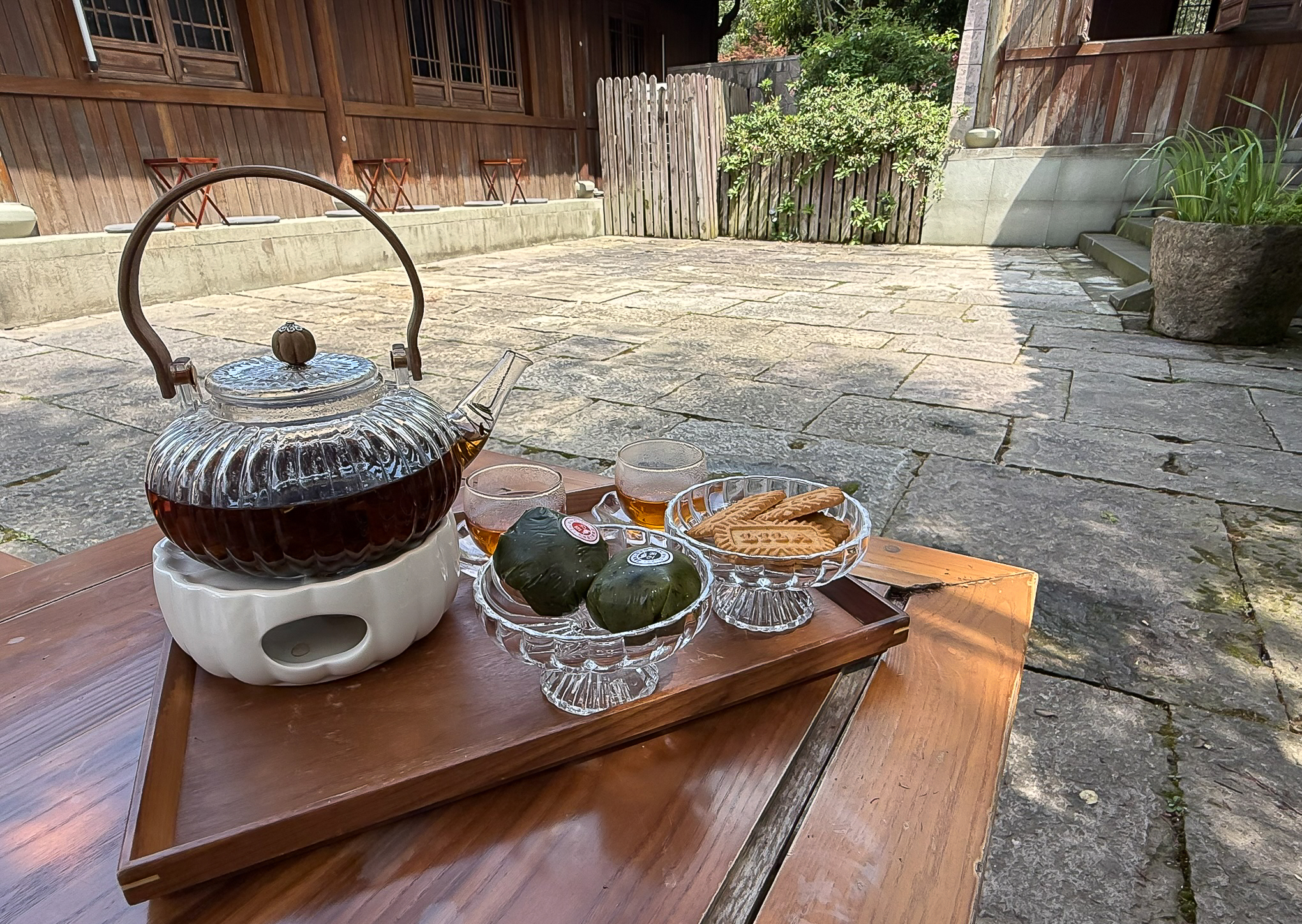
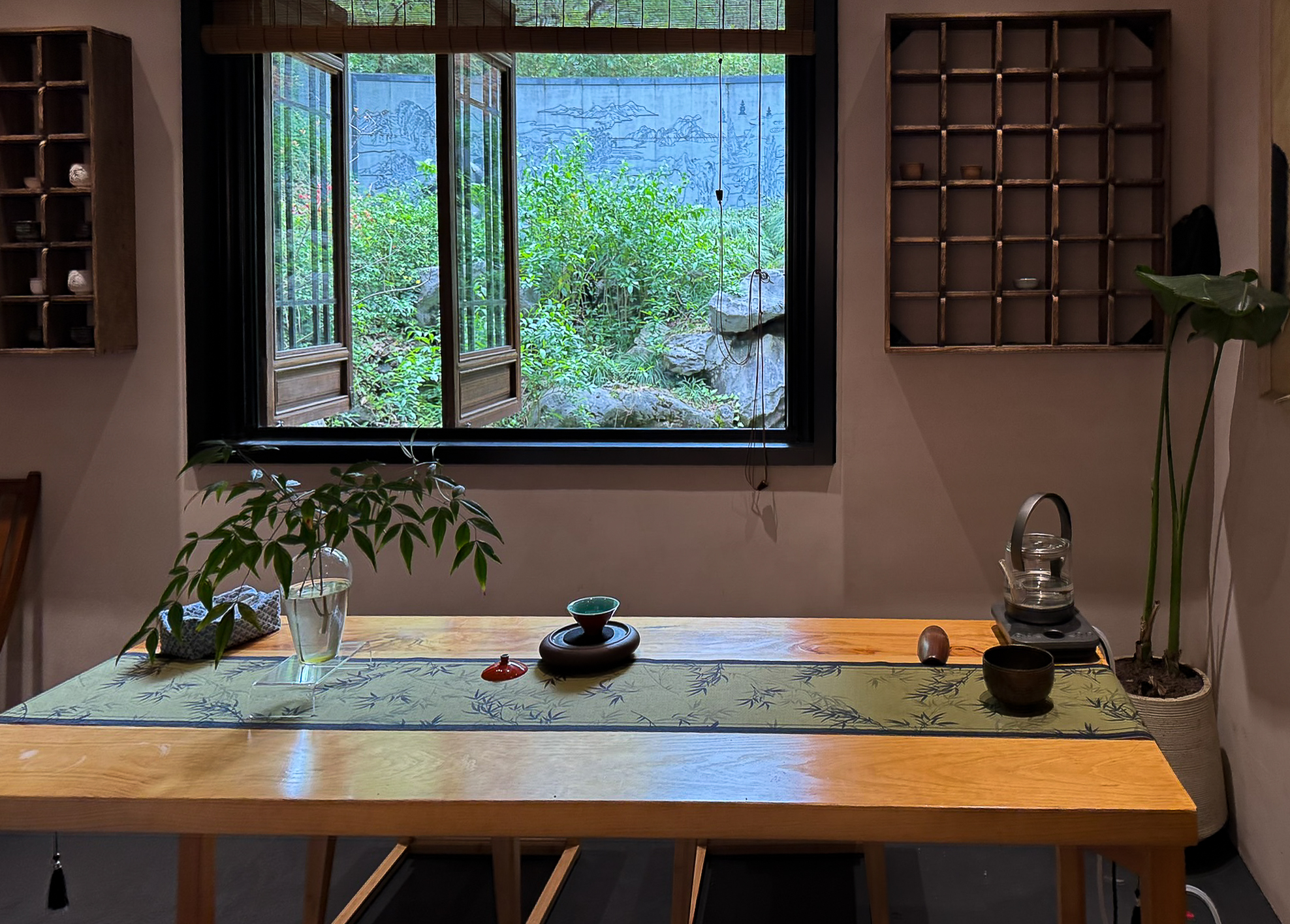
We enjoyed a quiet tea session in the courtyard—featuring fresh brew paired with seasonal green tea mochi (Qingtuan, 青团, qīngtuán). We were the only customer in the tea house. Inside the tea house, there was also a tea tasting room and a shop.
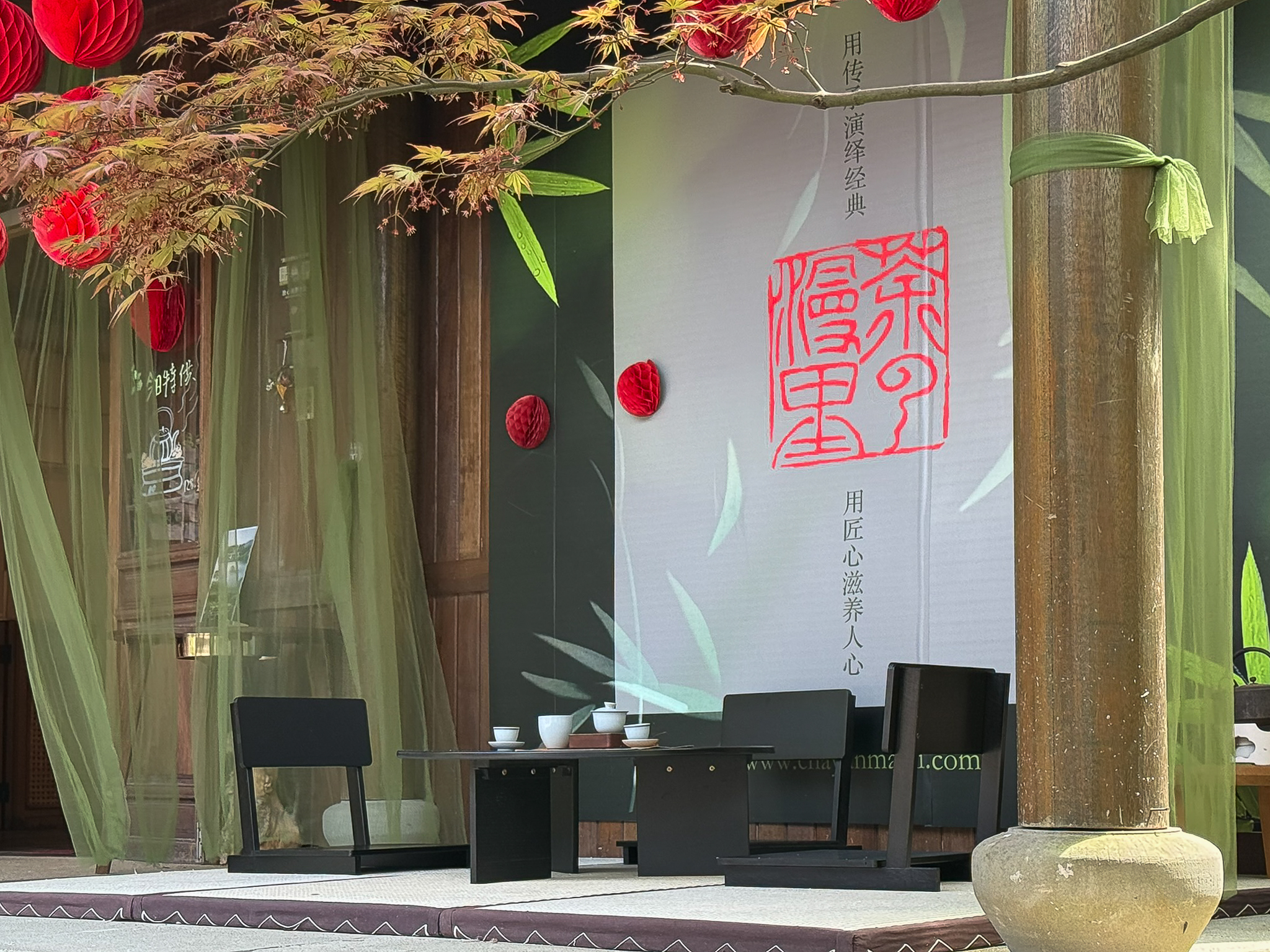
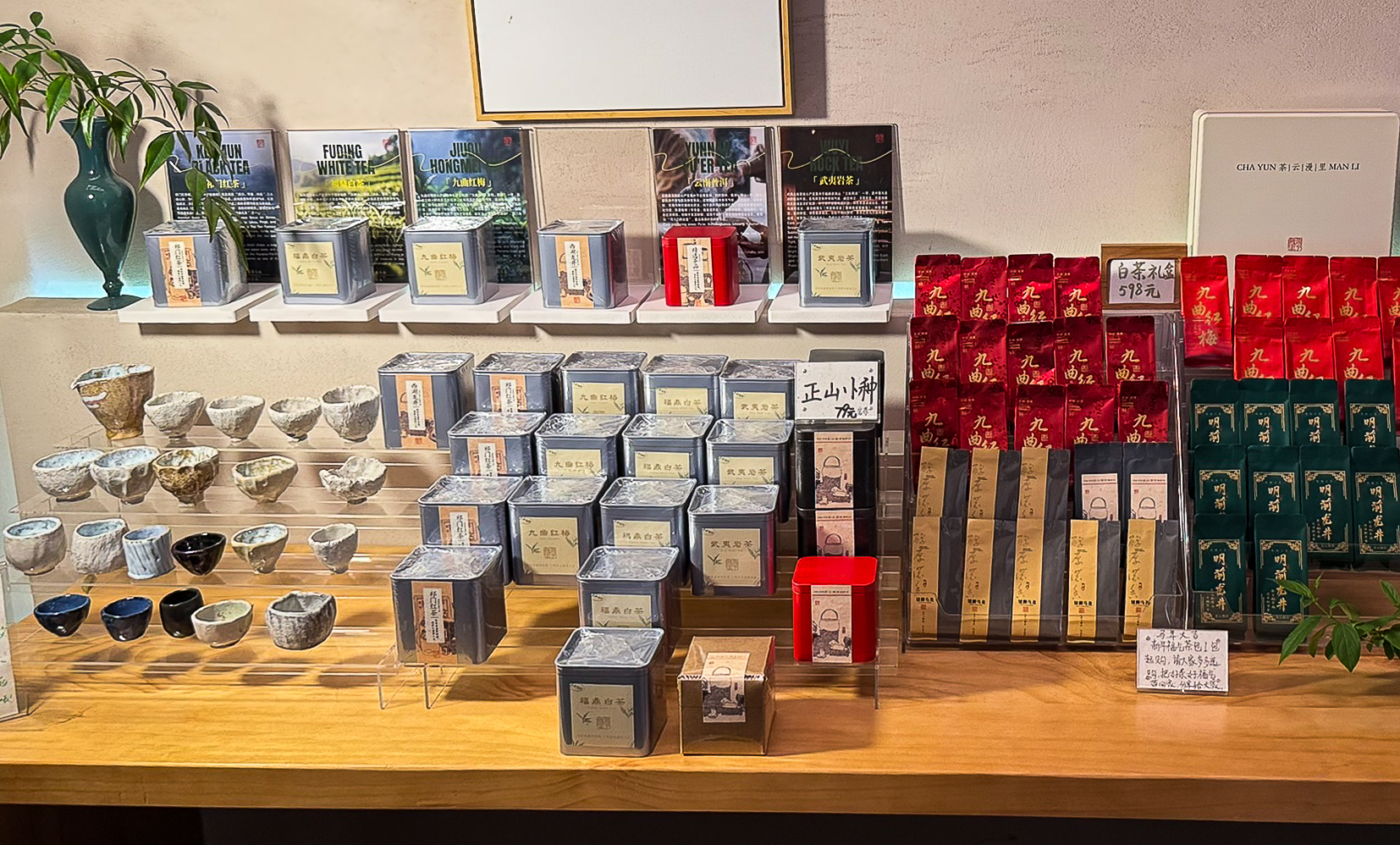
While we had hoped to find some peace in Longjing Village itself, its narrow approach roads were choked with traffic, dominated by Didi (滴滴出行) rideshares shuttling tourists. However, the sprawling tea museum on the ridge above the valley basin served as a genuine sanctuary from the chaotic mess below. To reach this branch of the museum by public transport, take Bus 27 (公交27路) from the start of the line at 岳王路站 to the last stop just below the museum 茶博龙井总站. An alternative is Bus 27B which ends at the entrance to Longjing Village (龙井村) followed by a brief walk uphill.
To truly appreciate this landscape, we advise visiting in the early morning, when the crowds have yet to arrive and the mist still clings to the slopes.
If you are interested in tea, see our previous post on tea shopping in Ippodo Chaho, Kyoto, Japan.
If you have visited Chinese National Tea Museum or enjoy Longjing tea, share your thoughts in the comments.
Leave a Reply