

While we were in Kyoto 京都 with our friend SK, her daughter asked her to buy some matcha from Ippodo. However, we learned at a depachika (department store basement deli) that there was a global matcha shortage, and we could only buy it at Ippodo Chaho (一保堂茶舗) flagship store on historic Teramachi-dori (寺町通).
The Watanabe family (渡辺家) started the business in 1717 originally under the name Omiya (近江屋). The name Ippodo (一保堂) which translates to “preserve or guarantee one” was given to the shop in 1846 by Prince Yamashina Akira (山階宮晃親王) as an imperial mandate: the shop must always protect a single, high standard of green tea.

The shop features a classic machiya (町家) townhouse exterior from the late Edo period (江戸時代). Heavy, brown canvas curtains (noren 暖簾) hang over the entrance, showing the store’s name in bold white calligraphy.
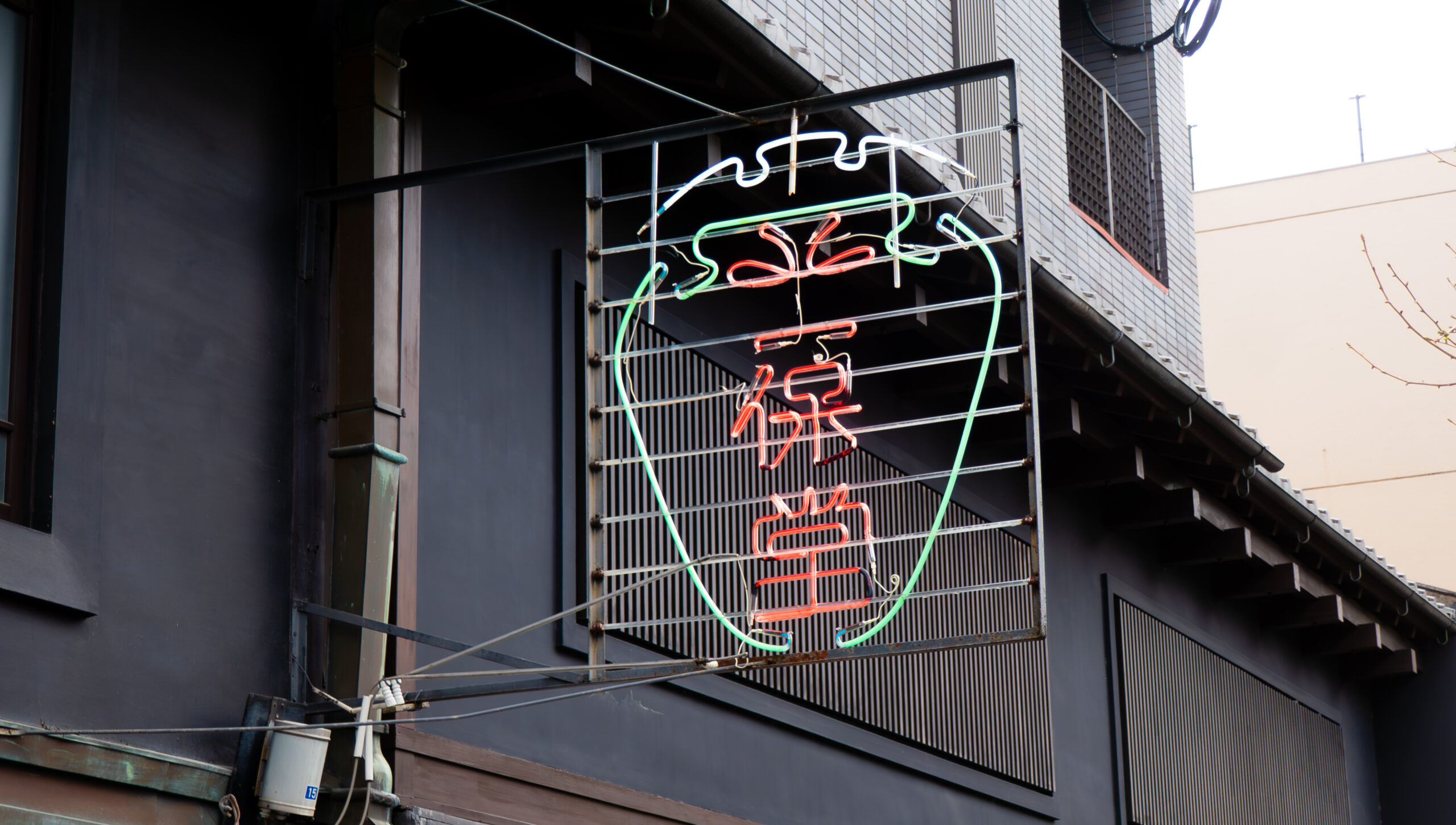
Attached directly to the weathered wood is a unique piece of Showa-era (昭和時代) commercial design: a custom mid-20th-century neon sign shaped like a traditional clay tea jar (chatsubo 茶壺).
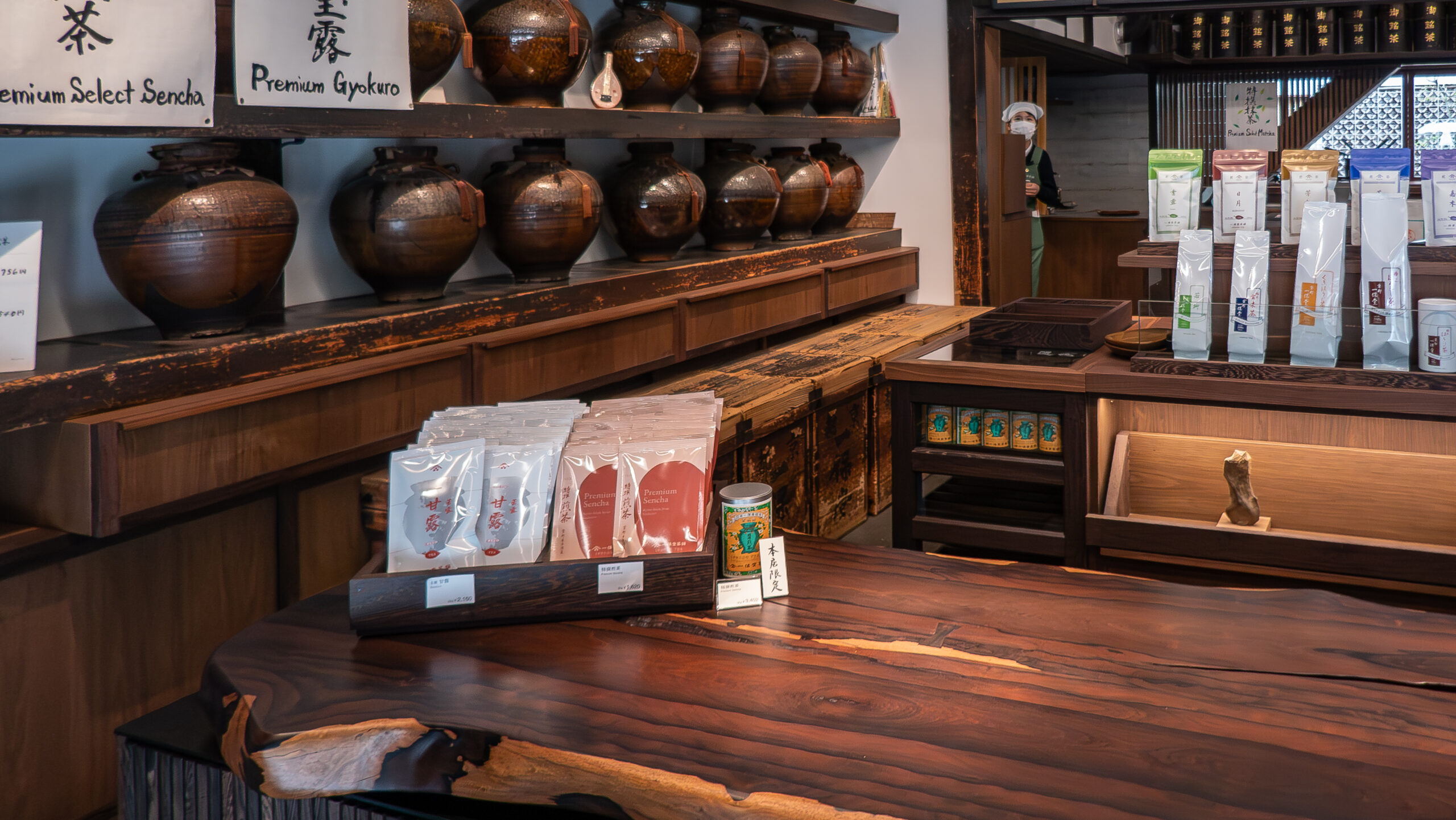
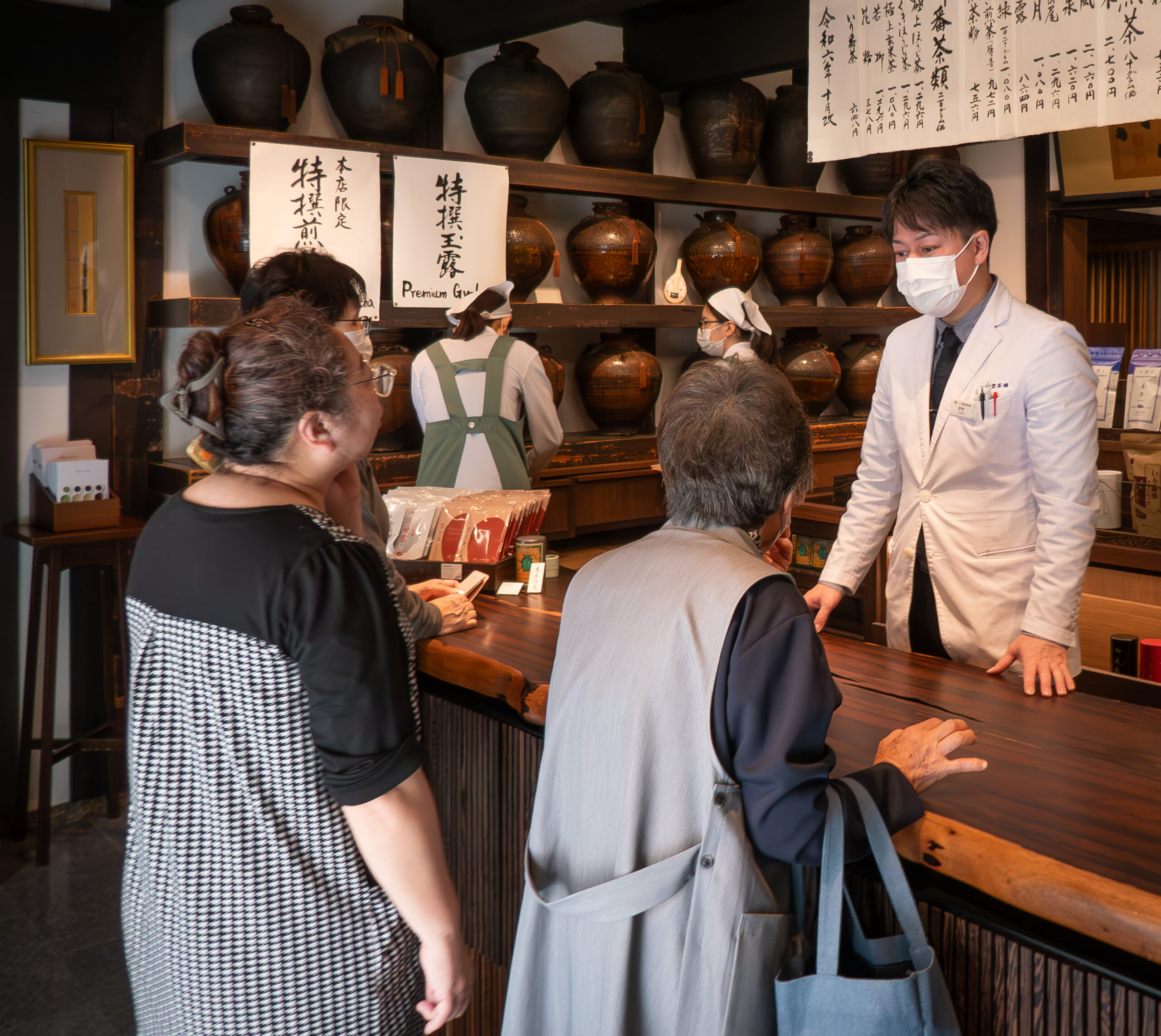
The showroom is dominated by a large, solid-wood counter with a natural, uncarved edge. Hanging above the counter is a large, hand-painted paper sign (meigarahyo 銘柄表) that lists the prices of a seasonal selection of matcha (抹茶), high-grade gyokuro (玉露) tea, and classic sencha (煎茶) green tea.

Behind the packaging and transaction counter, a dark timber shelving unit holds rows of antique ceramic chatsubo. These heavy, earthenware vessels, were traditionally sealed with paper and cord to store and age tea leaves.
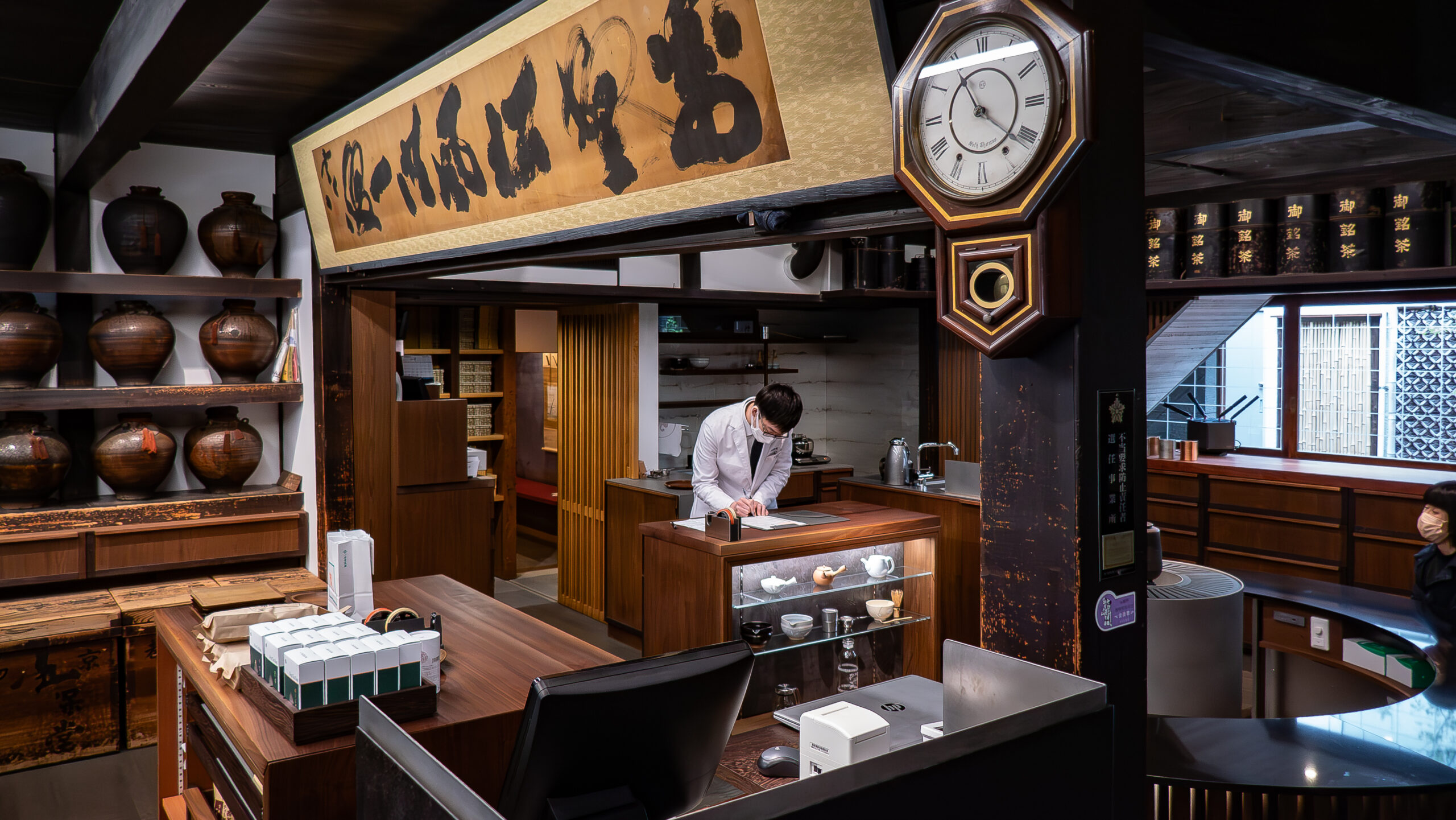
Above the work area behind the counter, a large signboard with bold, calligraphic characters is installed next to a vintage octagonal wall clock.
A promotional display celebrates the arrival of Shincha (新茶), the highly anticipated first harvest of spring. A range of Ippodo’s prepackaged teabags and loose tea leaves were displayed.


Deep inside sits the Kaboku (嘉木) tearoom. Its name comes from Lu Yu’s (陸羽) ancient book The Classic of Tea (Chajing 茶経): “Tea is a grand tree of the South” (茶者,南方之嘉木也).
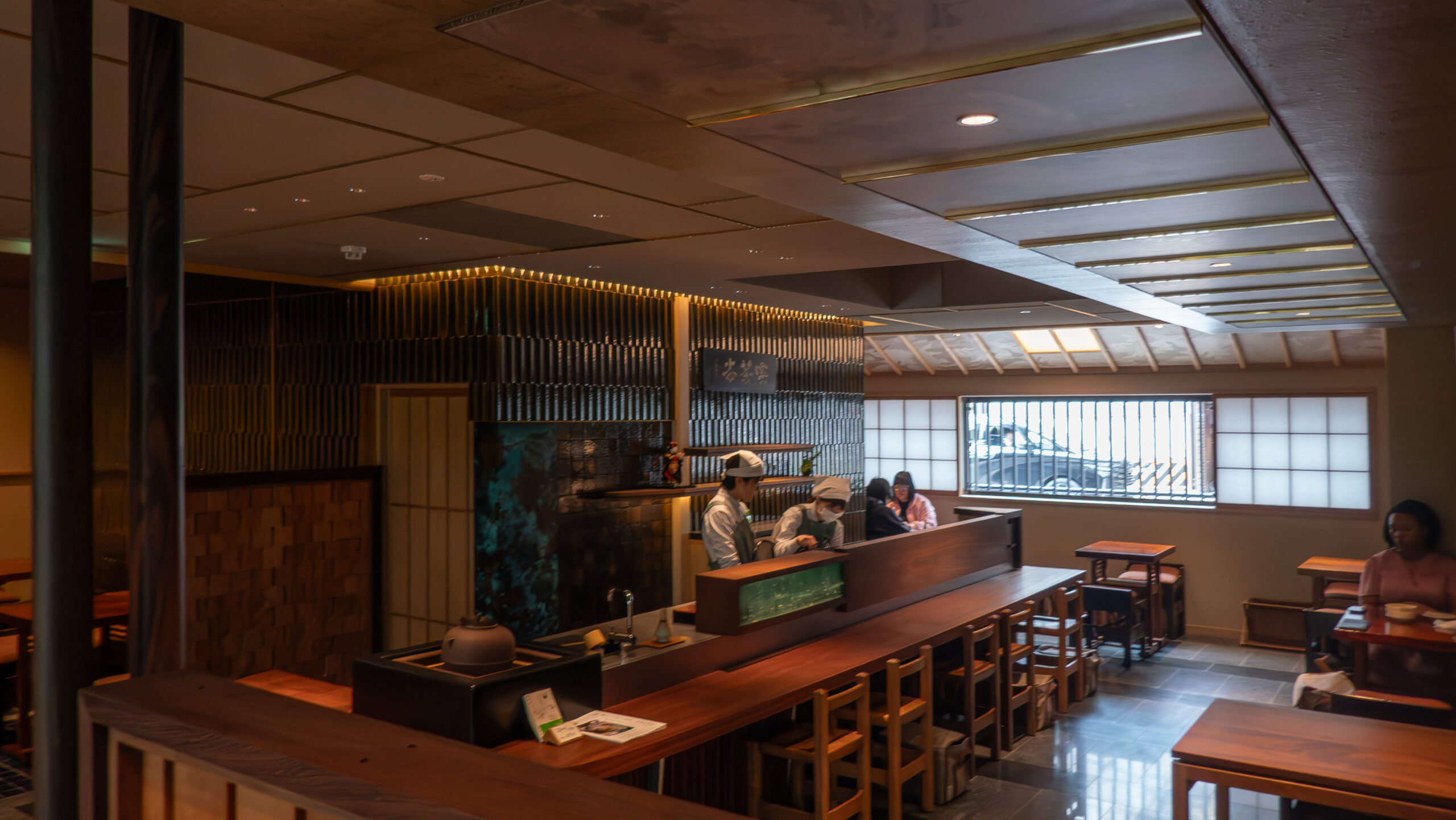
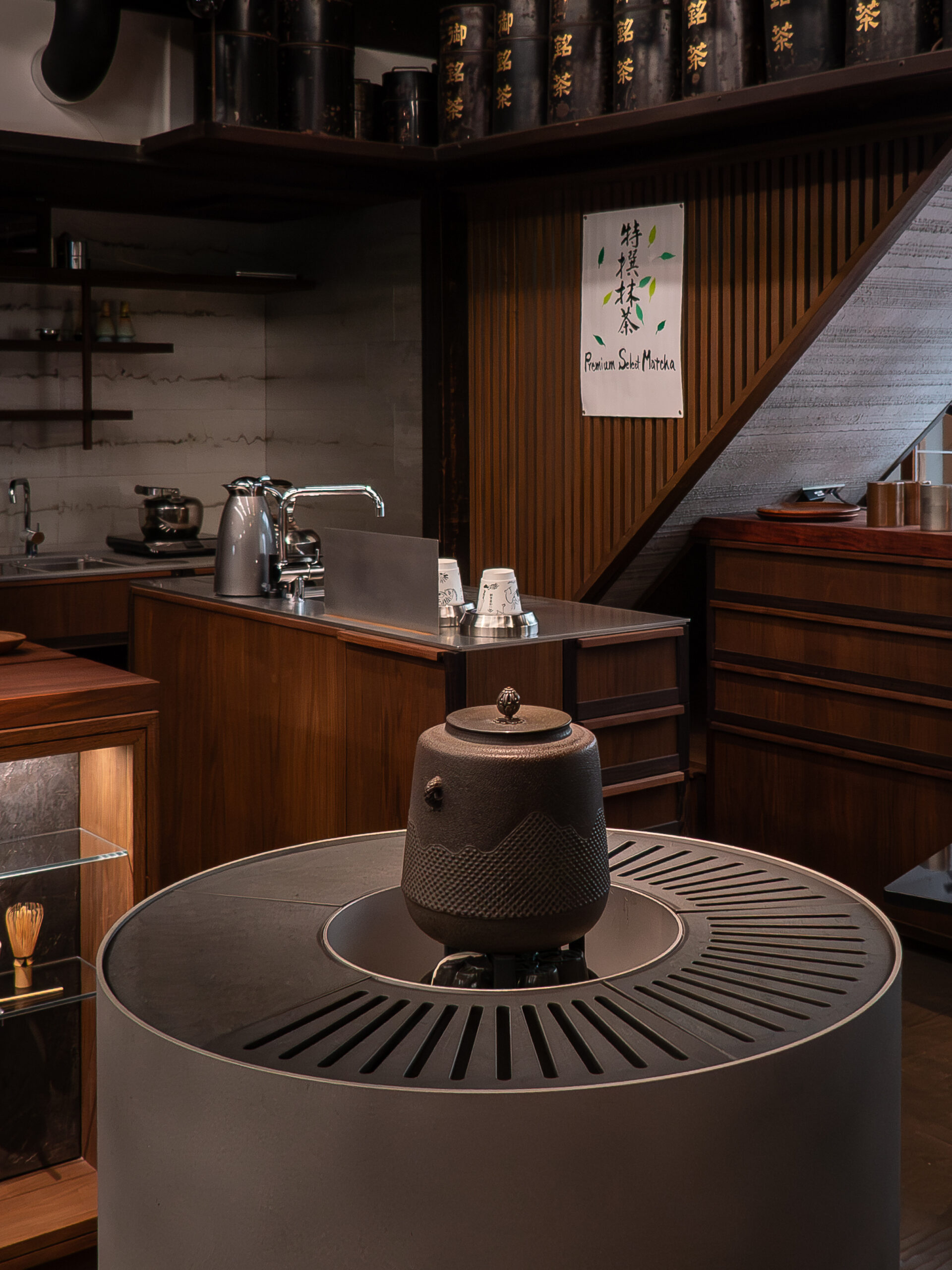
The centerpiece of this modern area is a heavy, cast-iron kettle (kama 釜) sitting on a smooth concrete pedestal. Combining rough iron with industrial concrete updates traditional tea styles for a modern audience.

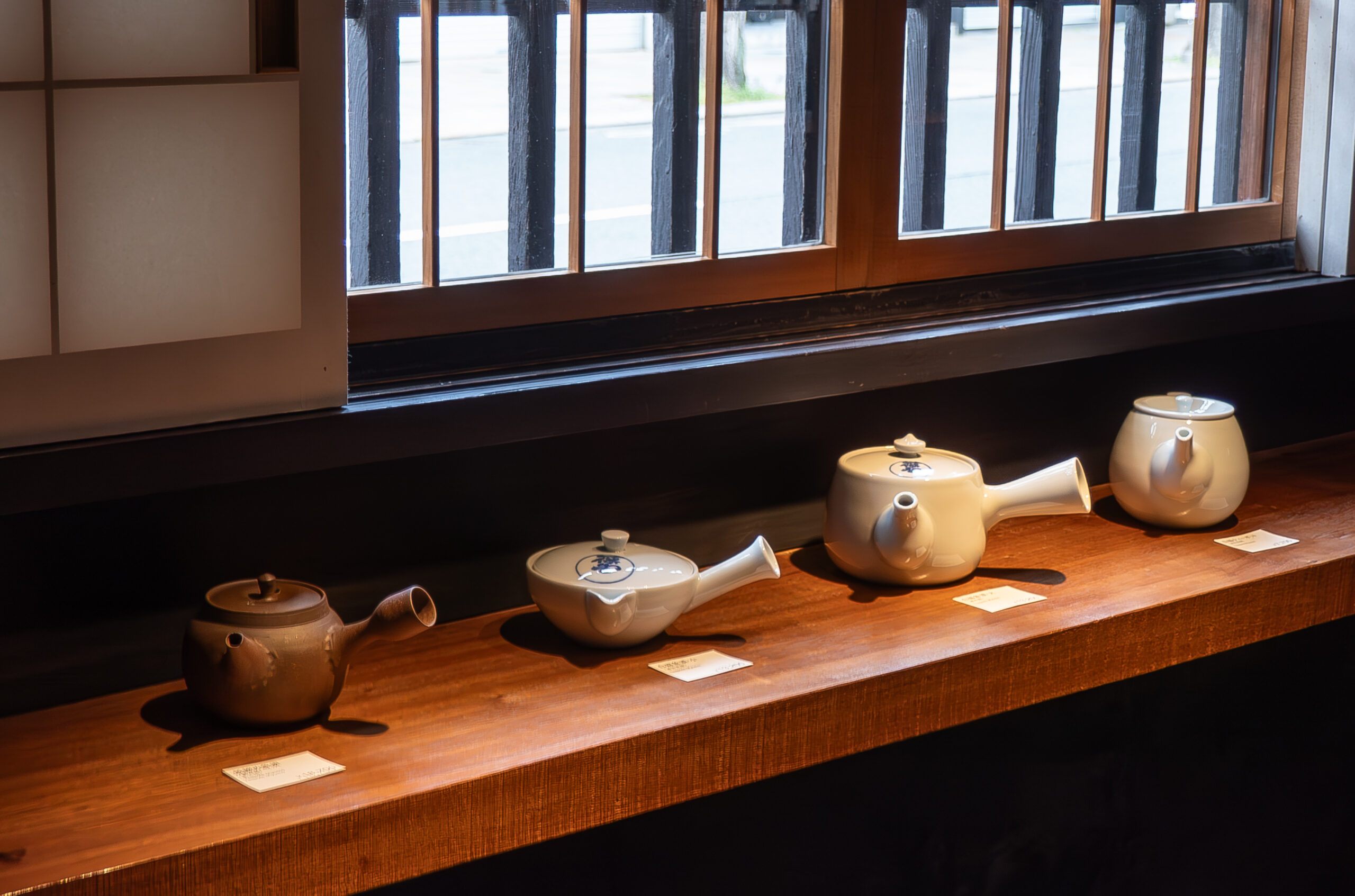
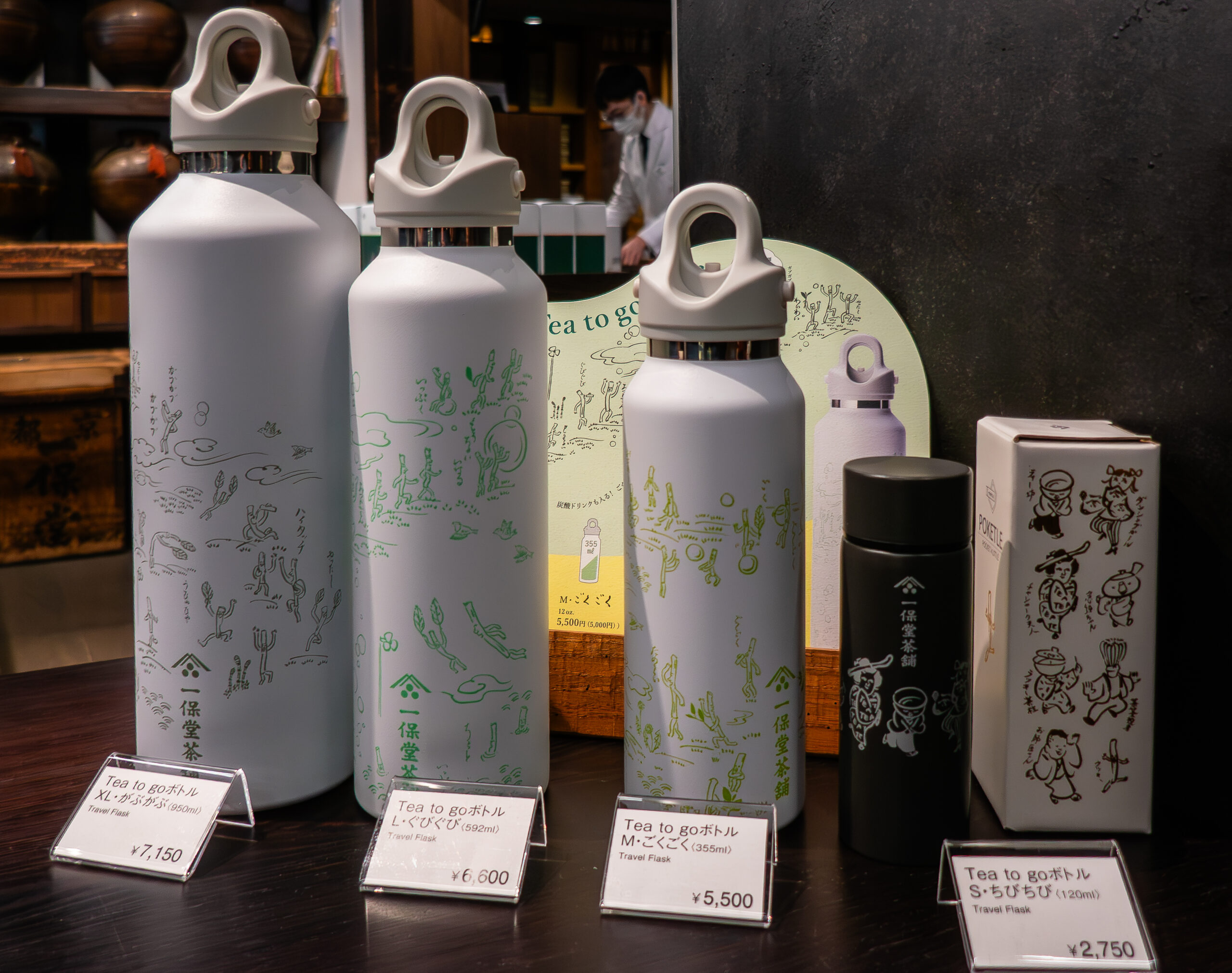
Both traditional Japanese kyusu (急須) teapots as well as Ippodo’s line of stainless-steel “Tea to go” travel flasks are available.
If you cannot visit the store, their website contains helpful suggestions of food pairings and delightful stories about different ways to enjoy tea.

Kyoto is famous for preserving its history. But the design of Ippodo’s flagship store blending old timber, antique jars, and imperial calligraphy with modern concrete, smooth stone, and playful neon, shows that preserving history is not about freezing the past.
If you are interested in tea, look out for our future posts on China’s National Tea Museum in Hangzhou.
Leave a Reply