

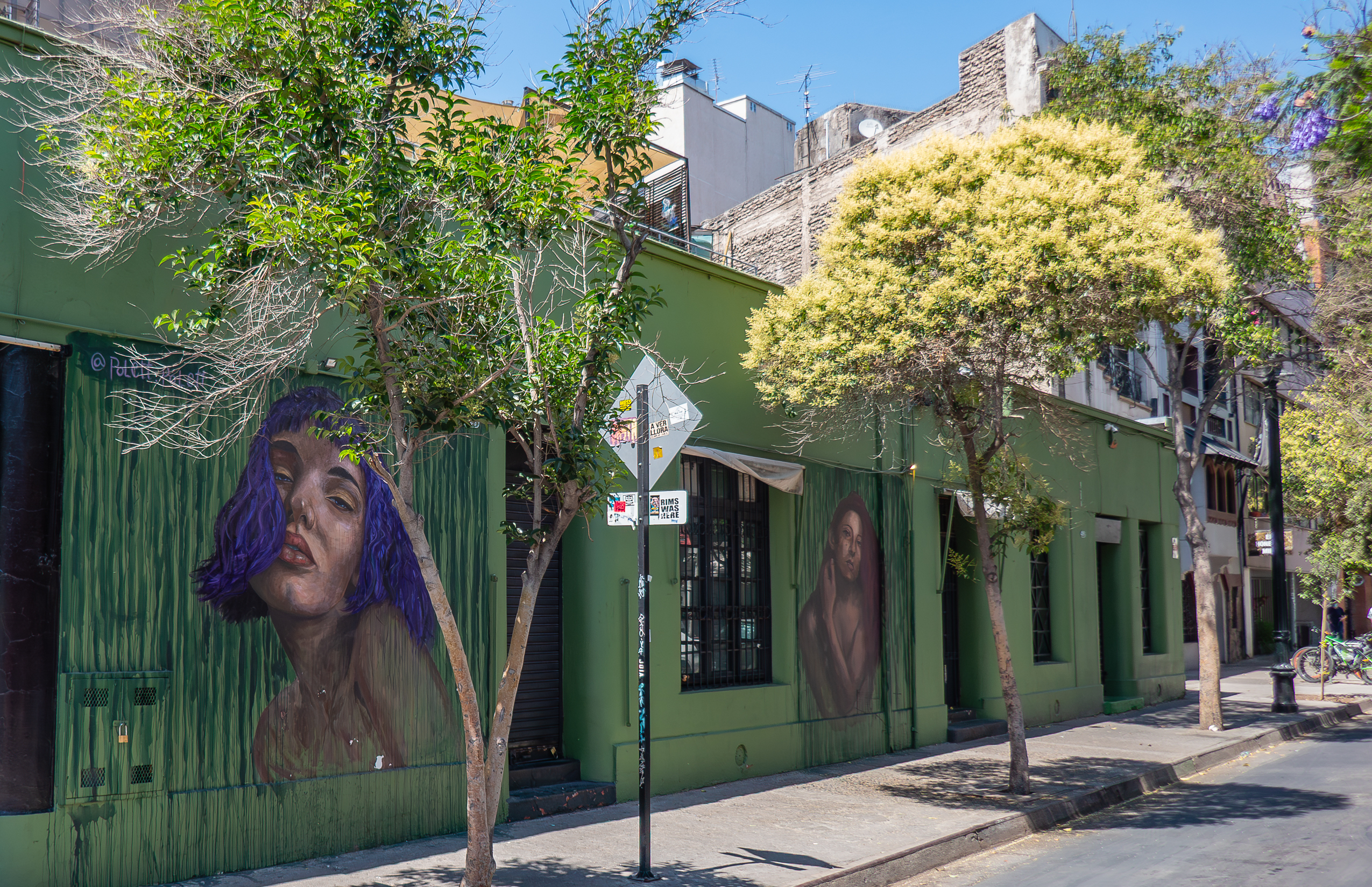
During a short stay in Chile’s capital – Santiago, we visited a colorful, historic district of the city – Lastarria. Barrio Lastarria is one of central Santiago’s most walkable, culture-forward districts—compact streets lined with cafés, wine bars, galleries, and indie shops which give it a lively, bohemian feel.
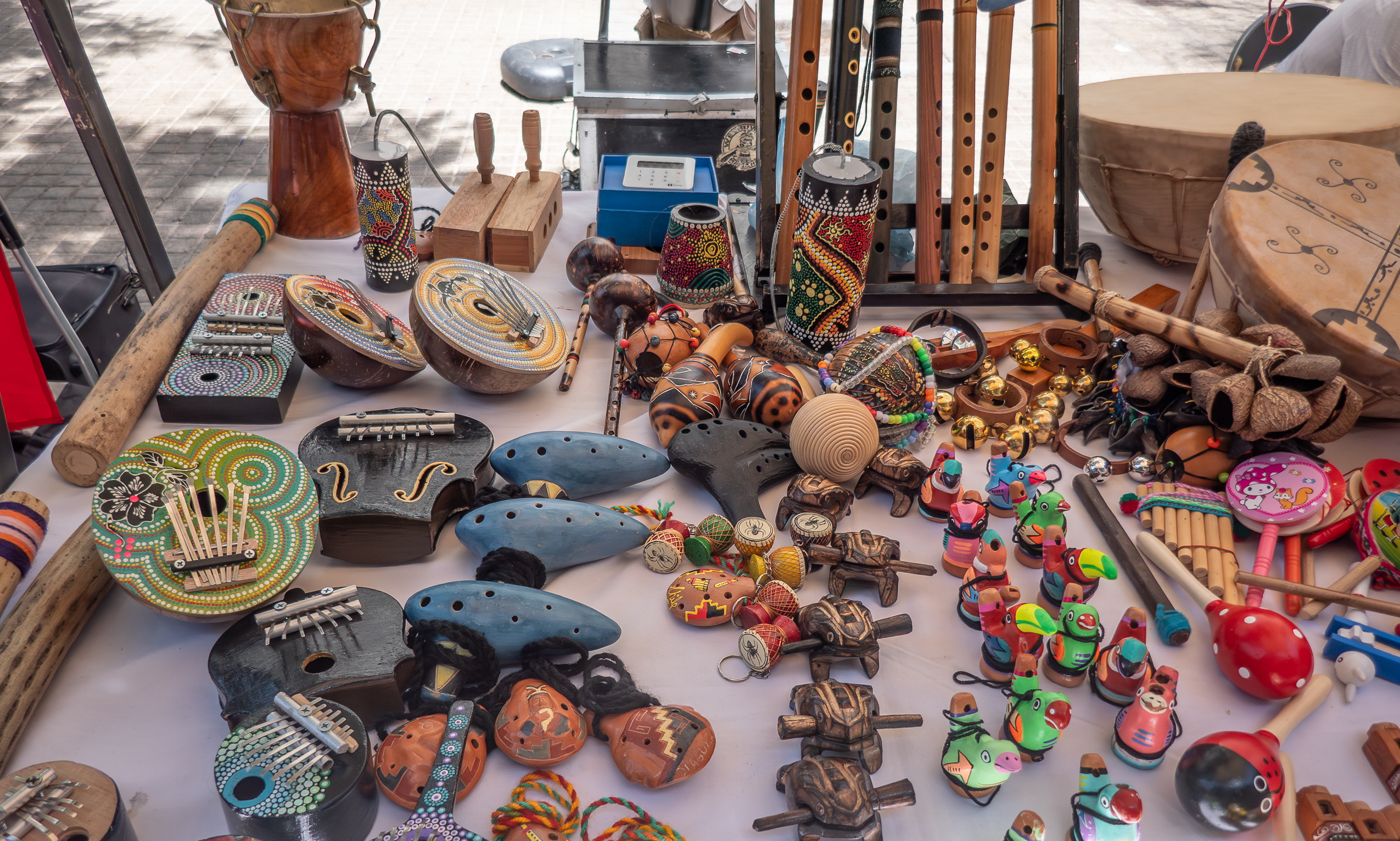
Enjoy a tune while browsing.
Barrio Lastarria sits between Cerro Santa Lucía and Parque Forestal, with Bellas Artes next door and the Alameda (Av. Libertador Bernardo O’Higgins) to the south, putting green space, museums, and Metro access within a few minutes’ walk.
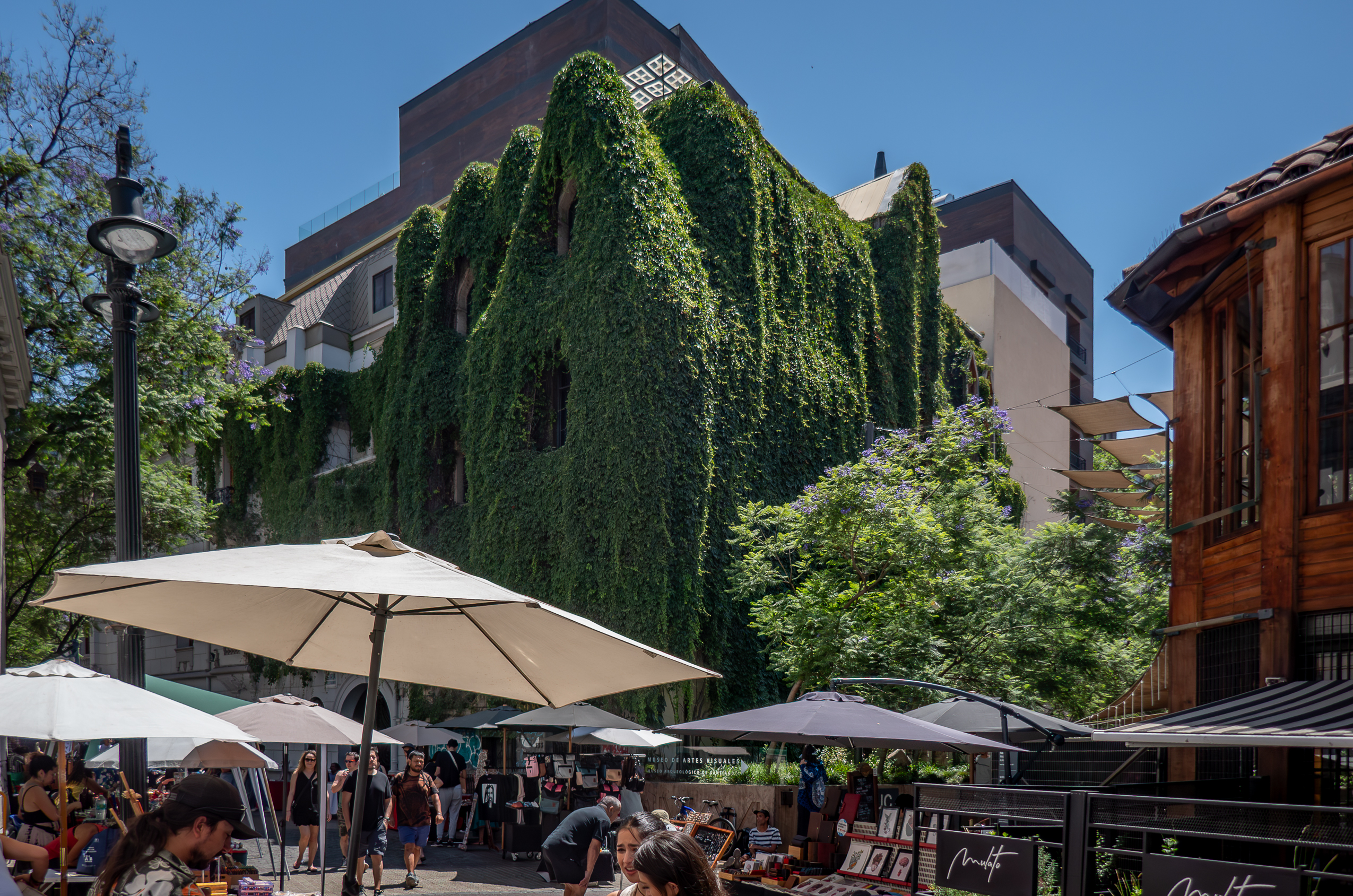
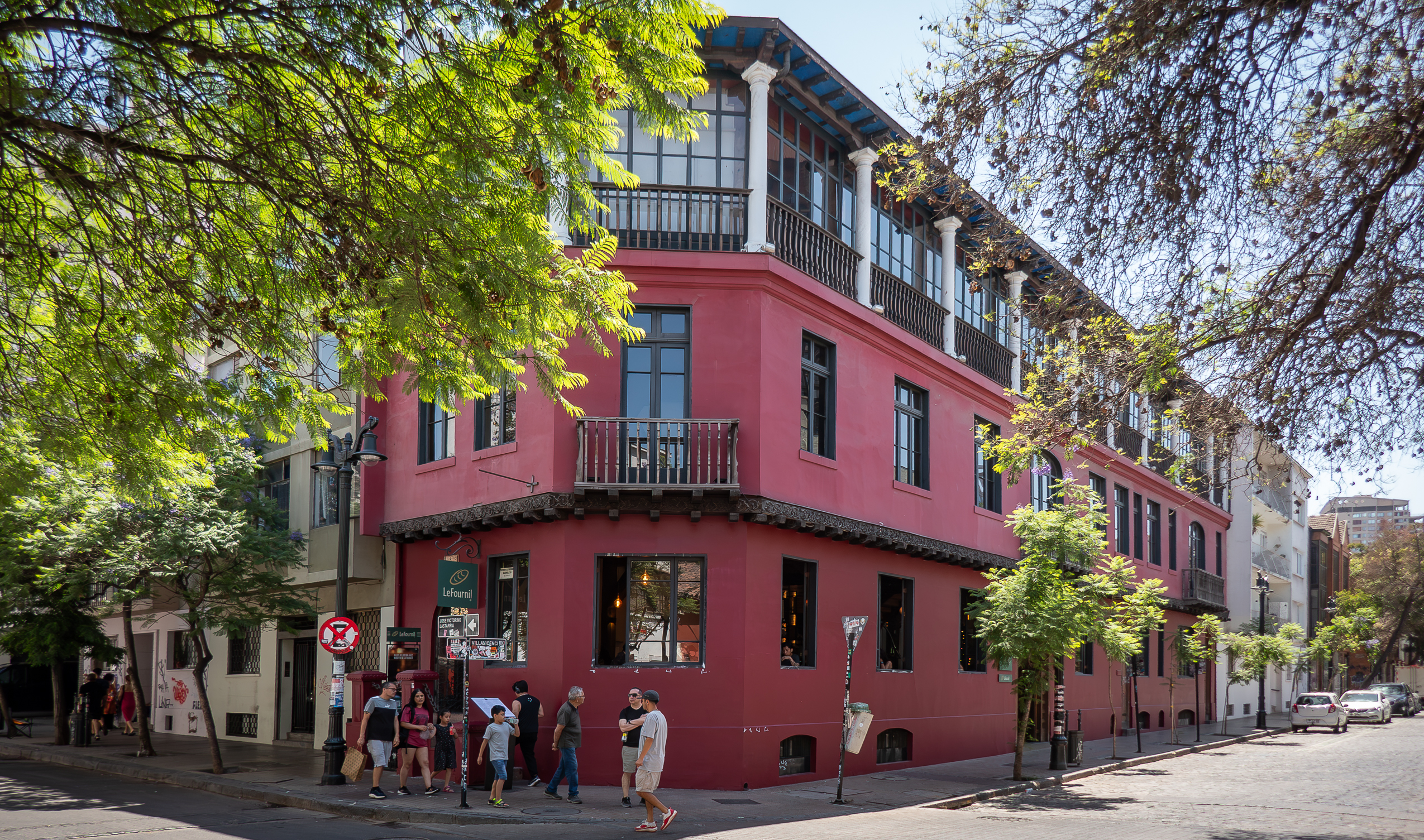
Many restaurants, cafes, shops and galleries line José Victorino Lastarria street, the main artery of the barrio.




Museo de Artes Visuales (MAVI UC) anchors Plaza Mulato Gil de Castro. It hosts rotating exhibitions that spotlight Chilean and Latin American artists across photography, painting, video, and installation.
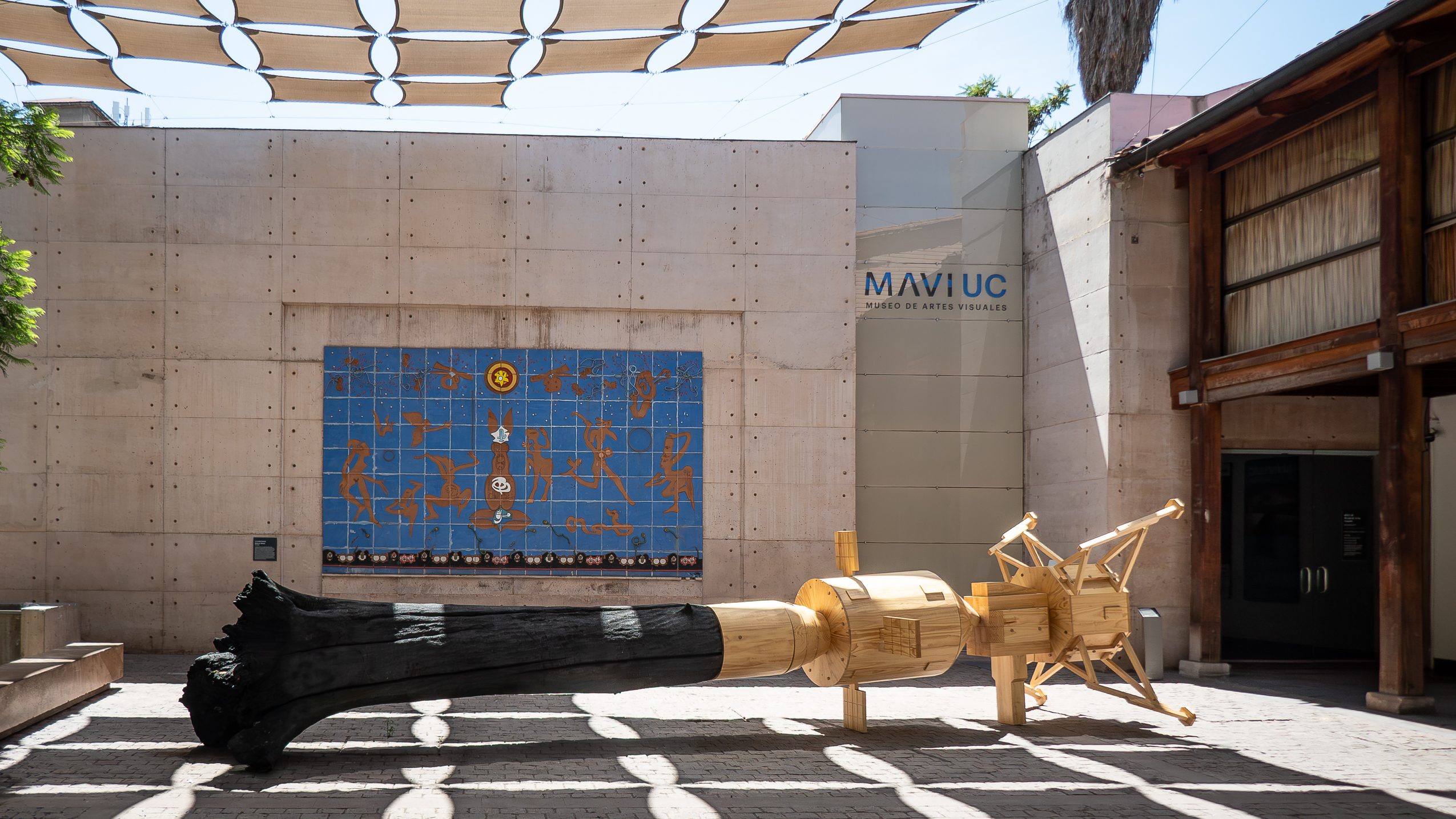
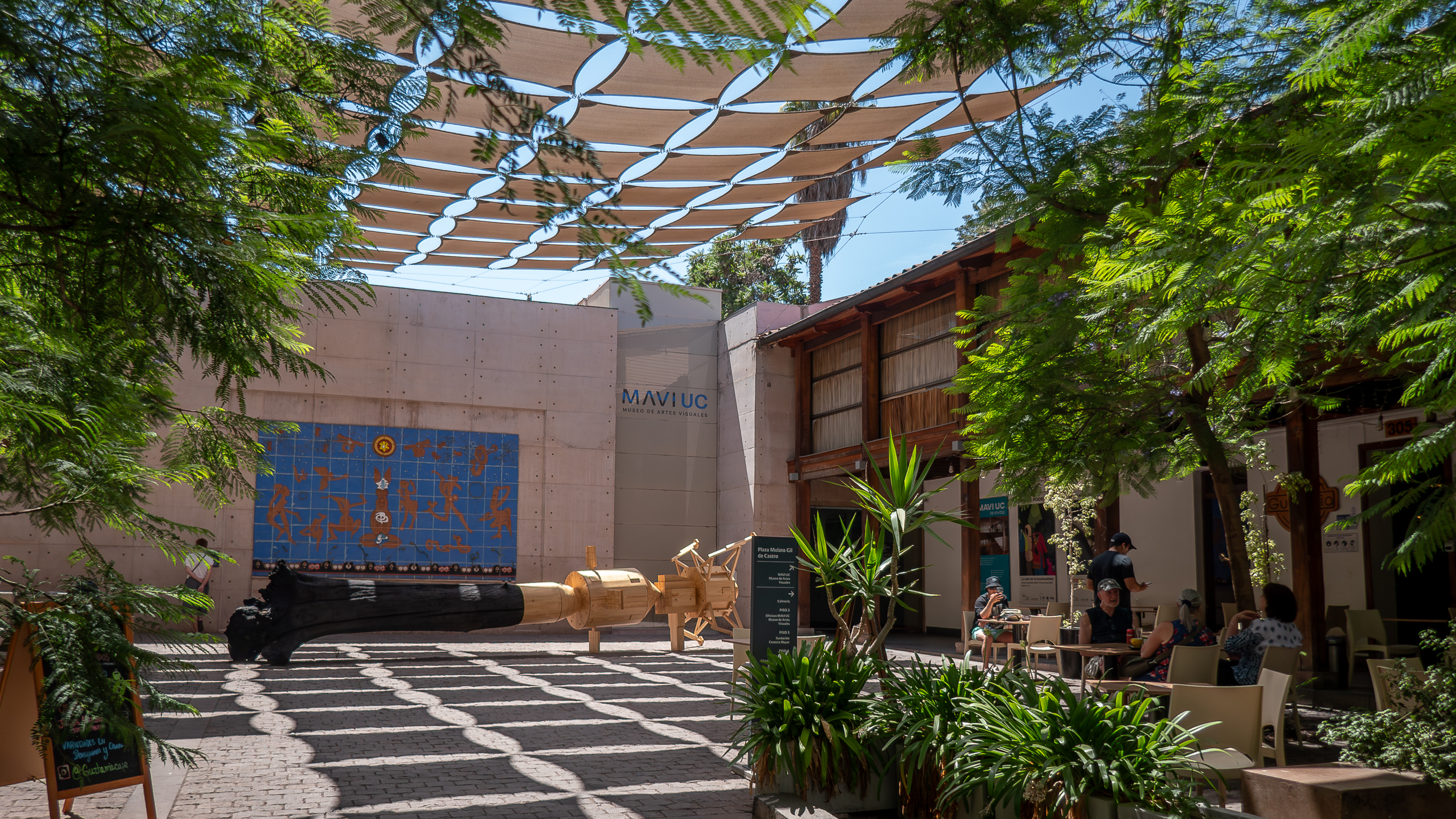
The modest modern building open onto the plaza, so the line between museum and street life is blurred, a setting that invites one to linger.
A pedestrianized section of José Victorino Lastarria street holds a market selling cultural products, not all touristy souvenir. We really enjoy our stroll through the craft market.
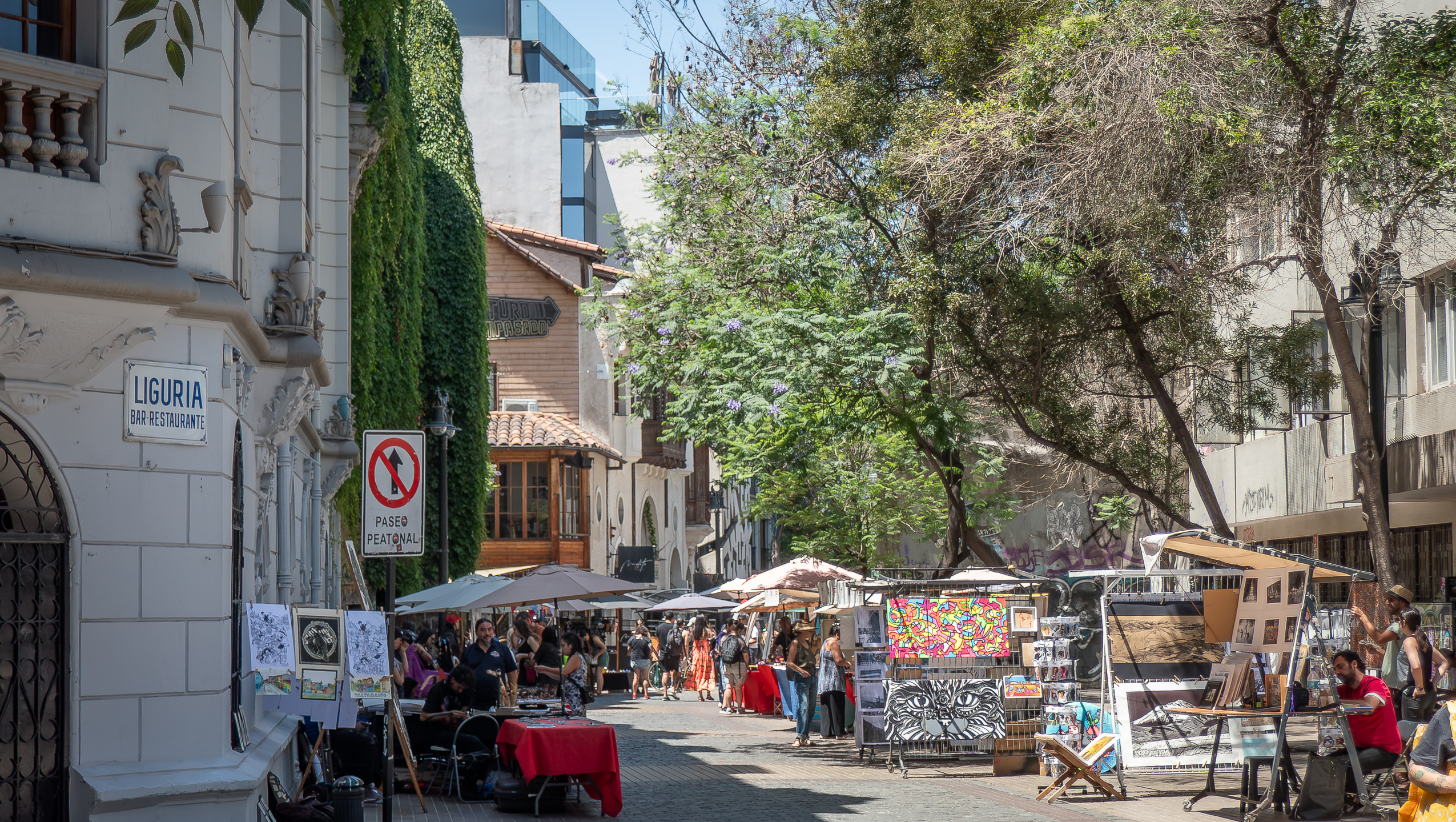
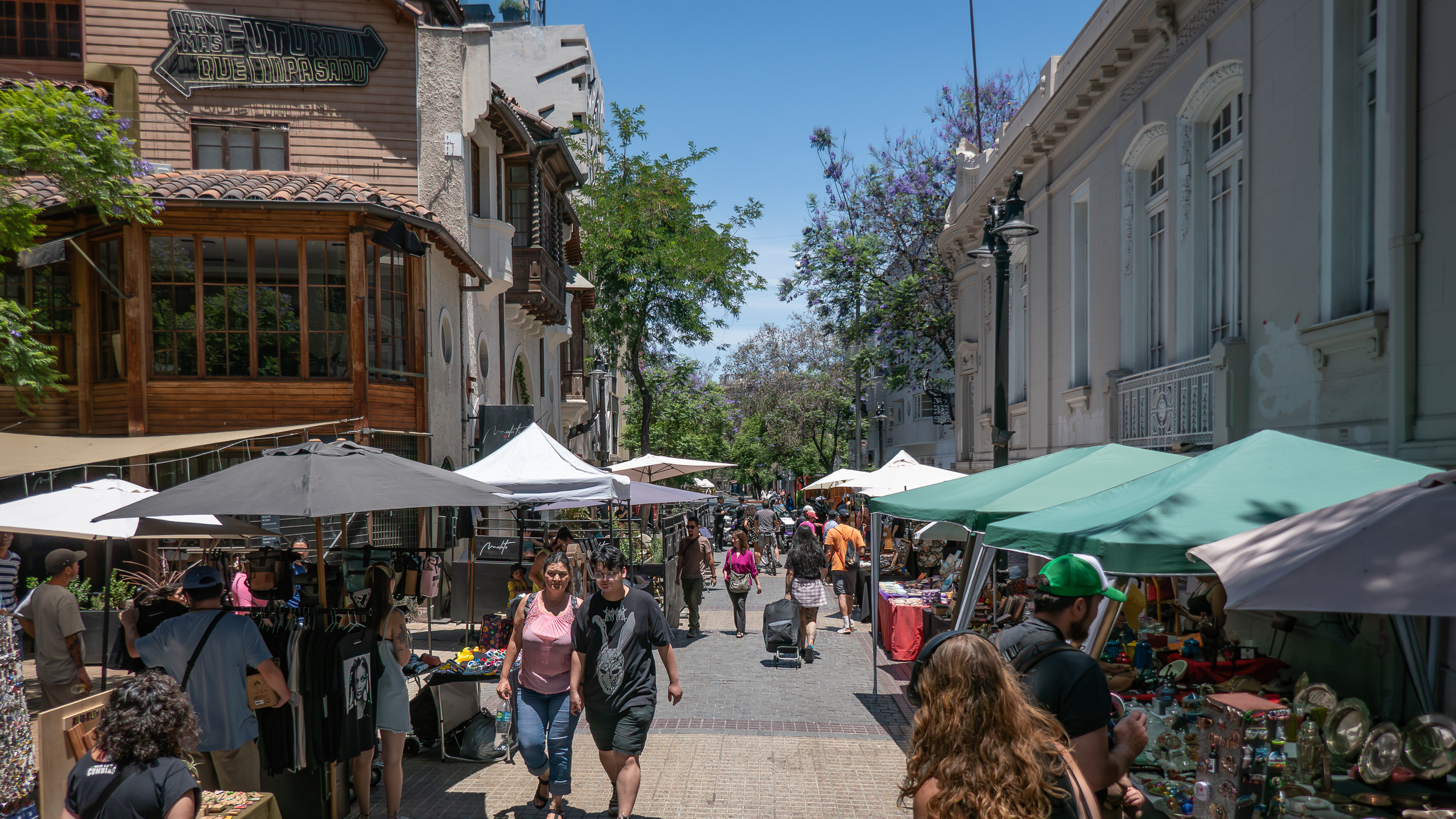
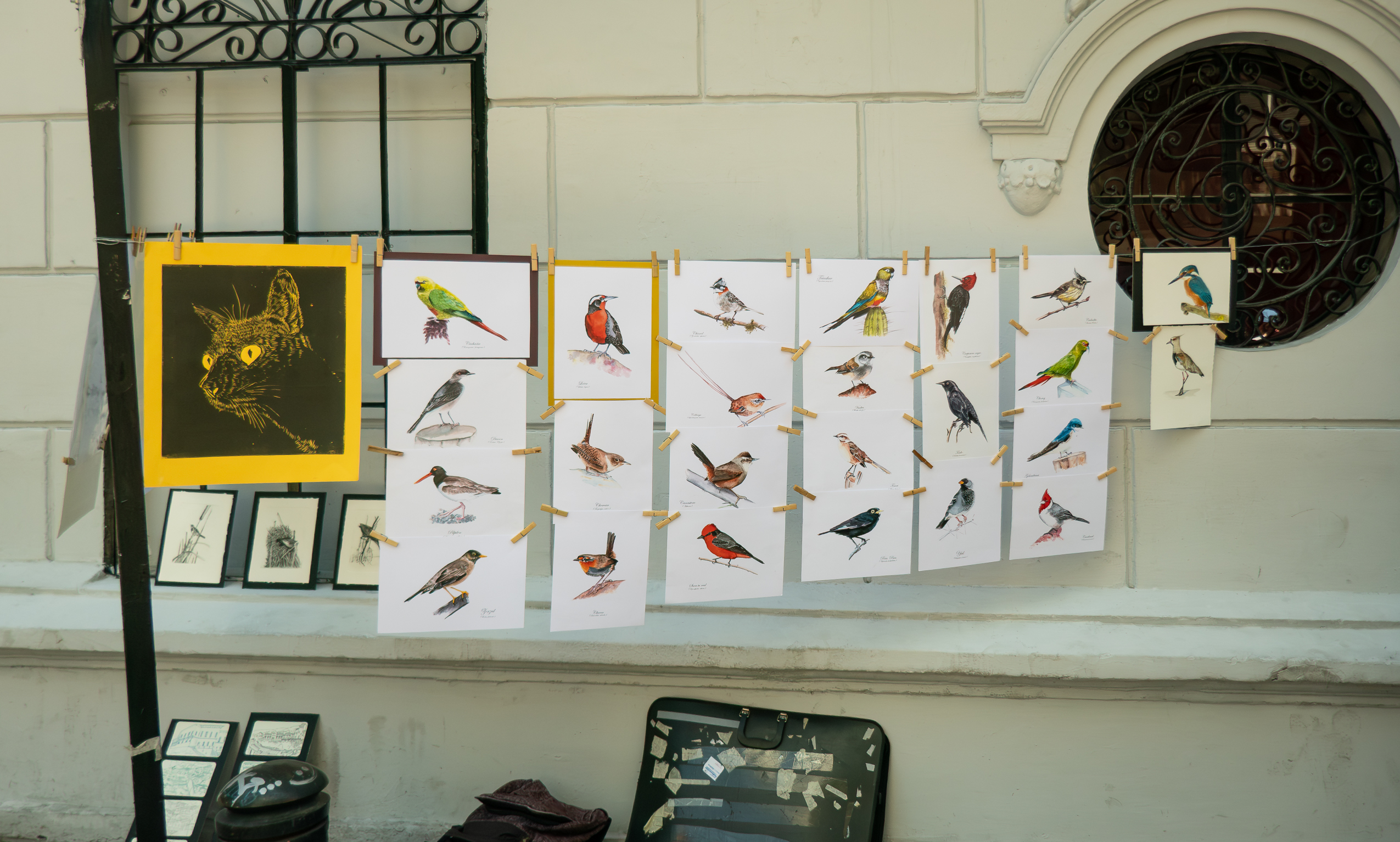
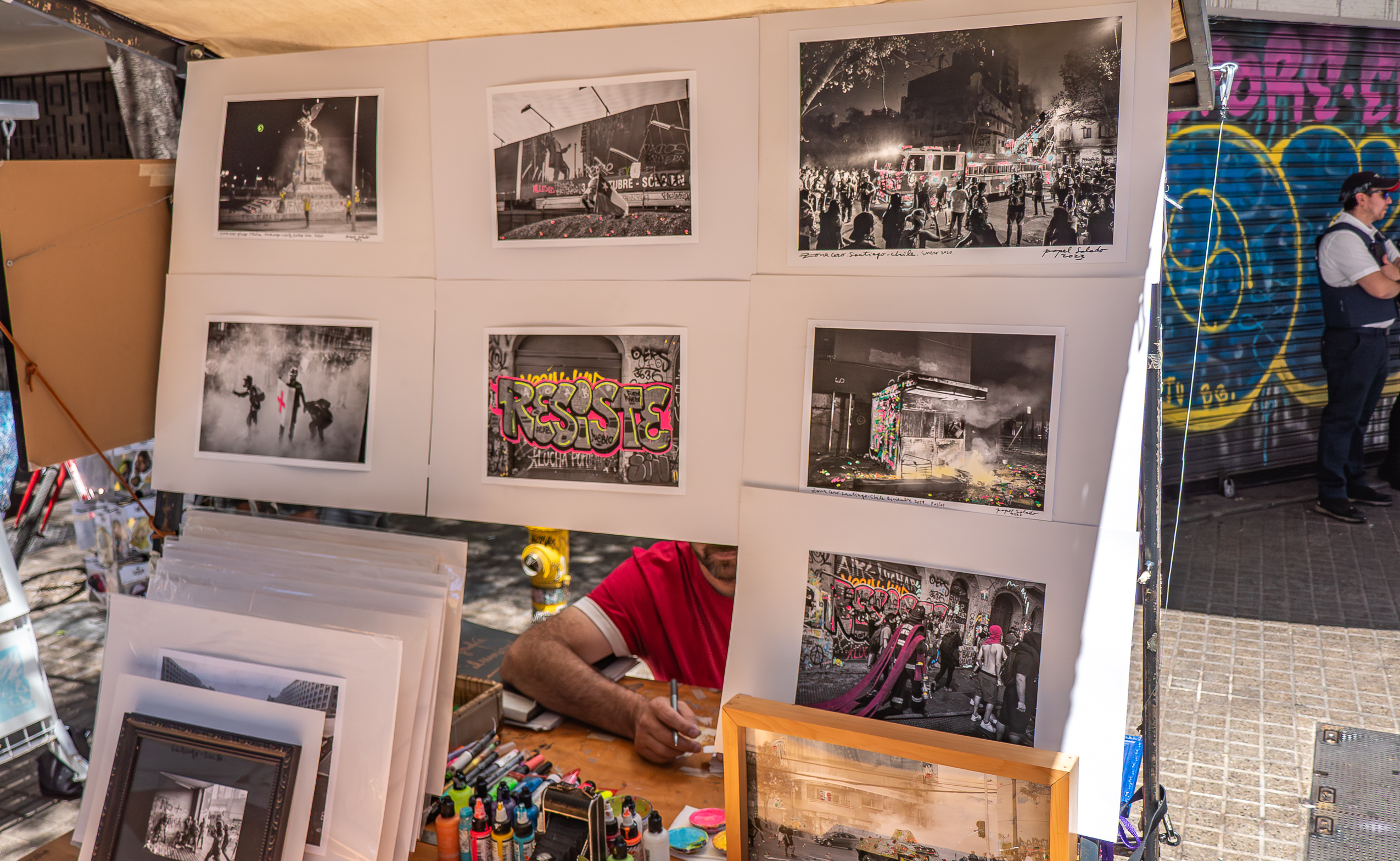
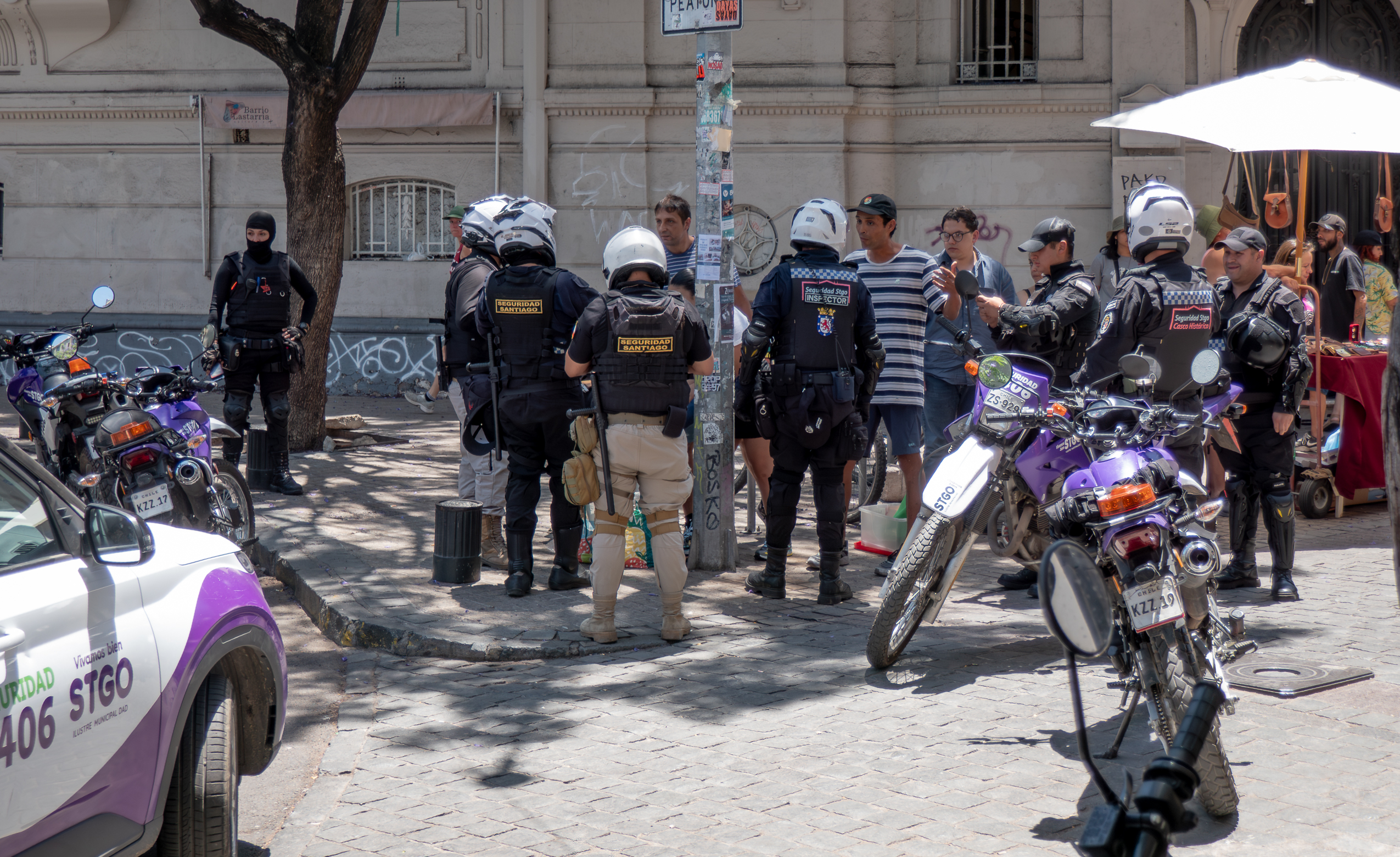
A street vendor was selling artwork which are B&W photographs tinted by fluorescent ink featuring street protests, while ironically we observed a heavy police presence to evict unlicensed vendors from the street. There were multiple motorcycles, police cars, and even a female officer ready with plastic cuff zip ties.
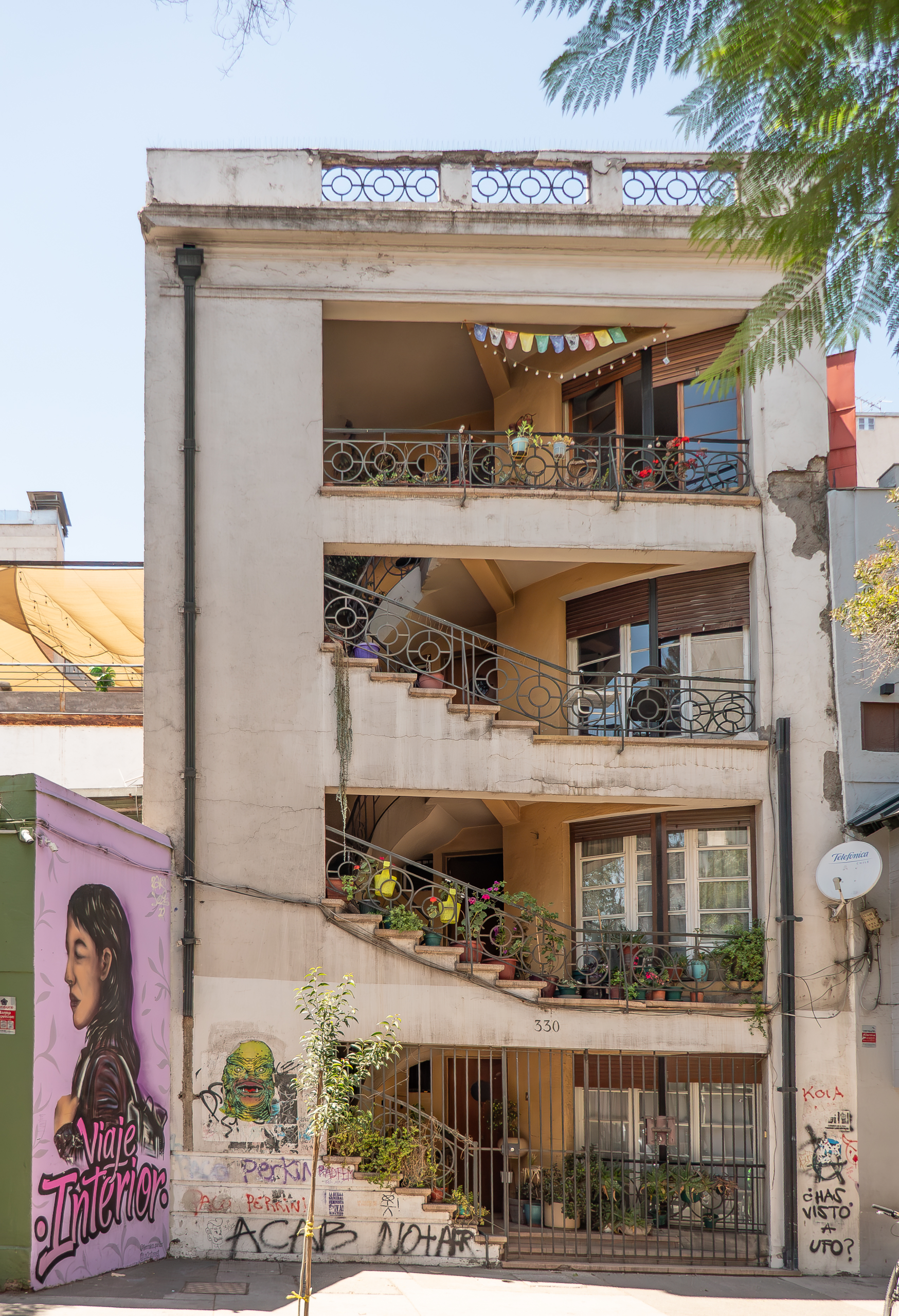
A restoration push in the 1990s, followed by heritage protection, helped revive façades and small businesses while keeping the intimate scale. The neighborhood was officially protected as a Zona Típica (heritage zone) in 1997.
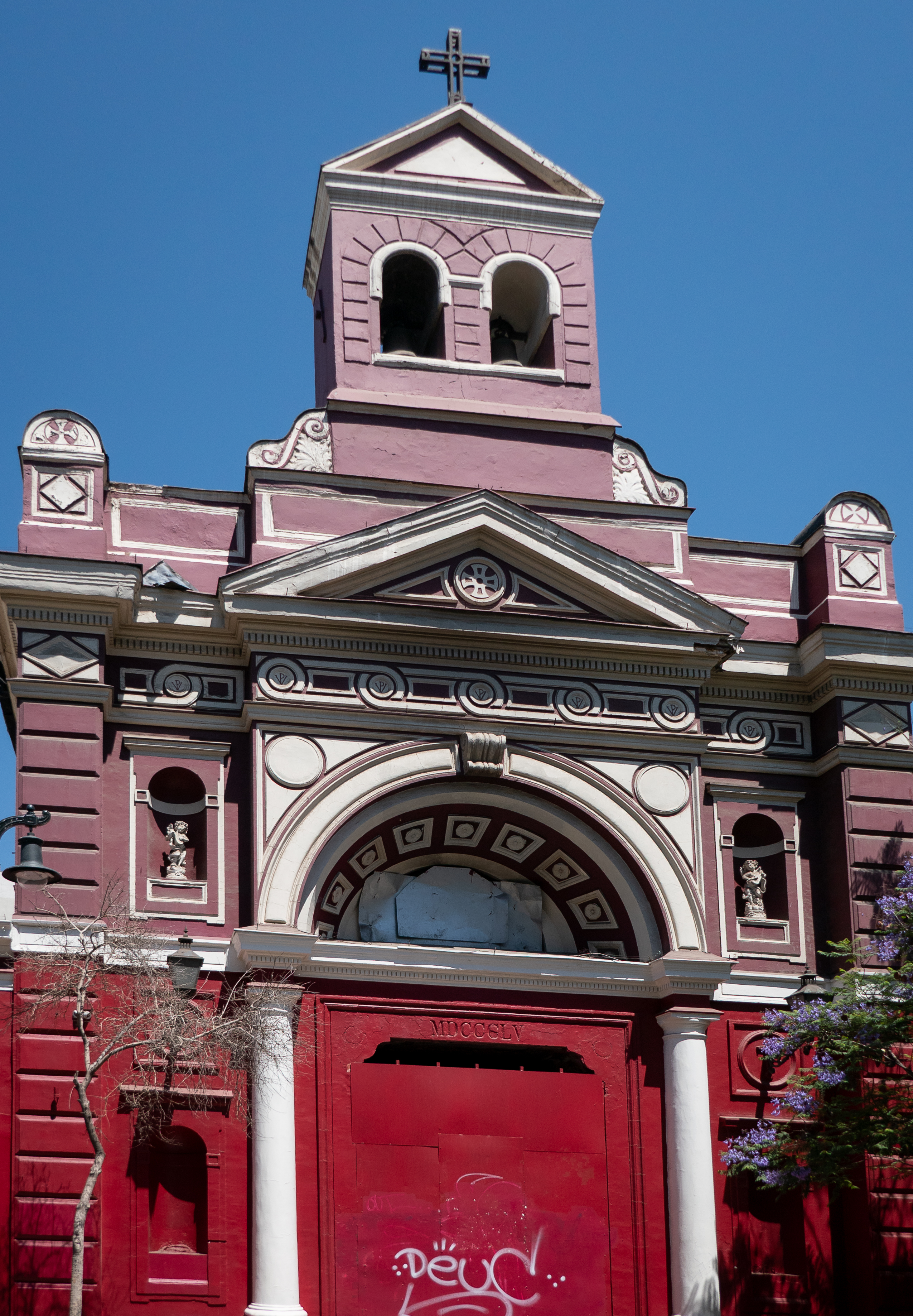
Historically, the area grew around the Iglesia de la Veracruz, and many 19th-century houses and narrow lanes survived modern changes.
In November 2019, amid the Estallido Social protests (“Social Outburst”), Iglesia de la Veracruz on José Victorino Lastarria was set on fire, leaving its historic nave and interiors severely damaged.
The protest arose from Metro fare hike and morphed into nationwide demonstrations over inequality, pensions, and living costs. Central Santiago saw marches and clashes; the upheaval triggered a constitutional reform process, marking one of Chile’s most consequential civic actions since the return to democracy.

We featured an independent bookstore in Lastarria, Libreria La Flor de Papel in one of our earlier blog post.
Lastarria is within walking distance to three major cultural destinations: Museo Nacional de Bellas Artes (MNBA), MAC contemporary art museum and GAM – Centro Cultural Gabriela Mistral. It is a perfect place for an espresso, a glass of wine or a quick bite before or after museum hopping or seeing a performance.