

While we were visiting Venice to see the 60th Art Biennale, we took a half-day trip to explore the island of Burano in the northern lagoon. Burano is a small, populated island village (~2,800 residents) located 7 km from the center of Venice.
Enjoy the music while browsing
Enjoy some music while browsing …
For centuries, Burano was a poor settlement primarily supported by lagoon fishing and agriculture. Burano’s prominence exploded in the 16th century when local women began practicing needle-lacemaking (merletto), a skill introduced via Cyprus. By the 17th century, their intricate, fabric-free needlework (punto in aria) became a massive status symbol for European aristocracy.
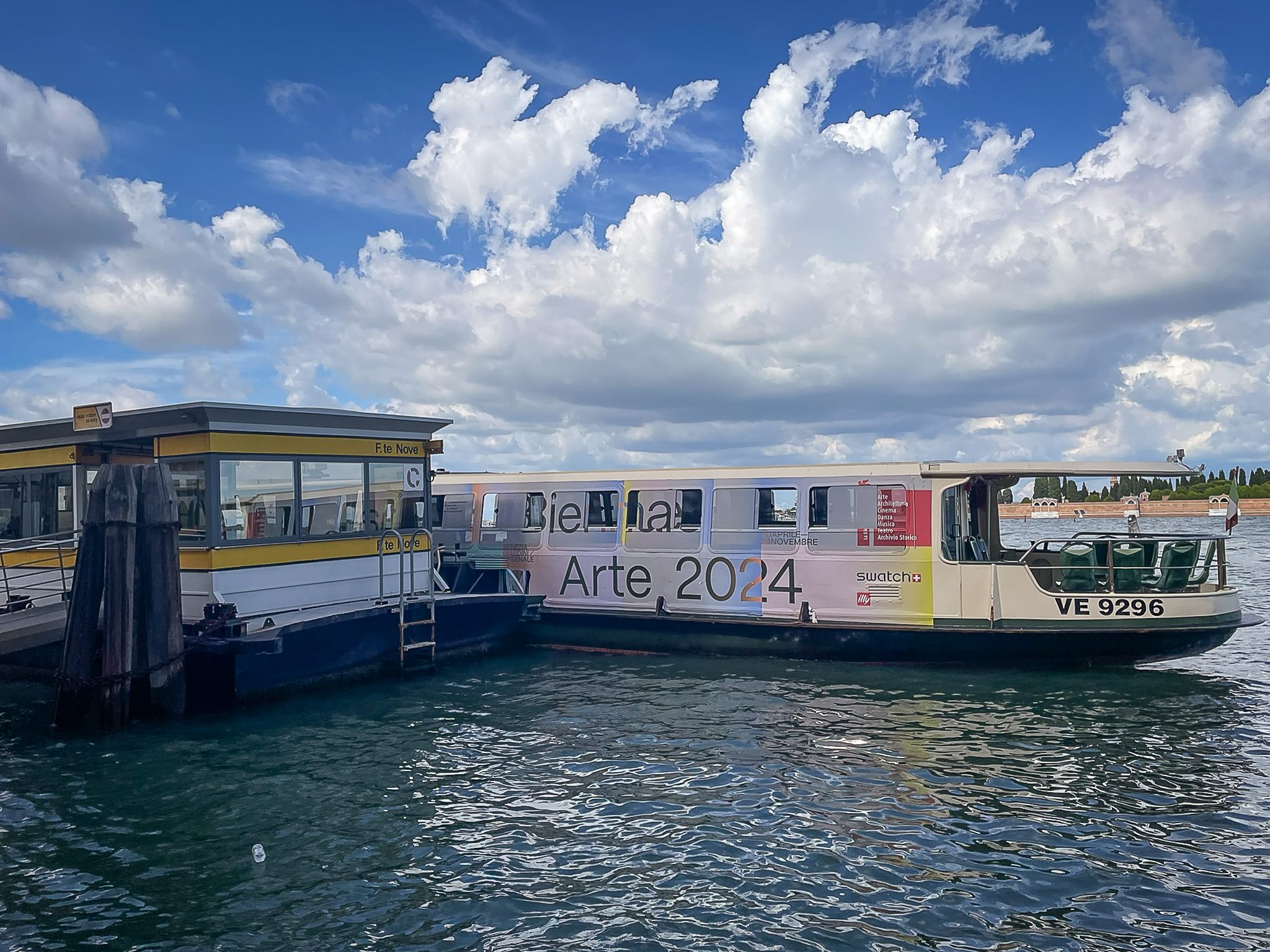
Our departure begins at the northern edge of Venice proper, along the wide stone promenade of the Fondamente Nove. The journey time was about 45 minutes on the ACTV Line 12 vaporetto.
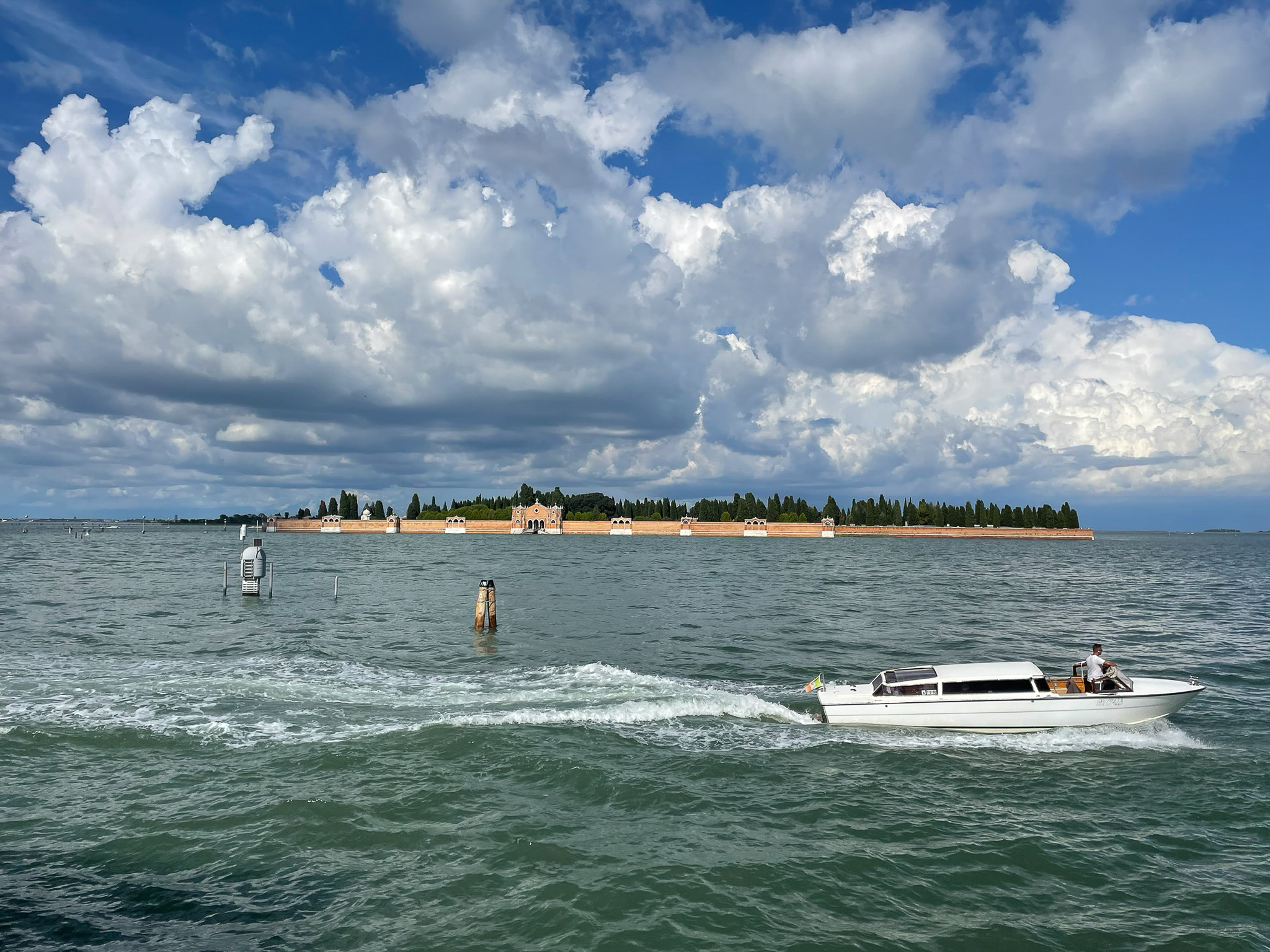
As the vessel enters the open lagoon, under dramatic cumulus clouds, heading north-northeast, we saw a long, imposing barrier of red brick and white Istrian stone. This is the cemetery island of Isola di San Michele.
Until the 1800s, Venetians buried the dead in cramped parish churchyards. In 1807, a Napoleonic decree banned this on public-health grounds in the flood-prone city. Architect Gian Antonio Selva merged the islands – San Michele and San Cristoforo della Pace into a walled necropolis.
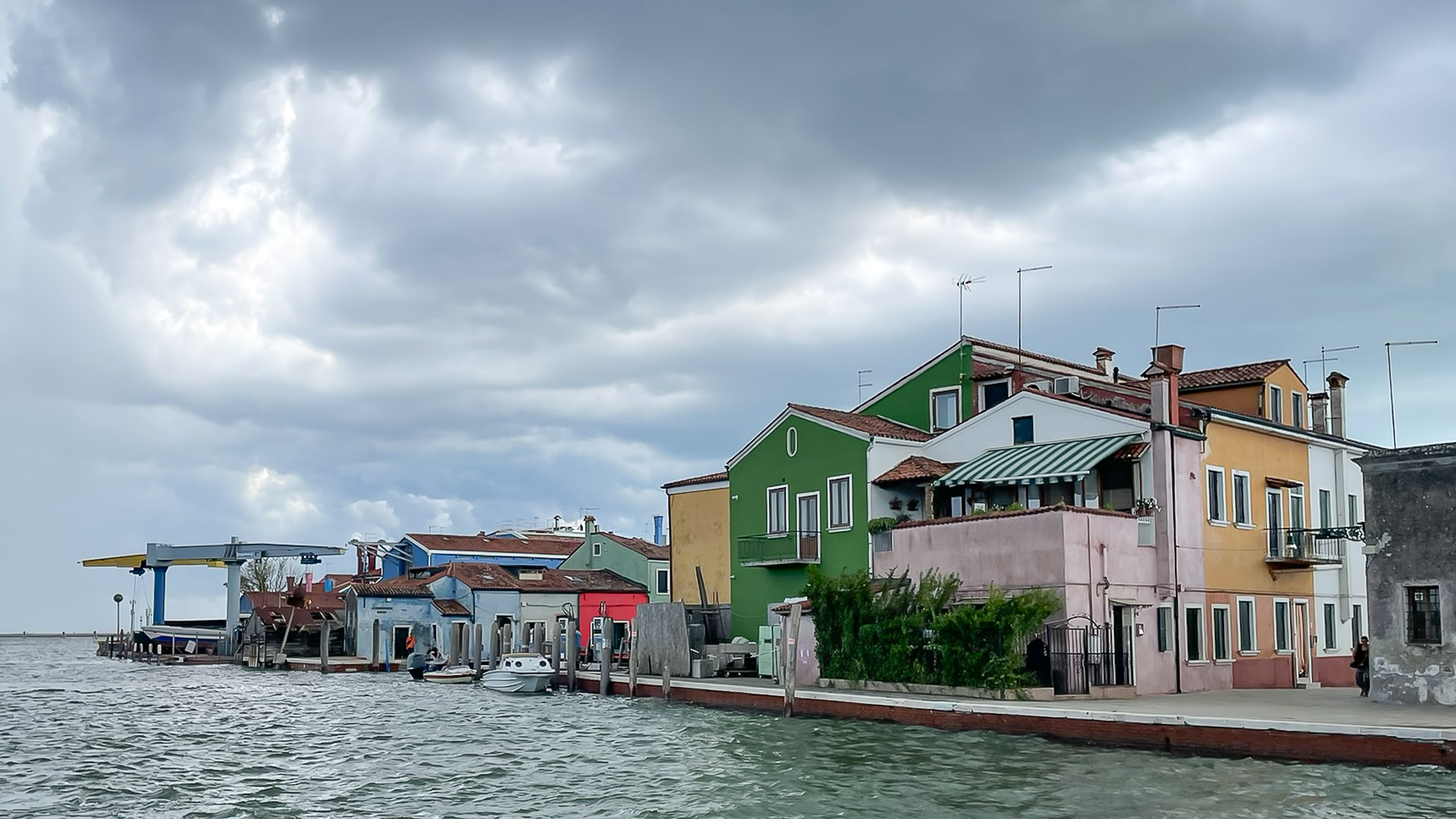
At first glance, Burano’s fondamenta reveals a residential facade of striking colors alongside a small industrial dock, complete with a crane and moored boats.
Burano is well known for its candy-colored homes. Popular travel lore has long attributed these colors to a romantic, utilitarian origin: that the island’s fishermen painted their homes in vivid hues to navigate their way home through the caigo—the dense, blinding winter fog.
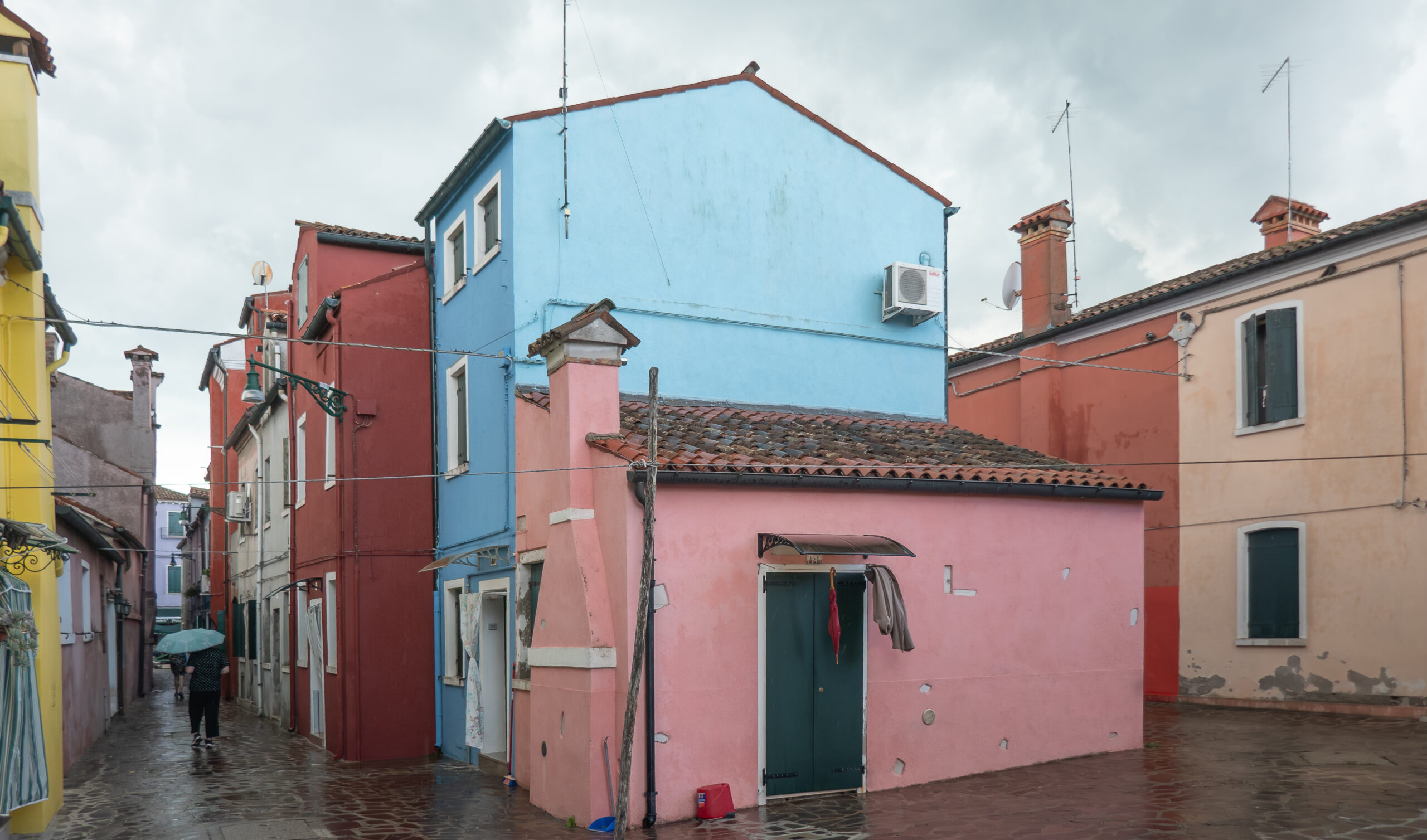
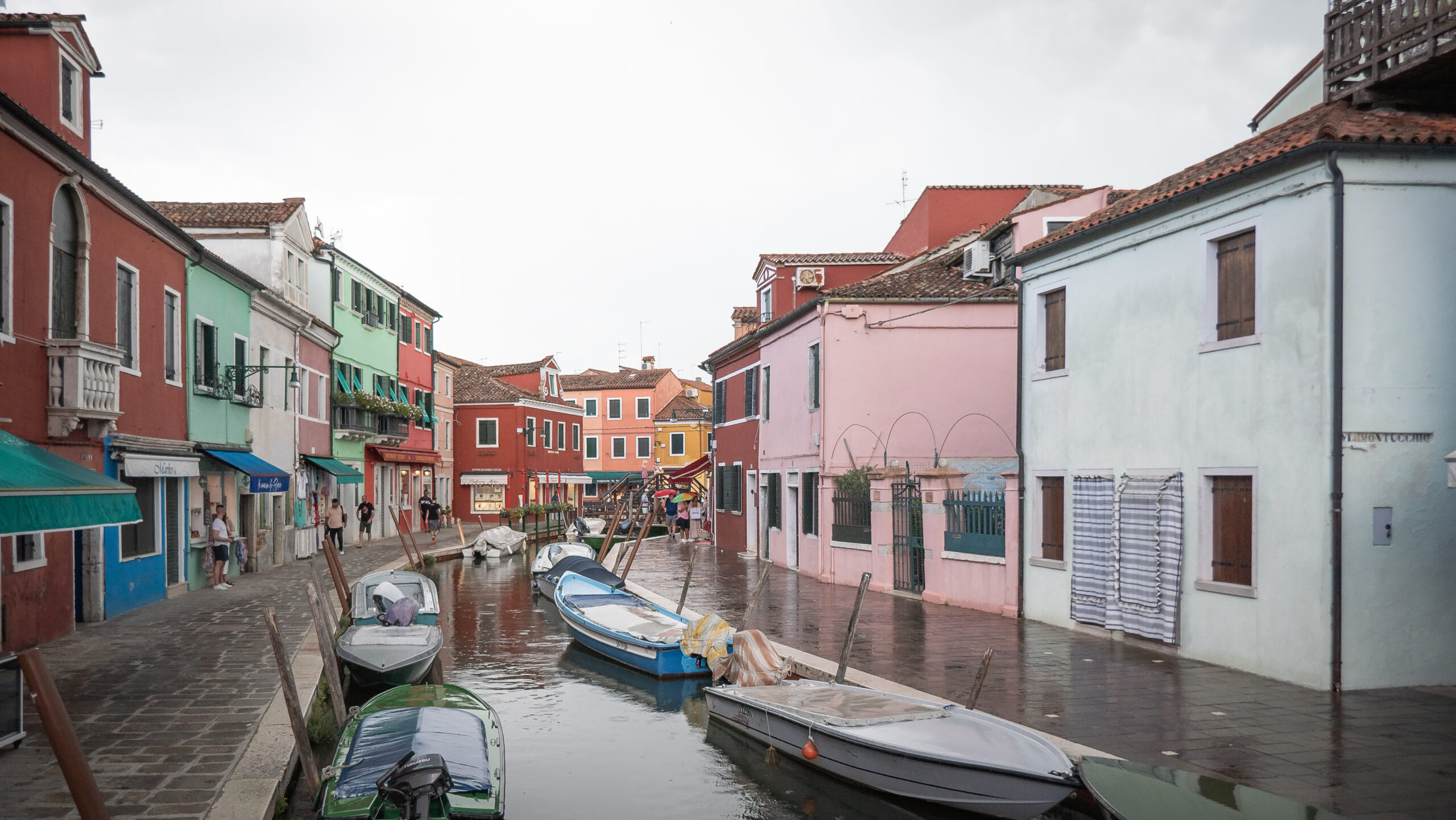
Rather than a safety measure or spontaneous self-expression, Burano’s colors began as a property-demarcation system. In a working-class community dominated by a few shared surnames (Trevisan, Rosso, and Senigaglia), identifying homes by lineage was difficult, so local clans (casade) used distinct color combinations to prevent disputes and mark boundaries.
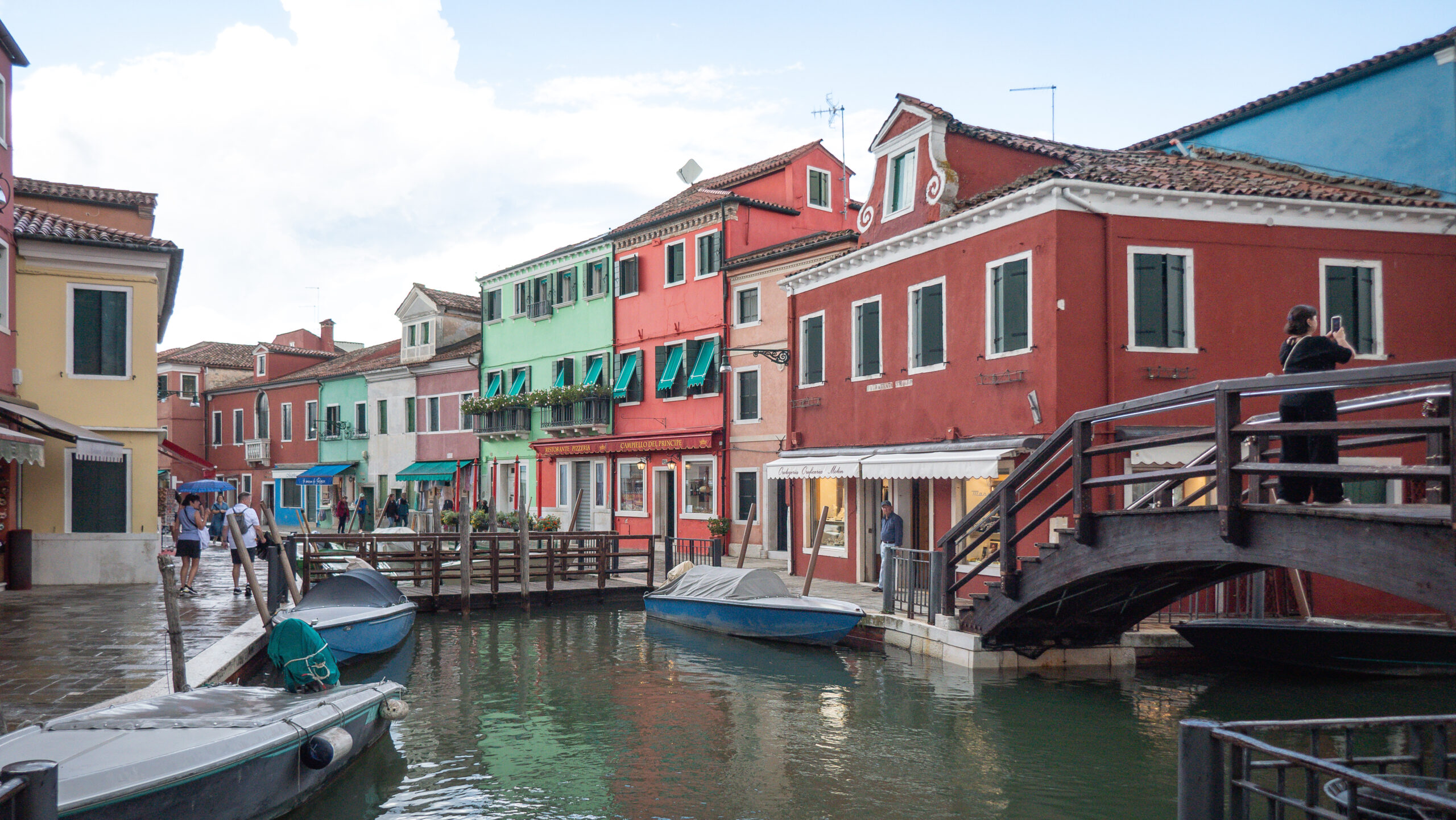
In an open square (campi), the relationship between color, architecture, and civic infrastructure is fully realized. A historic pink structure—home to Osteria Al Museo—features prominent external chimneys and traditional timber shutters, looking out over an ancient Istrian stone well-head (vera da pozzo).

Today, a homeowner in Burano cannot simply visit a local hardware store and select a paint color. The repainting process is governed by a strict administrative petition submitted to the Comune di Venezia.
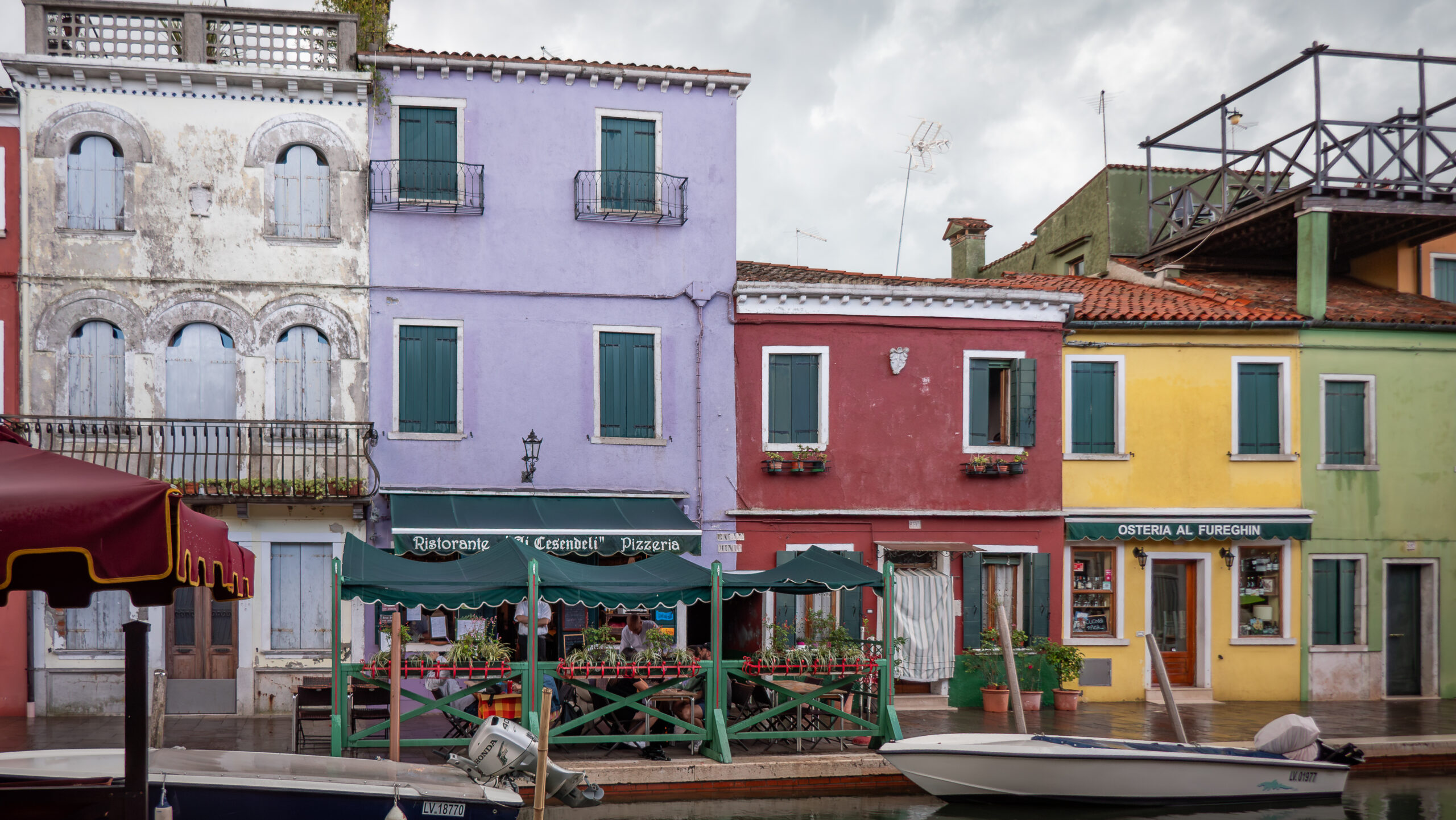
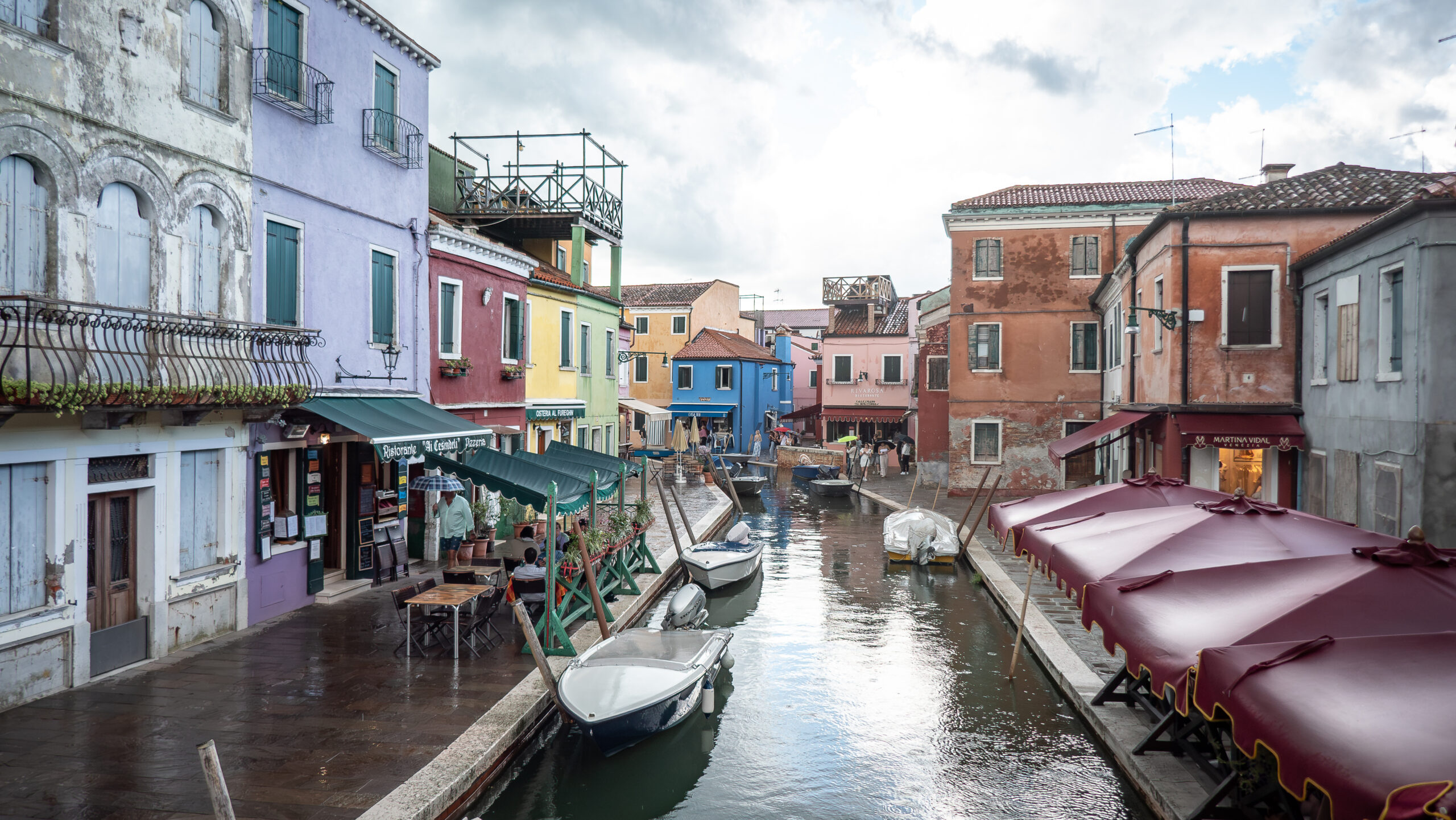
Upon receiving an application, municipal historians and zoning officers consult a historical color grid that maps the entire island by precise coordinates.
The municipality then dictates the exact pigment allocation permitted for that specific geographic location. This ensures that the historic balance of the neighborhood is maintained, preventing any single color from dominating a block or disrupting the traditional distribution of tones.
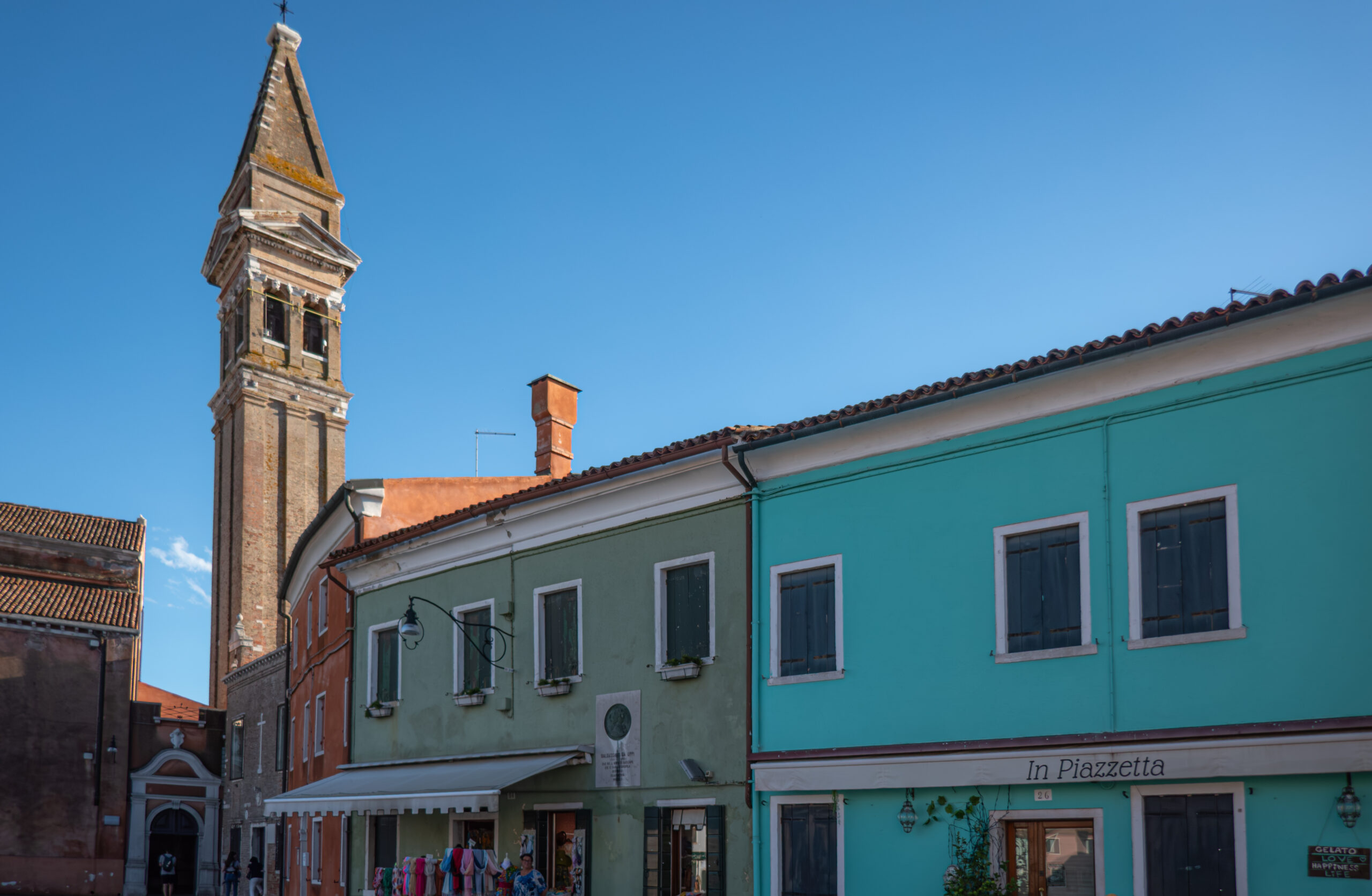
Burano has a leaning bell tower, the Campanile della Chiesa di San Martino, that dates back to the early 18th century. Over time, its brick structure has shifted on the lagoon’s soft alluvial clay, leaving the 53 m tower displaced by about 1.83 m at the summit.
Tourism has replaced fishing and lace-making as the primary economic driver. Like Venice, Burano faces intense demographic pressures. Thousands of daily day-trippers pack the narrow walkways, while the actual resident population continues to shrink due to rising living costs, and a lack of localized healthcare services.
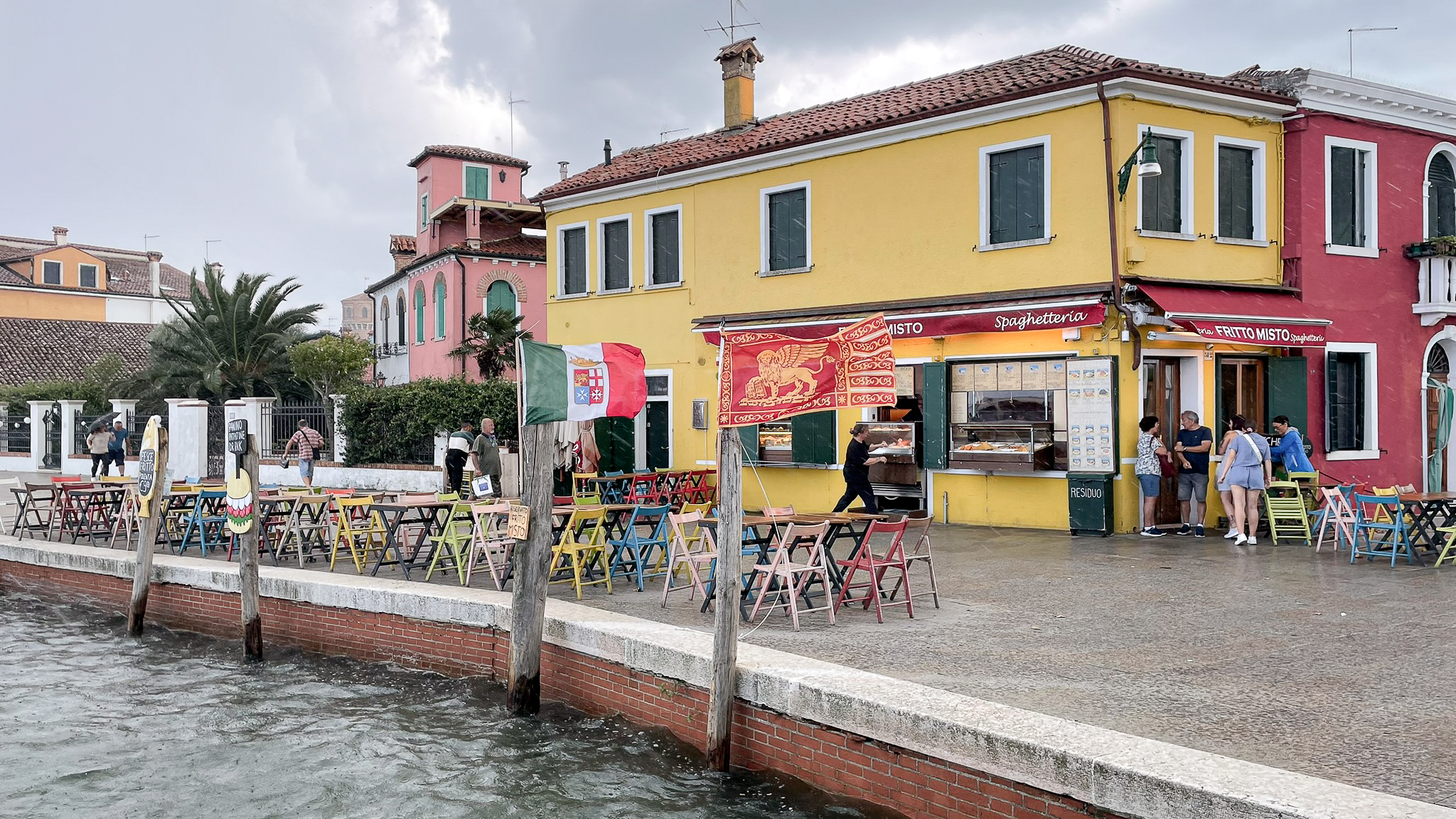
Flapping in the wind, the Italian maritime tricolor and the crimson-and-gold flag of the historic Republic of Venice (Serenissima), frame the outdoor dining area of a waterfront restaurant. This is where we wait for our vaporetto for the trip back to Venice.
Burano survived after its lace-making trade declined in the 18th century. Hopefully, it will find a way to counter over-tourism and sustain its livelihood and traditions.