

Frank Gehry, the Canadian-American star architect, died earlier this month (December 2025) at the age of 96. We’ve come across and admired many of his iconic buildings on our travels and have featured them on the blog before; here, we’re bringing together a selection of those photos as a small tribute.
Spacious and shimmering, this piece of music will go well with Mr. Gehry’s architecture, play it while browsing.
Gehry (born Frank Goldberg) studied architecture at the University of Southern California. After working for various firms, Gehry started his own firm in Los Angeles in 1962. He became recognized in 1978 due to a remodeling of his home using corrugated metal and chain-link fence. He was invited to do a façade for the 1980 Venice Biennale’s “Strada Novissima” (The Presence of the Past), which put him on the international map. And then, crucially, Philip Johnson and Mark Wigley selected him as one of the seven architects in MoMA’s 1988 exhibition “Deconstructivist Architecture”.
Click on any image to see a full-size version.
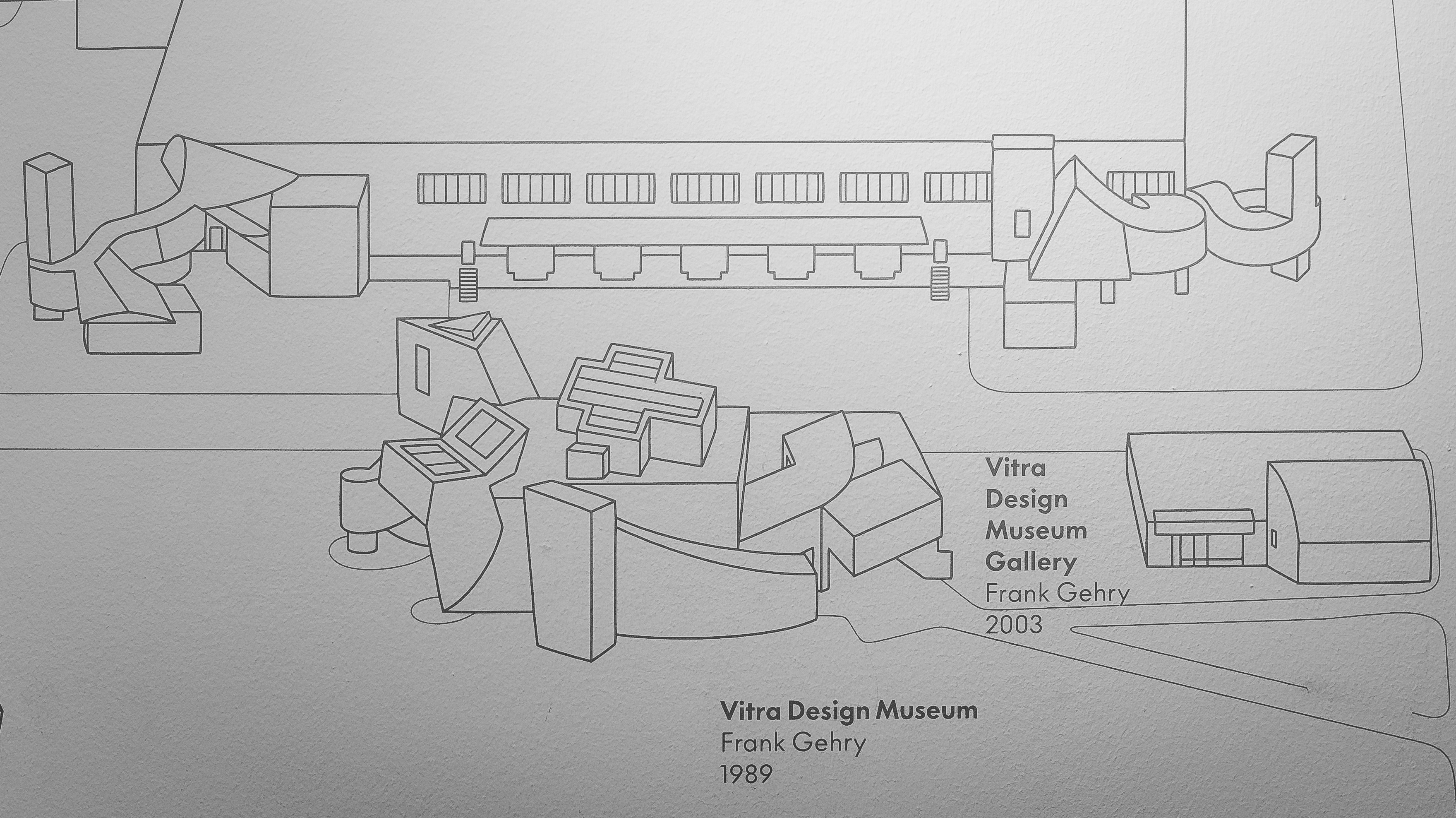
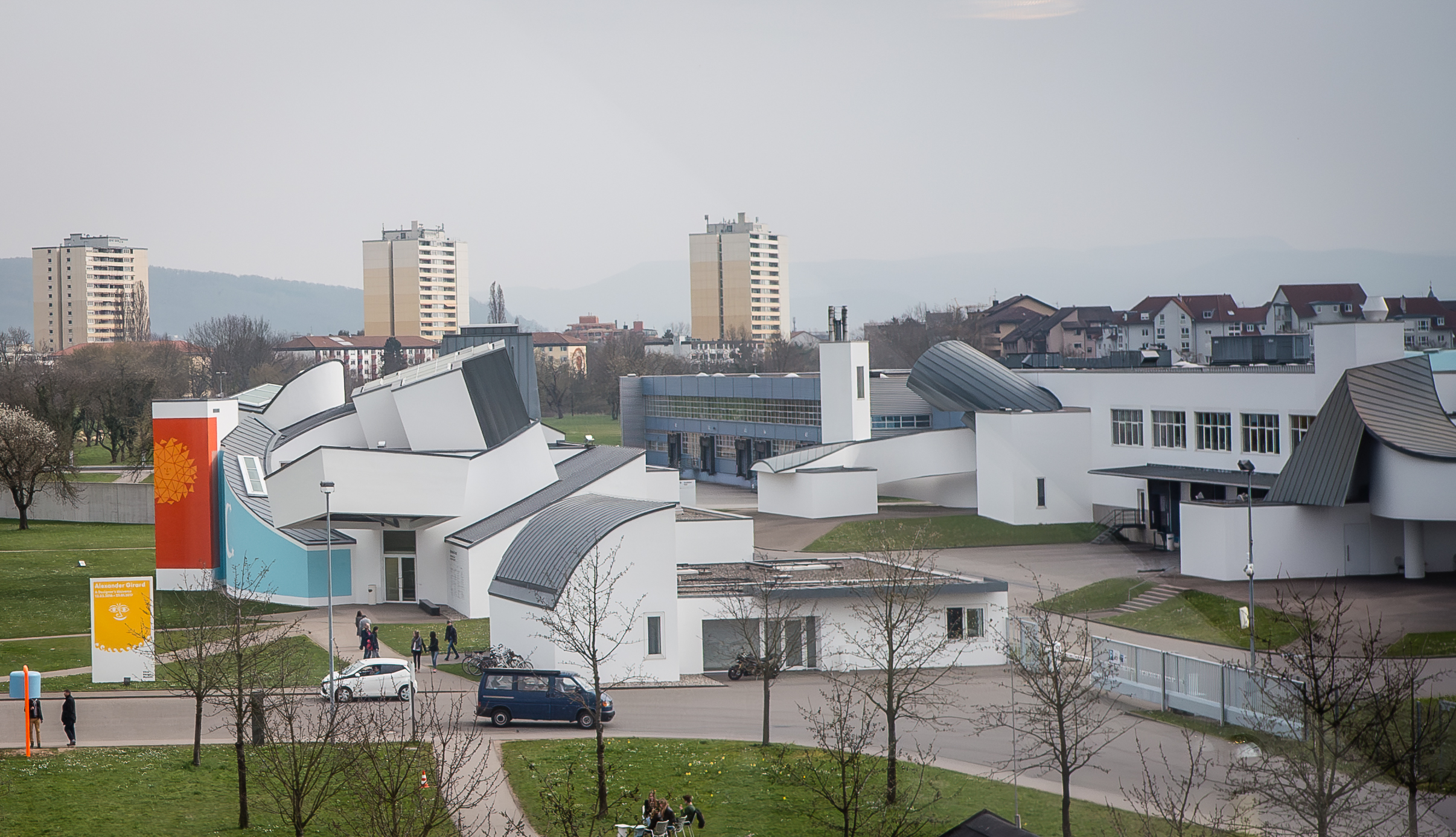
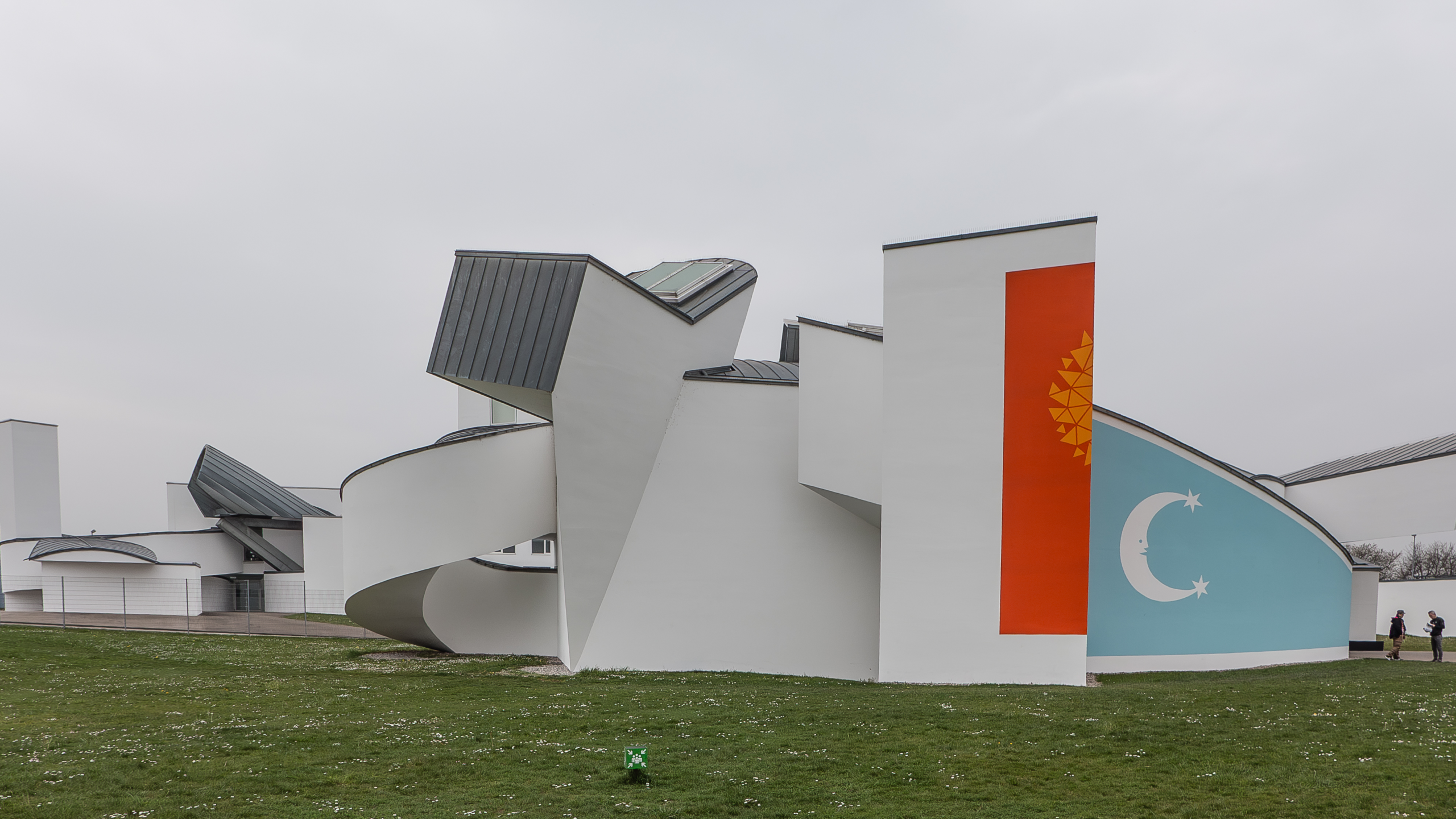
Vitra Design Museum, Weil am Rhein in Germany (1989) – Small museum of white plaster forms and zinc; twisted, intersecting volumes and ramps, often read as one of his key deconstructivist works and his first major European commission.
If you are into design and architecture, the Vitra Campus is one of the most interesting destination to visit. See our various blog posts about the place.
Deconstructivist architecture rejects symmetry and clean boxes in favor of fragmentation, sharp angles, warped forms, and a sense of controlled chaos. It visually disrupts expectations of stability and order, turning buildings into collisions of clashing geometries rather than calm, unified objects.
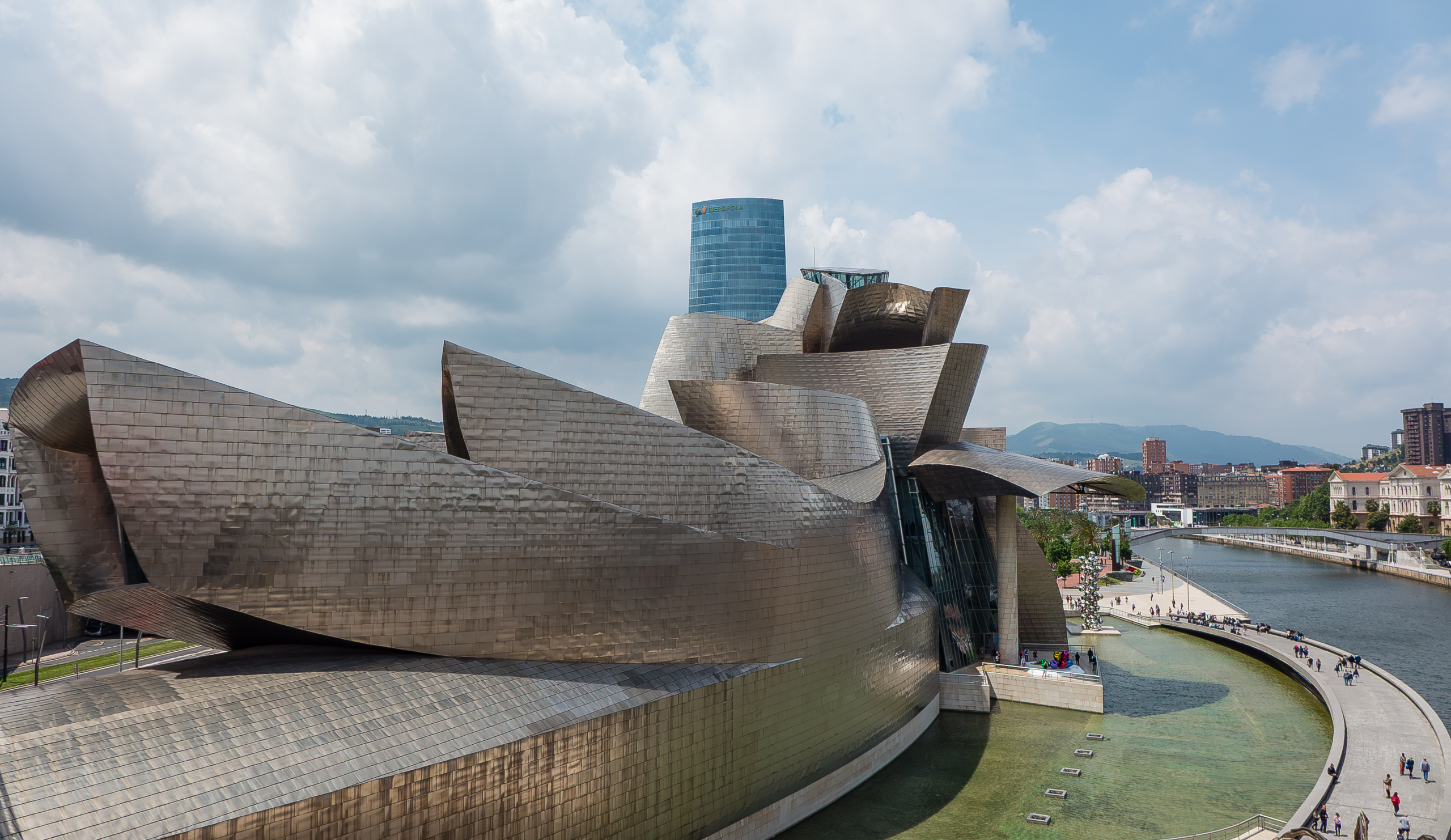
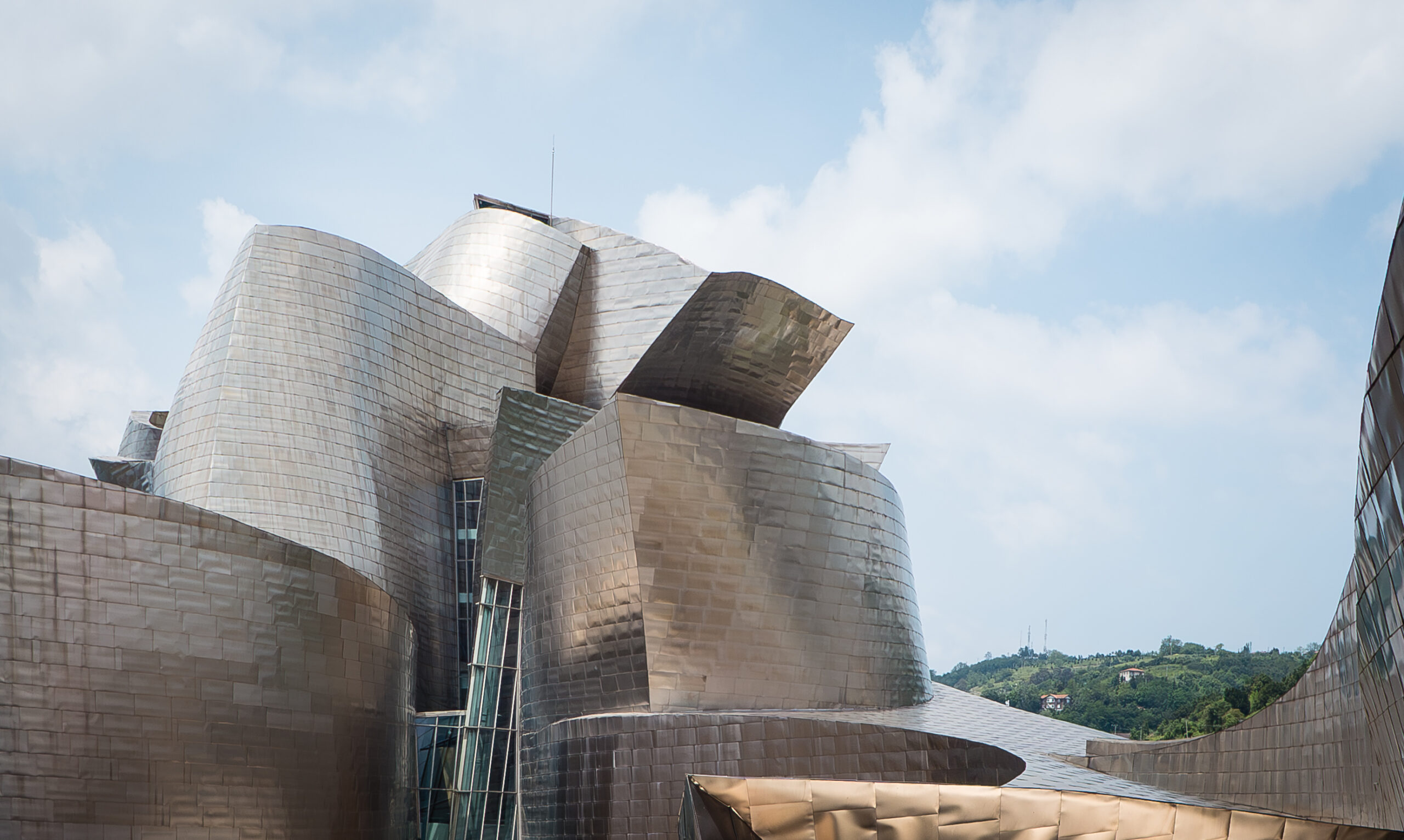
Guggenheim Museum Bilbao, Spain (1997) – Titanium-clad, sweeping forms wrapped around river and city; usually treated as the emblem of late-20C deconstructivism and catalyst of the “Bilbao Effect” (cultural building as urban economic engine). See also the building’s plan on this post’s cover,
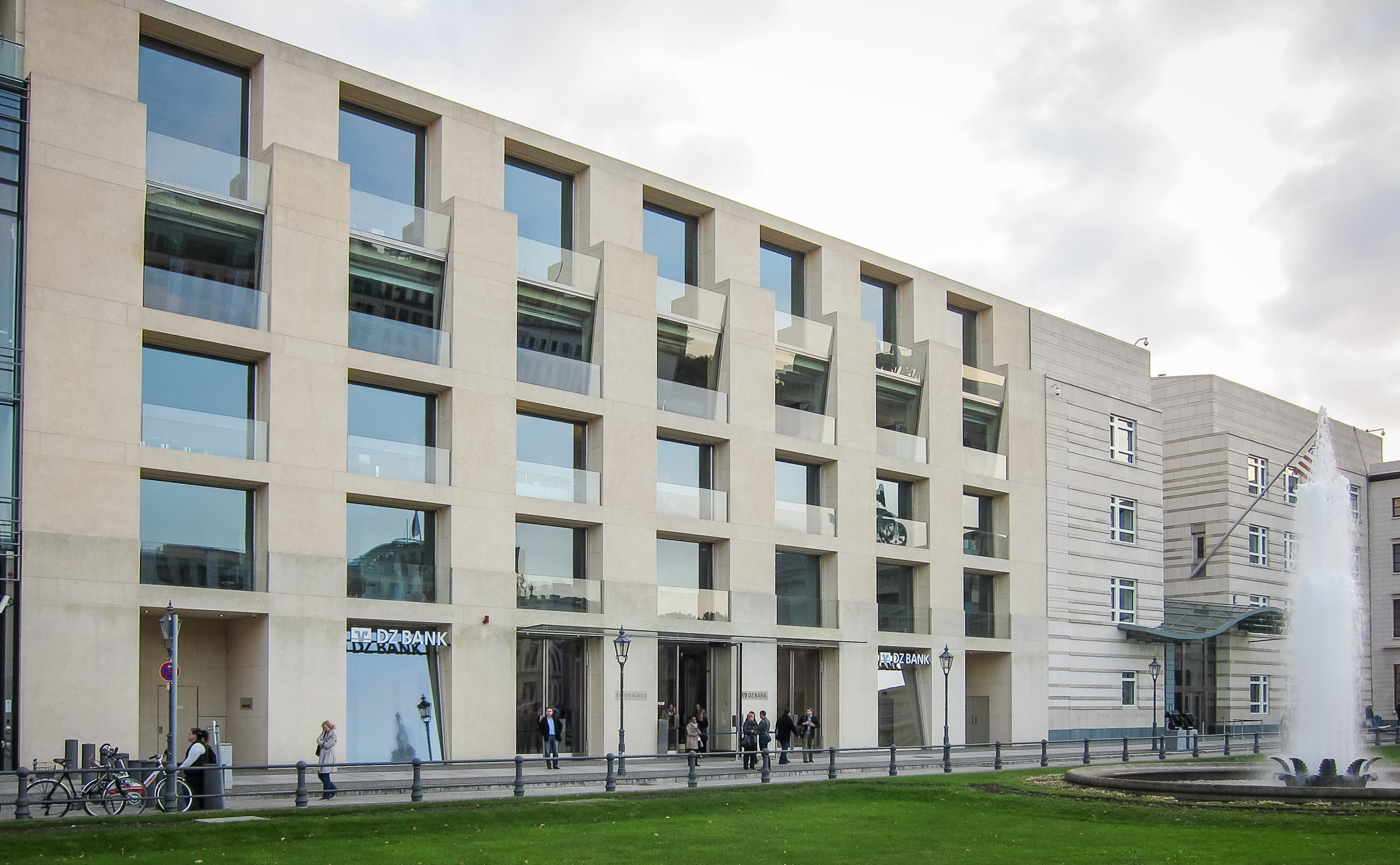
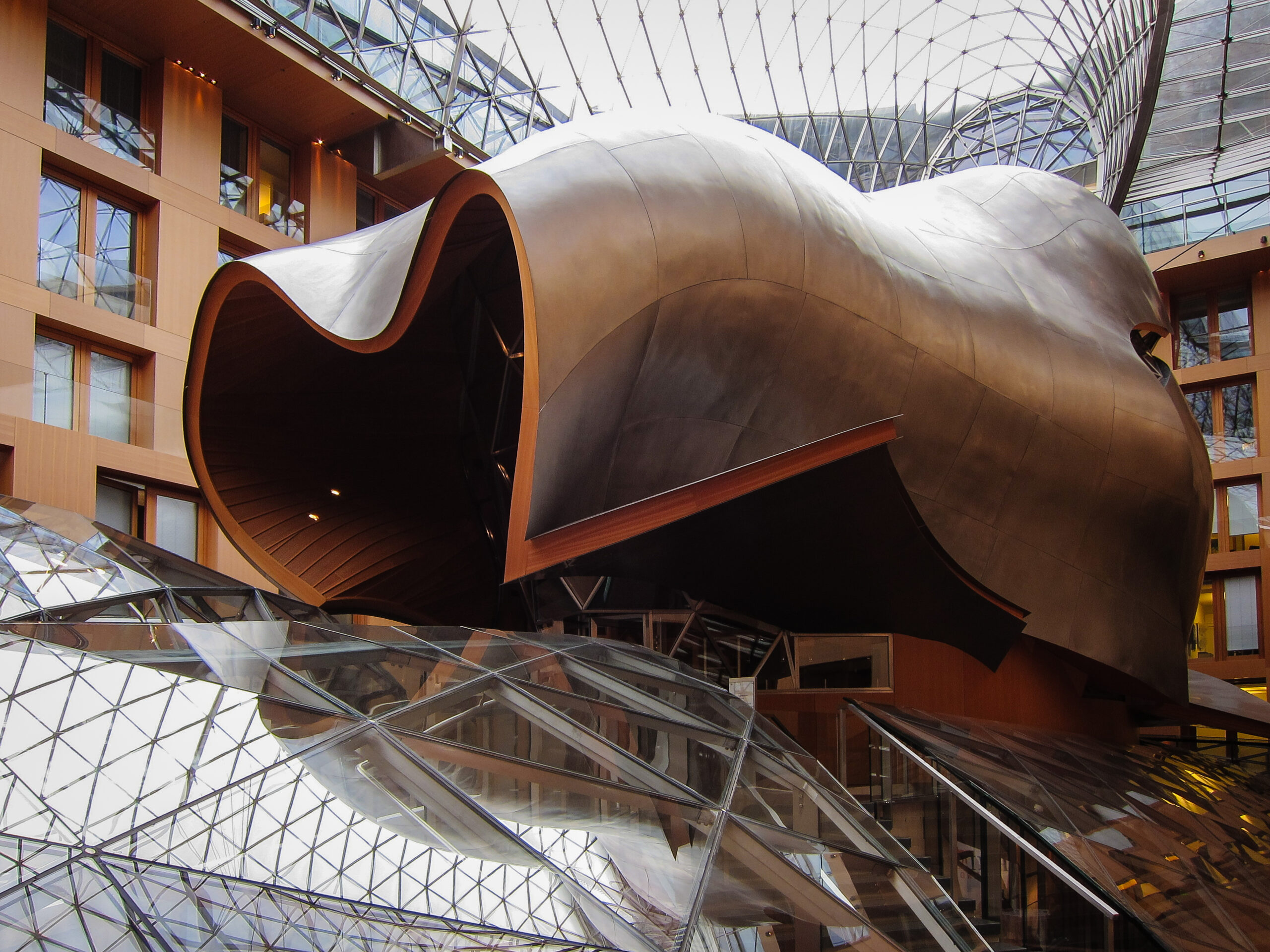
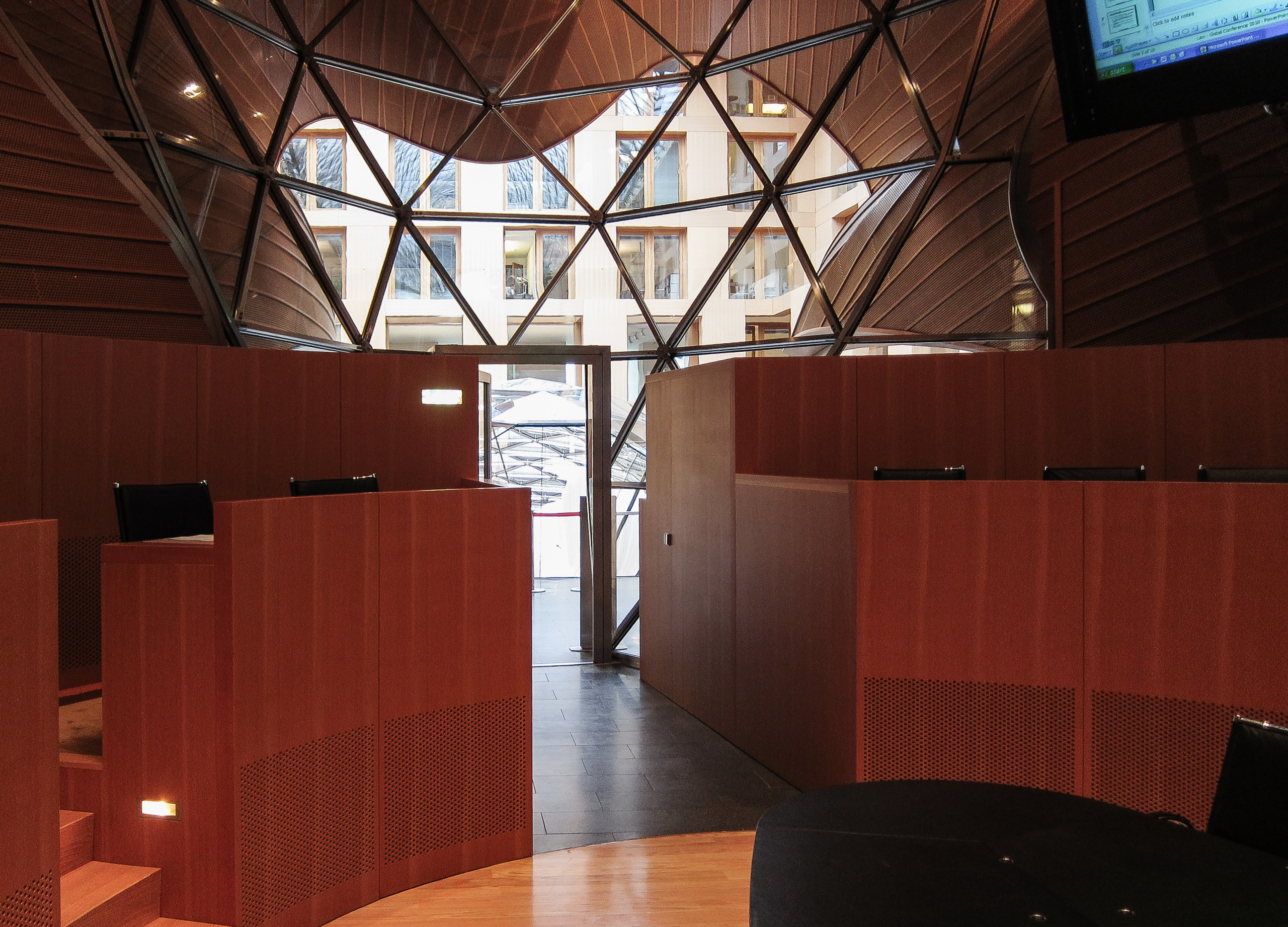
DZ Bank, Berlin (2001) – The building presents a quiet, respectful stone shell facing the Brandenburg Gate but inside, it habors an extravagant, metallic “creature” spewing faceted glass-and-steel over the interior courtyard.
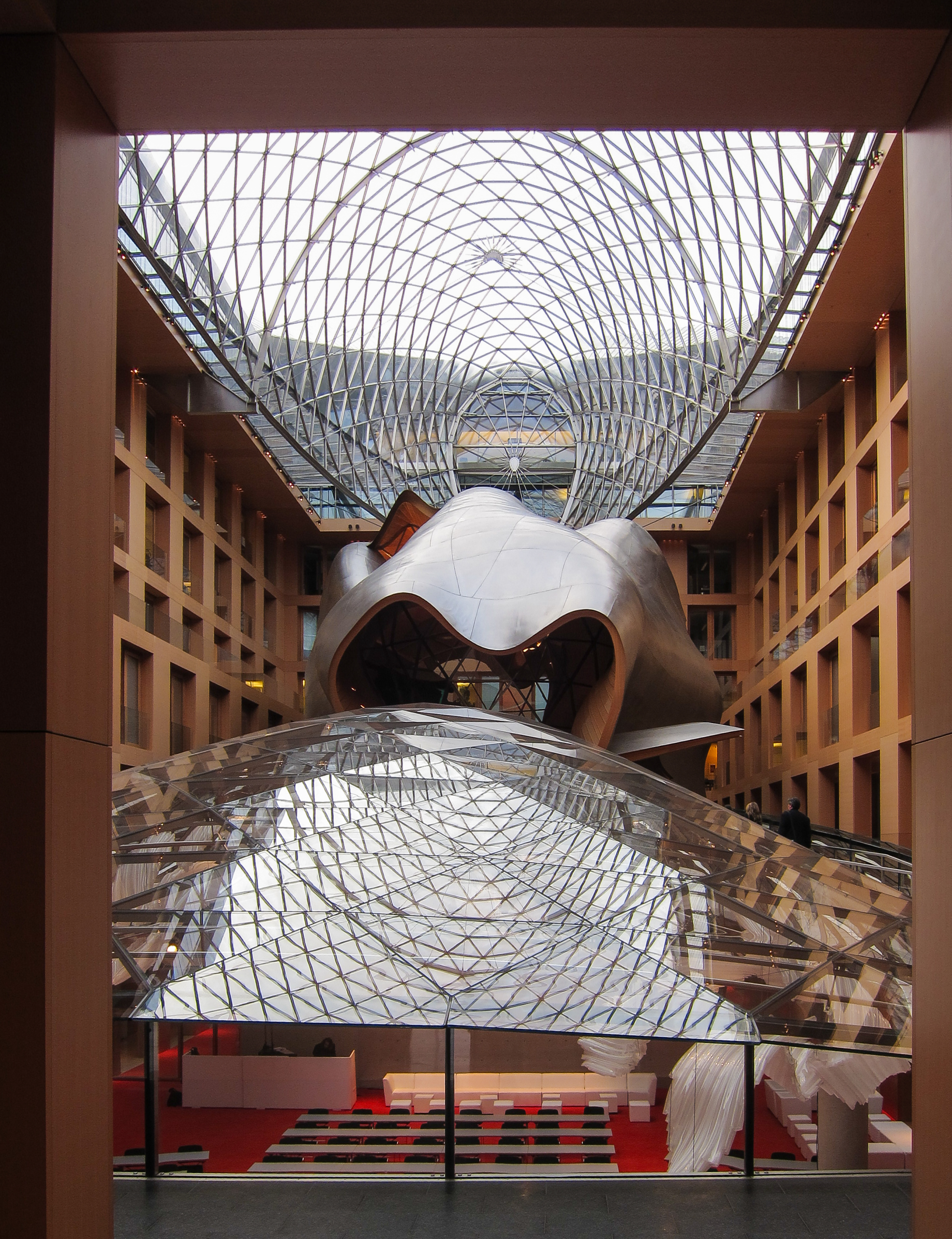
I (Chris) had a full-day meeting in this building and a chance to experience the architecture. Inside the mouth of the creature is a conference room! See our post about this building here.
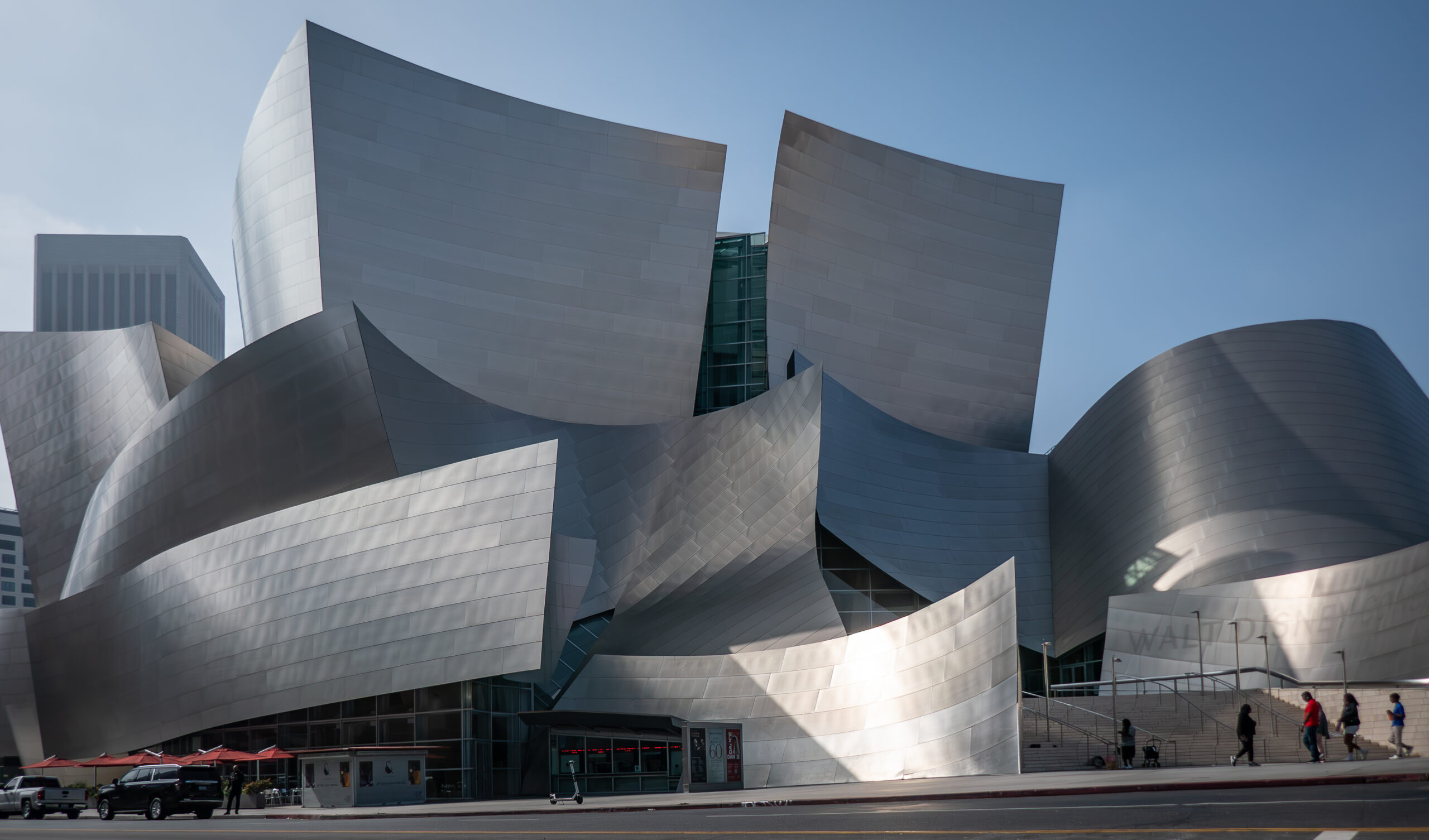
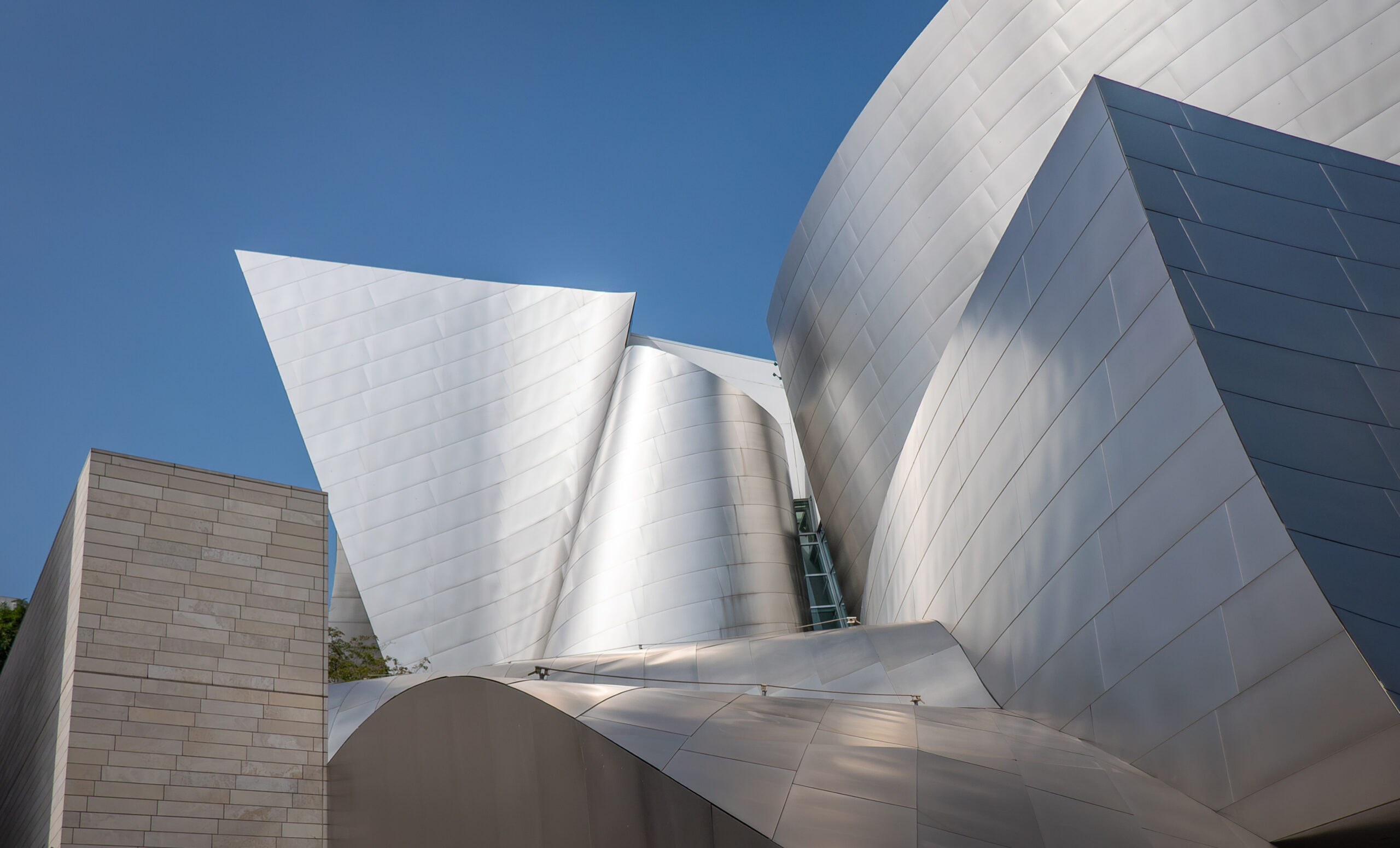
Walt Disney Concert Hall, Los Angeles (2003) – a series of sweeping stainless-steel “petals” that catch and bend the light, wrapping around the building in fluid, overlapping arcs, more unified and lyrical than Guggenheim Bilbao. We wandered into it on our way to the Broad Museum next door.
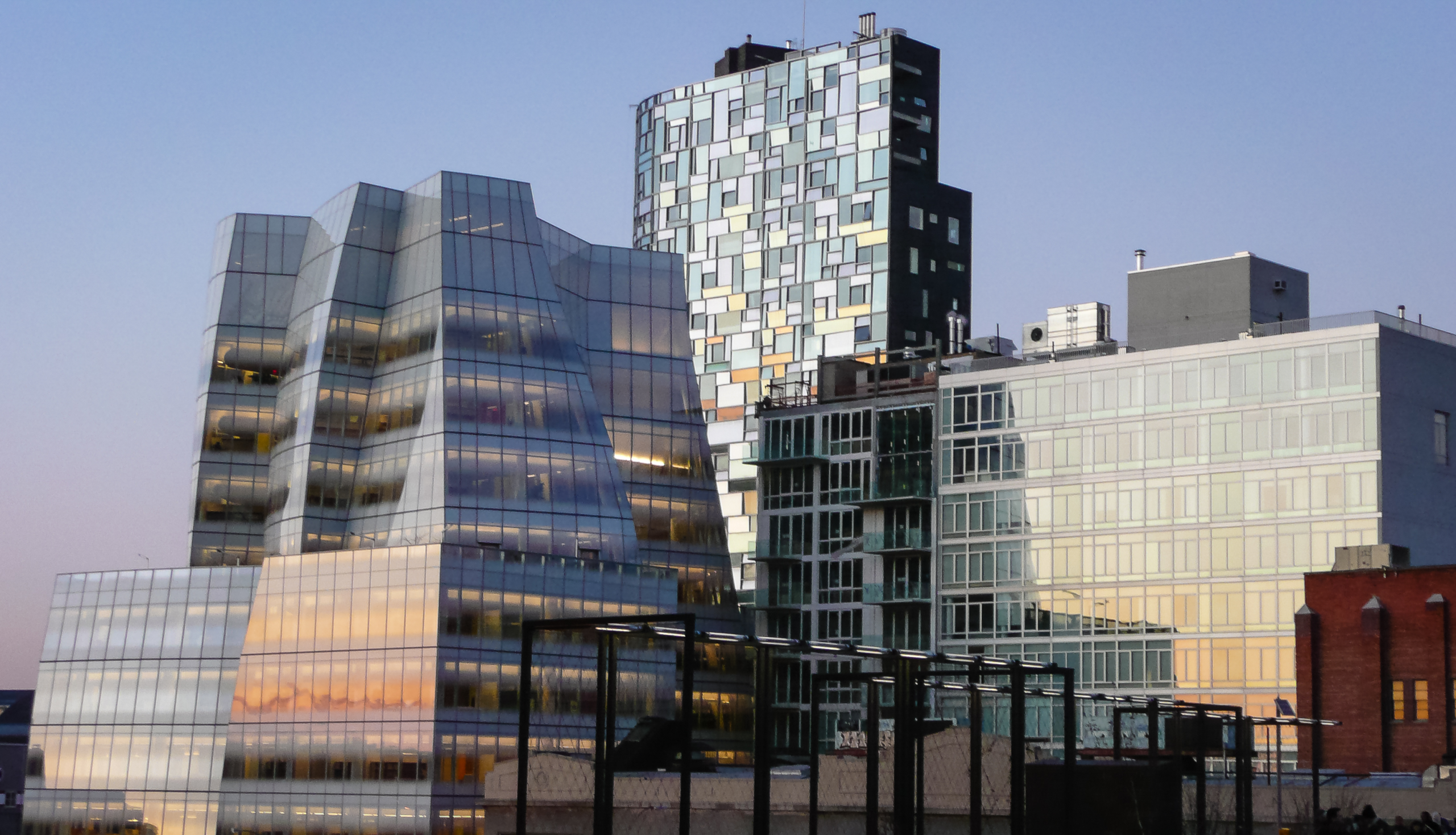
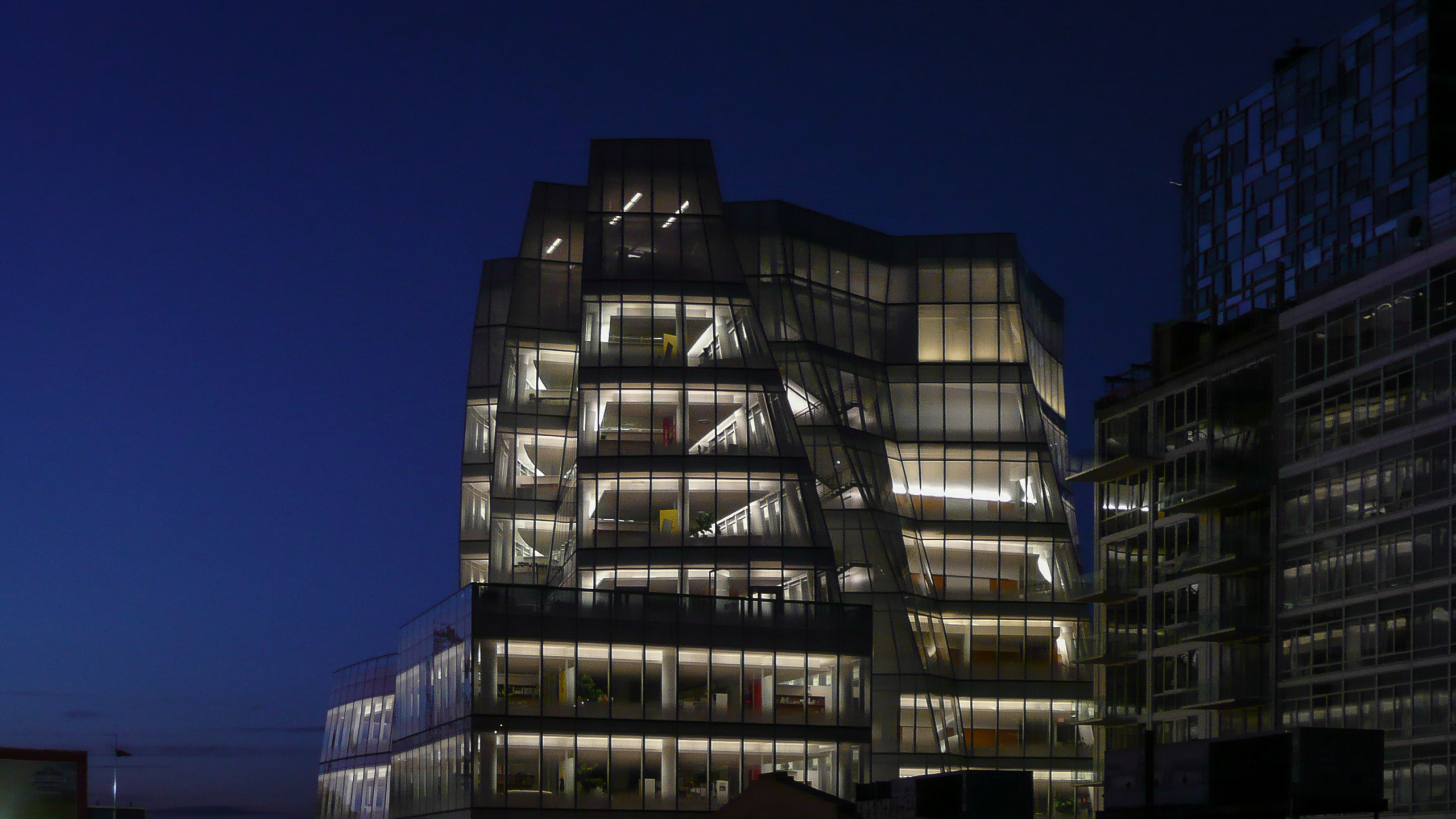
IAC Building, New York (2007): A low, nine-story office block with curving, sail-like translucent glass façade on the West Side Highway. These photos were taken from the High Line.
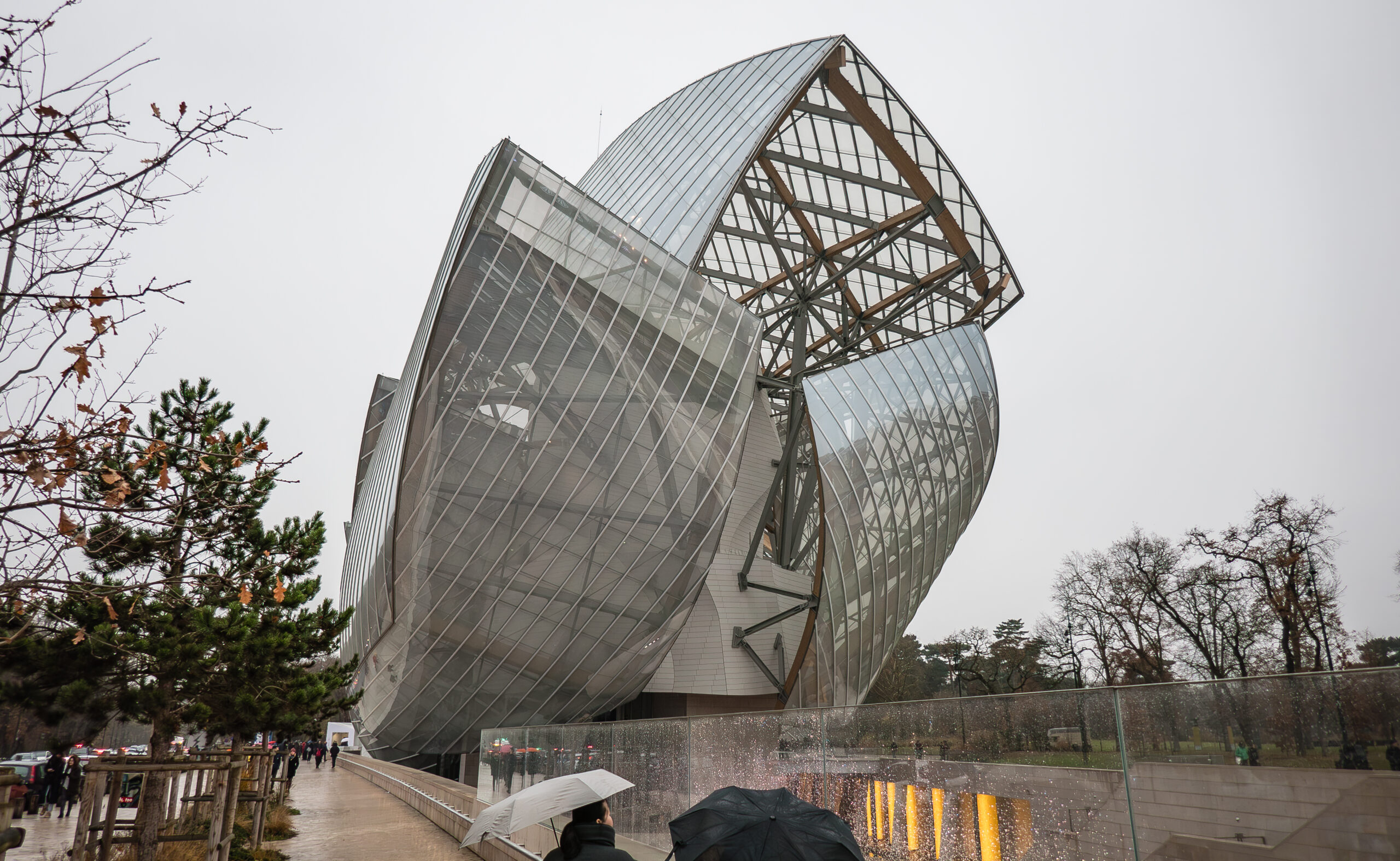
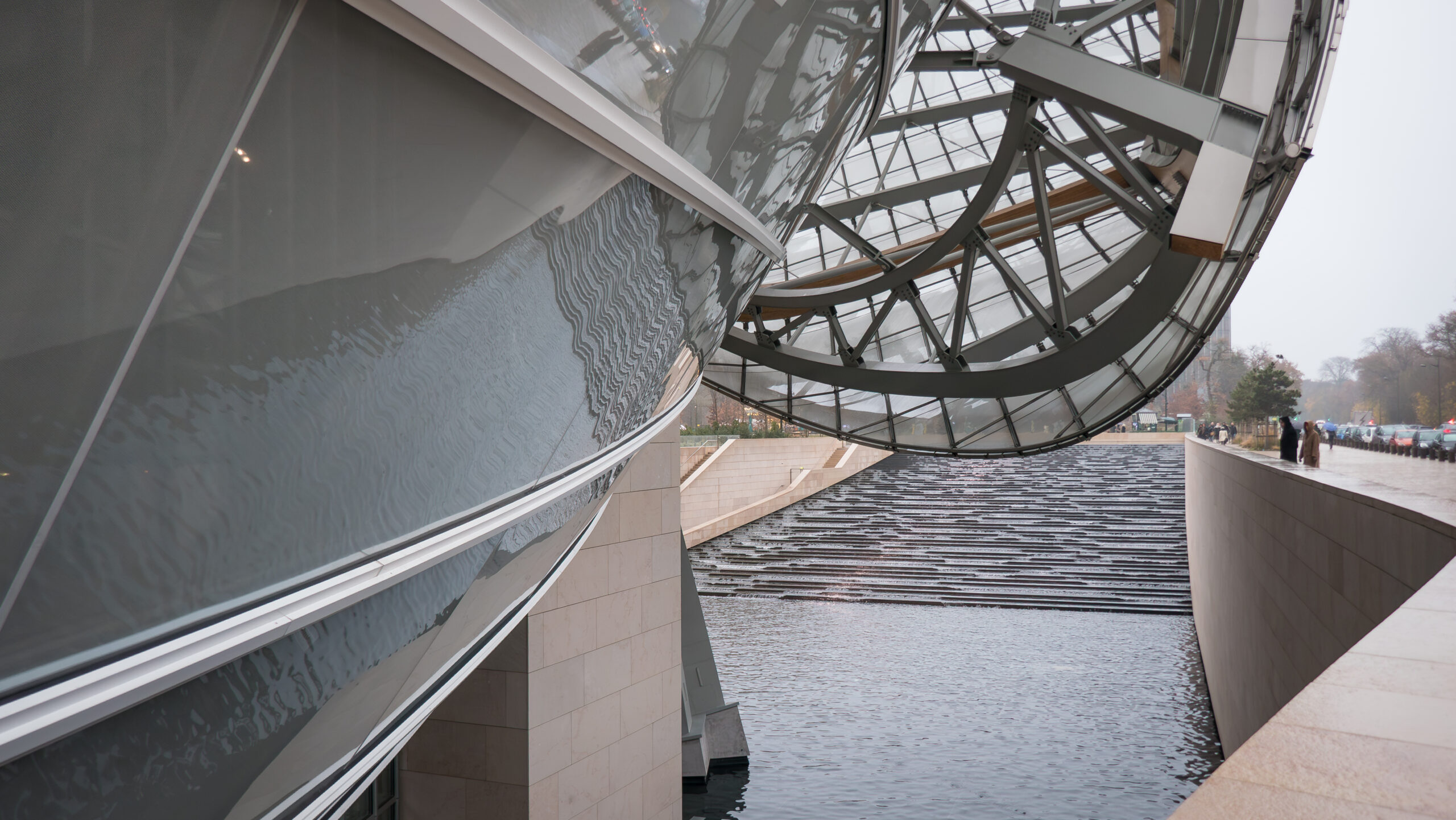
Fondation Louis Vuitton, Paris (2014) – White concrete galleries wrapped in twelve huge curved glass “wings” emphasizing transparency, and reflections. The site features a gentle stream of water that slips quietly over a series of steps and into the building.
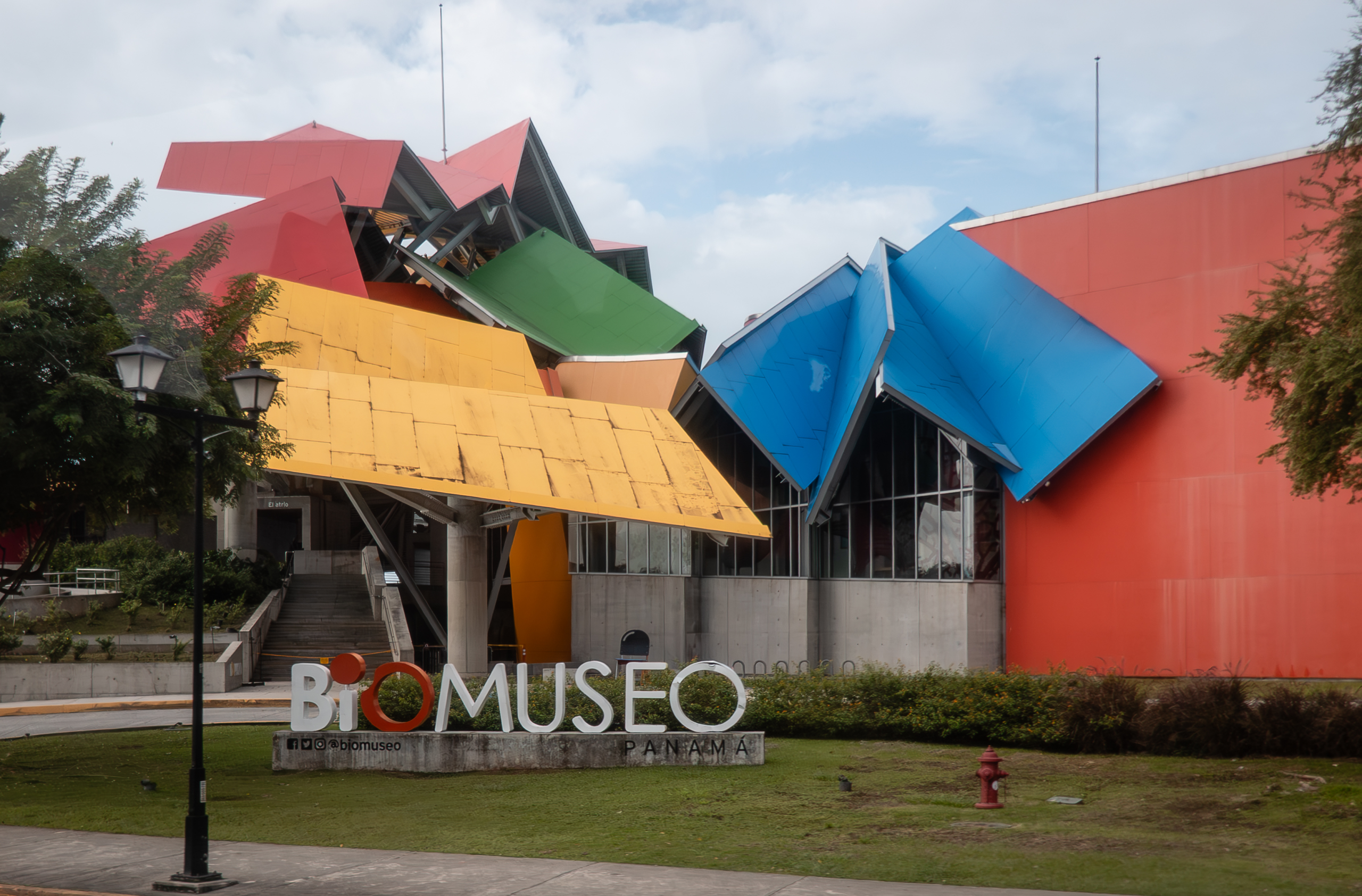
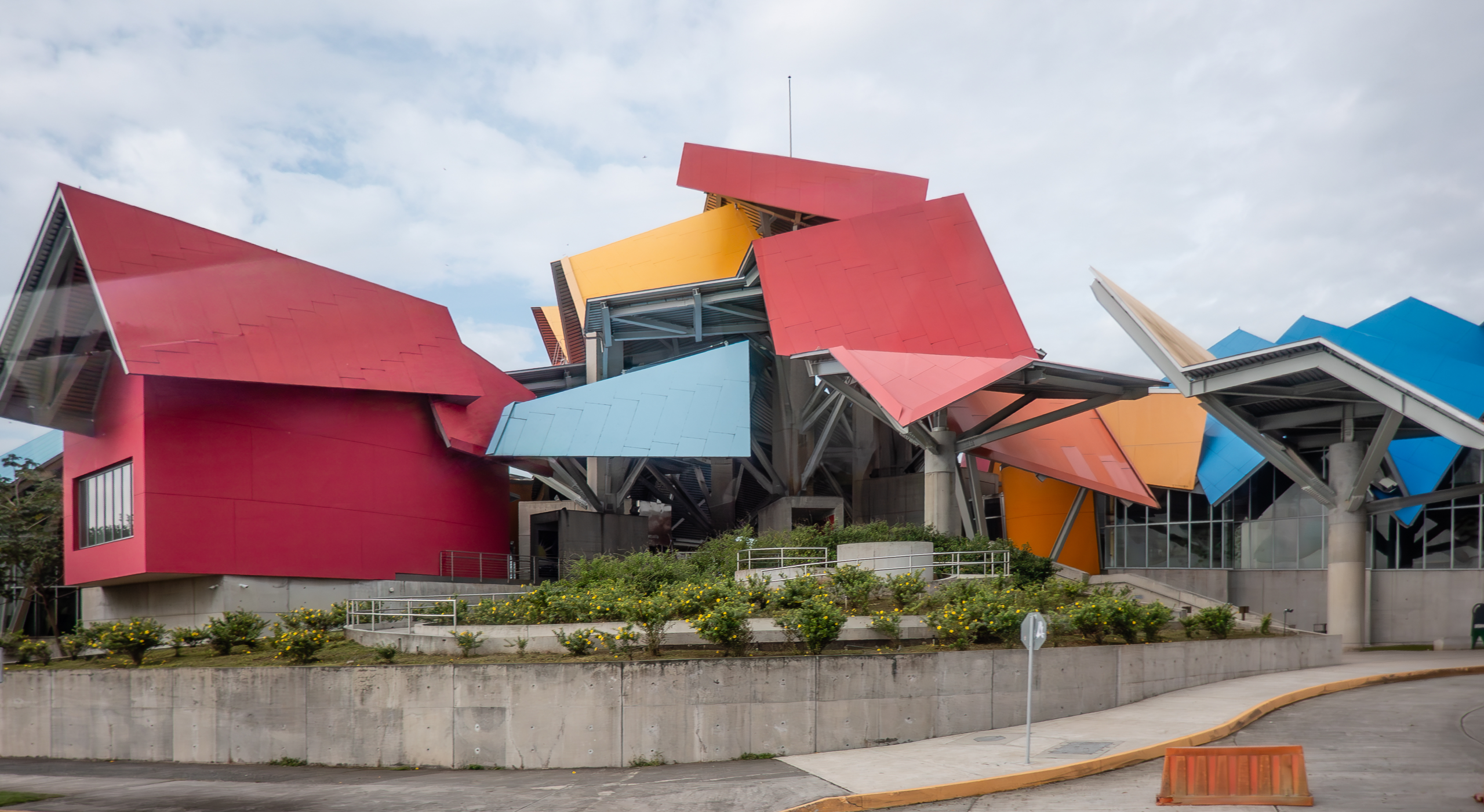
Biomuseo, Panama City (opened 2014) – A museum with brightly colored, sharply folded roofs; more planar and graphic than Bilbao, but still fragmented and sculptural.
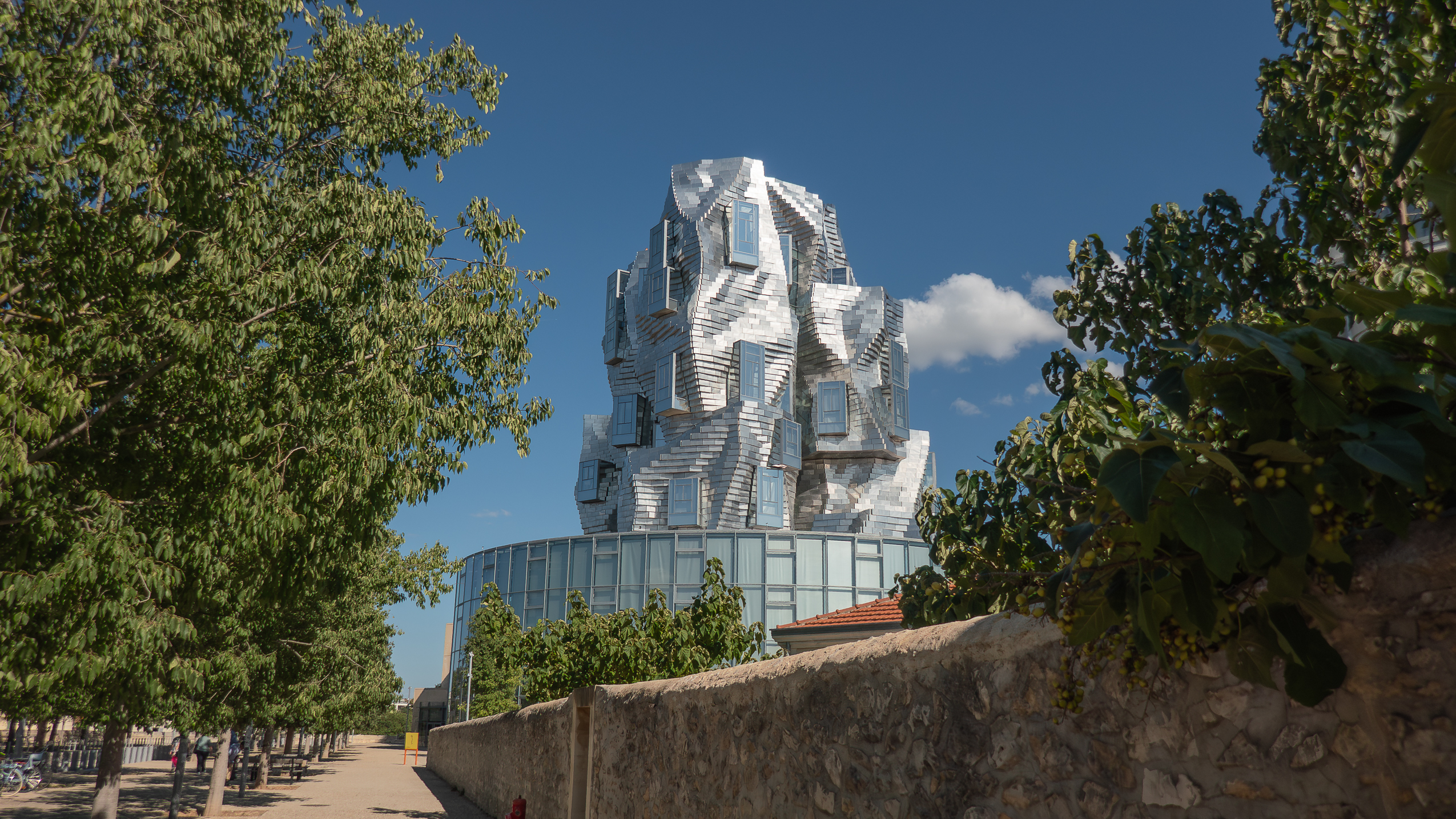
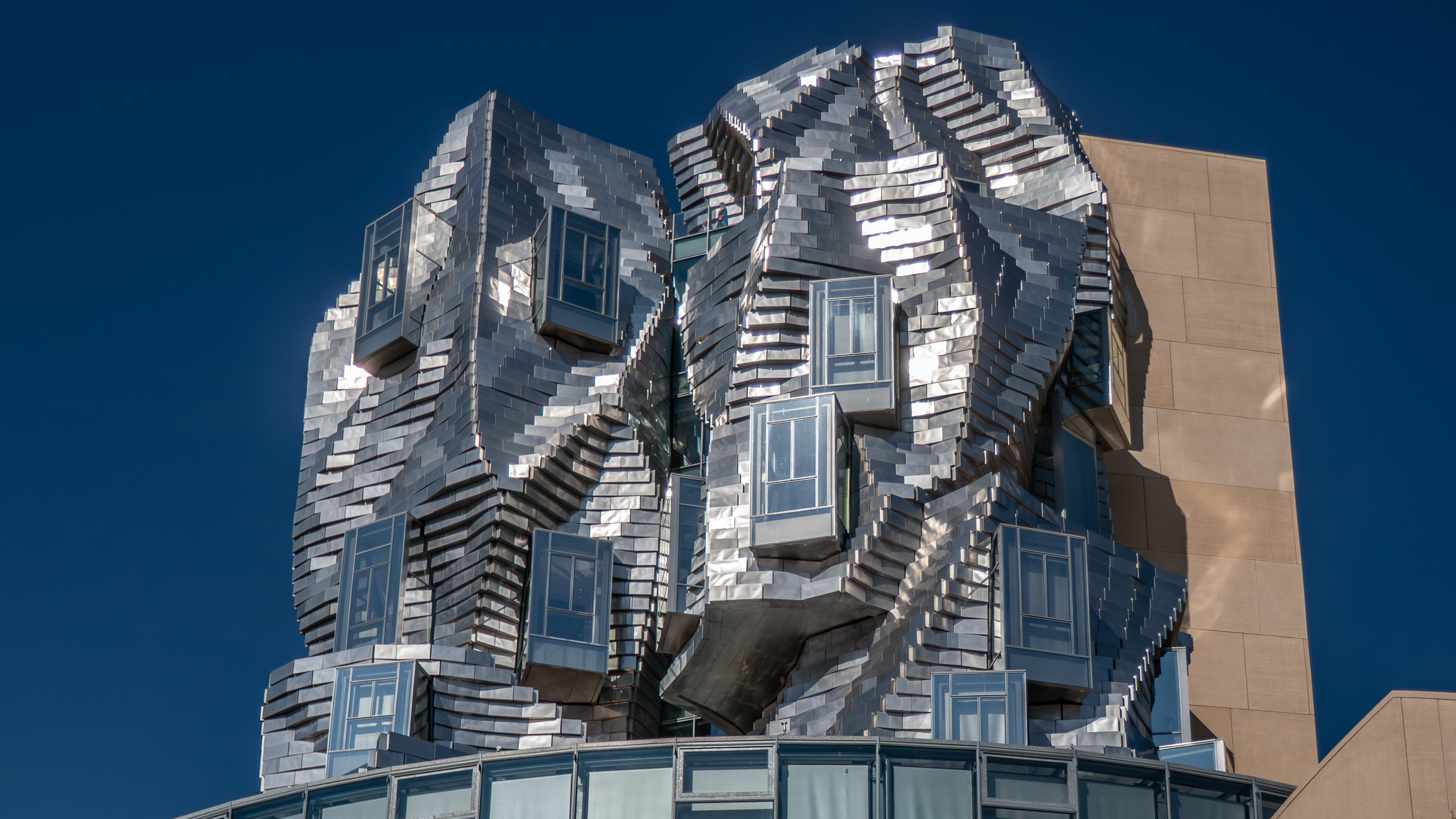
LUMA Arles, France (2021): A crumpled stainless-steel tower rising from a circular glass base, with a fractured, rock-like surfaces catching the light like an alien craft landing in the old Provençal town. See our post about this building here.
Gehry received the top award in his field, the Pritzker Architecture Prize, in 1989. The jury praise was that “juxtaposed collages of spaces and materials” and a “restless spirit” made his buildings a distinctive expression of contemporary society.
All photos © Chris and Sue 2025, all rights reserved.