

In 2025, Aix-en-Provence is honoring its most famous resident, Paul Cézanne, with citywide celebrations aimed at restoring him to the heart of his beloved hometown. We visited the centerpiece of these events—the international Cézanne au Jas de Bouffan exhibition at the Musée Granet. The other events include the reopening of the Cézanne family home (Jas de Bouffan) and his final studio (Atelier des Lauves).
Enjoy some music while browsing.

The exhibition ran from June 28 to October 13. We were there in August.
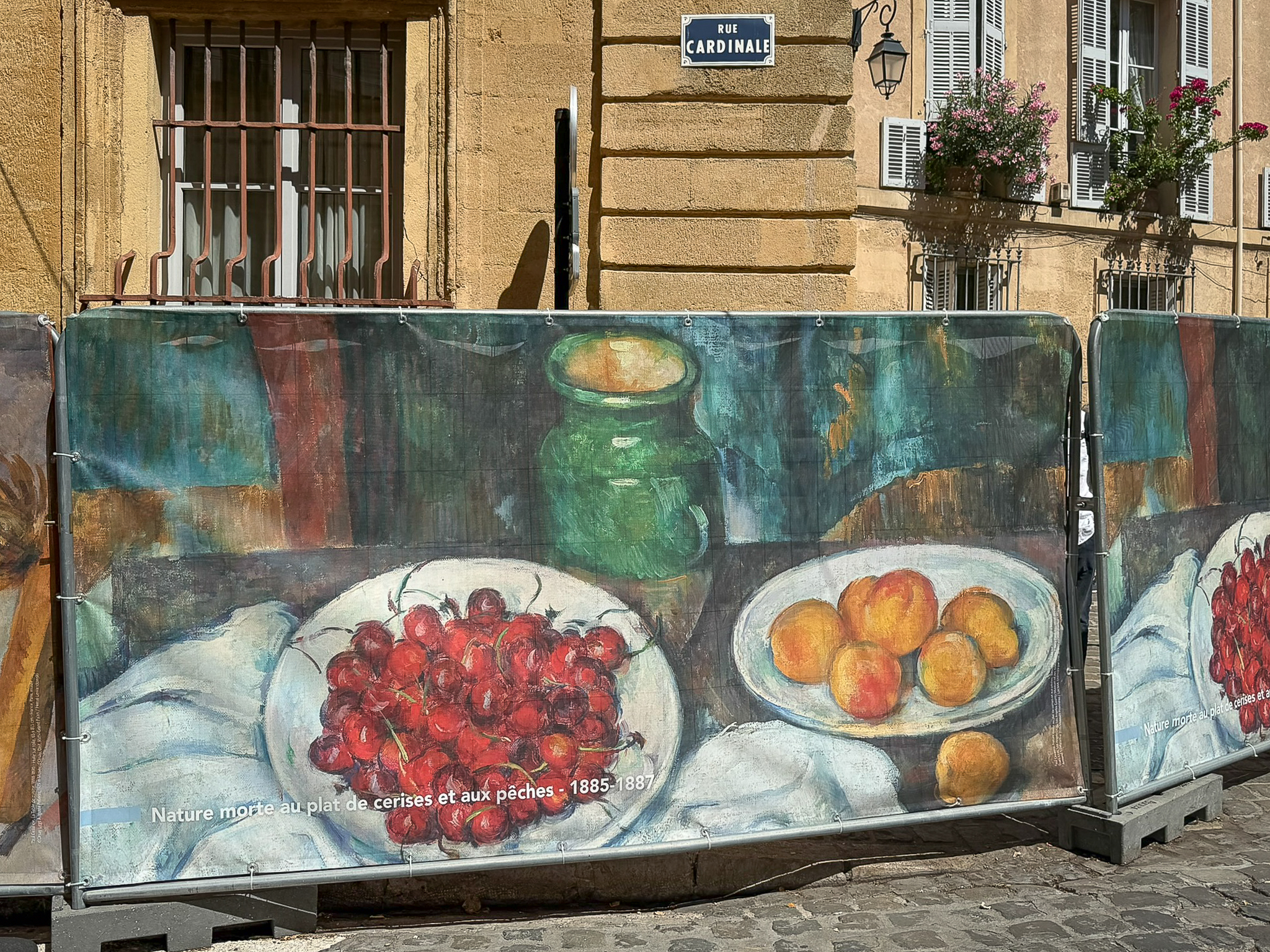
Anticipating large crowds, the Musée Granet closed nearby streets to make space for visitors waiting in line for their reserved entry times.
The museum was formerly the free school of drawing where Cezanne was enrolled in 1857.
The exhibition brings together 130 masterpieces spanning four decades, tracing Cézanne’s artistic evolution at Jas de Bouffan, his family estate on the western edge of Aix-en-Provence.
Cezanne was born in Aix-en-Provence on January 19, 1839.

The Jas de Bouffan was a testing ground for the young Cezanne who first painted directly onto the walls of the grand salon, before depicting the bastide, its park, his family and friends.
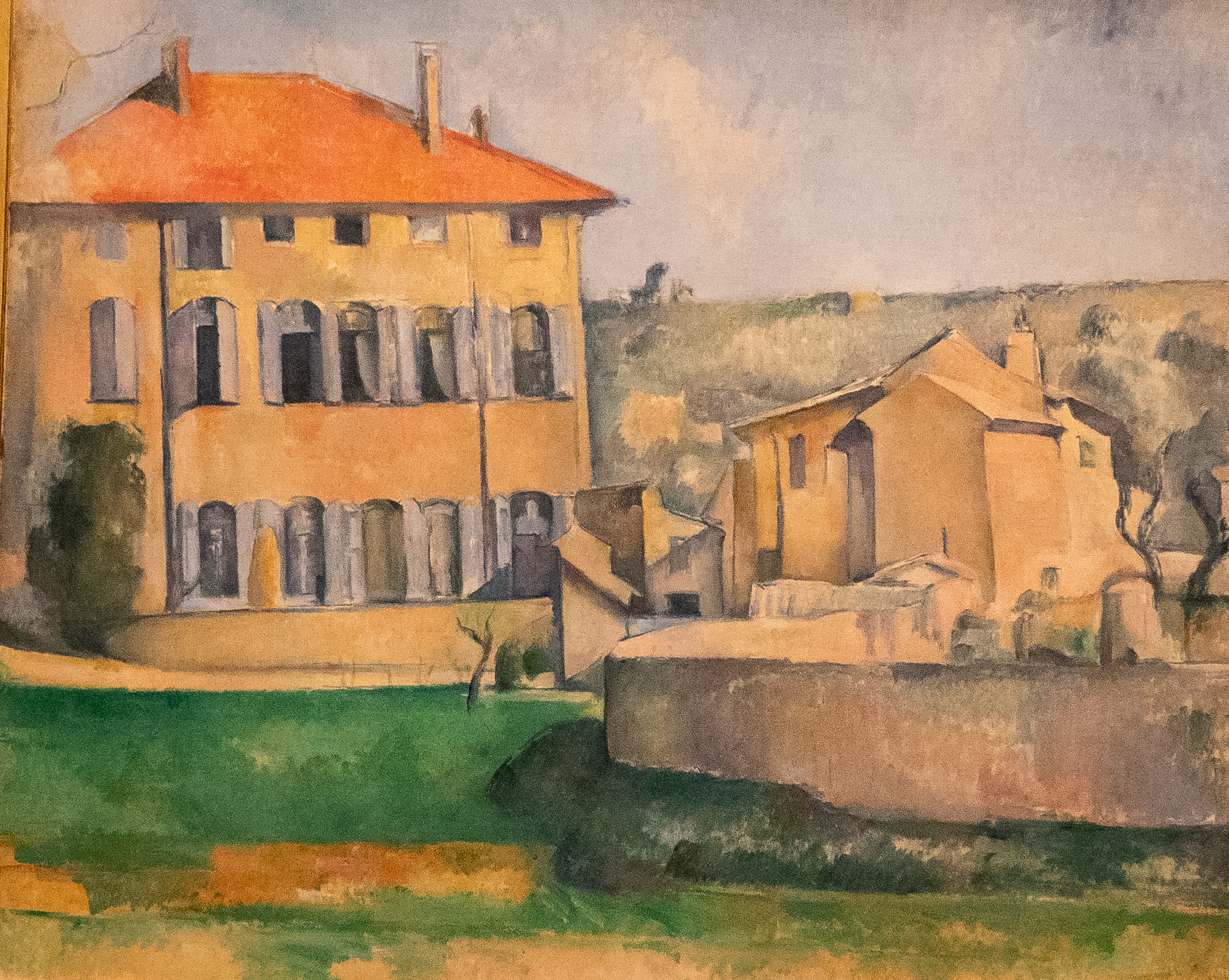
Cezanne’s father, a humble hatmaker and later a successful banker bought the property in 1859.
Maison et ferme du Jas de Bouffan 1885-1887
Through a series of self-portraits, and exploratory works, it offers a rare glimpse into how the artist gradually discovered his true calling.
During 1862-1868, he visited Paris and became friends with Camille Pissarro, he was also friends with Emile Zola. He also met Claude Monet, Edgar Degas, Auguste Renoir and others in cafes popular with avant-garde artists at the time.
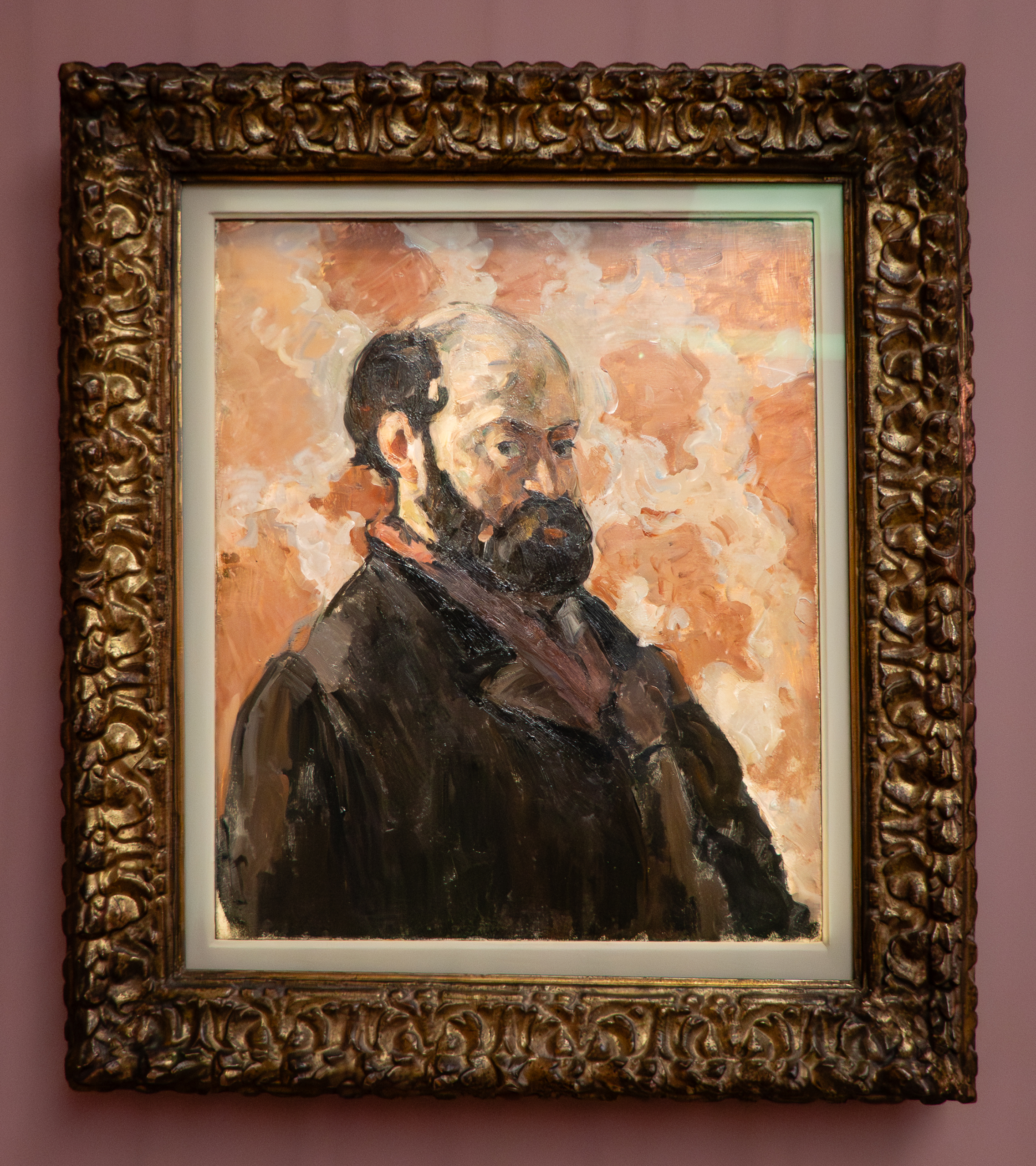

Paul Cézanne is often regarded as the bridge between Impressionism and modern art, laying the groundwork for movements like Cubism and Fauvism.
Bassin et lavoir du Jas de Bouffan 1885–86
His bold approach to color, structure, and perspective redefined how artists saw and represented the world. By breaking forms into geometric shapes and emphasizing the painter’s perception over realism, Cézanne transformed painting into a new kind of visual inquiry—one that continues to shape modern art today.
Les grands arbres au Jas de Bouffan 1885–87
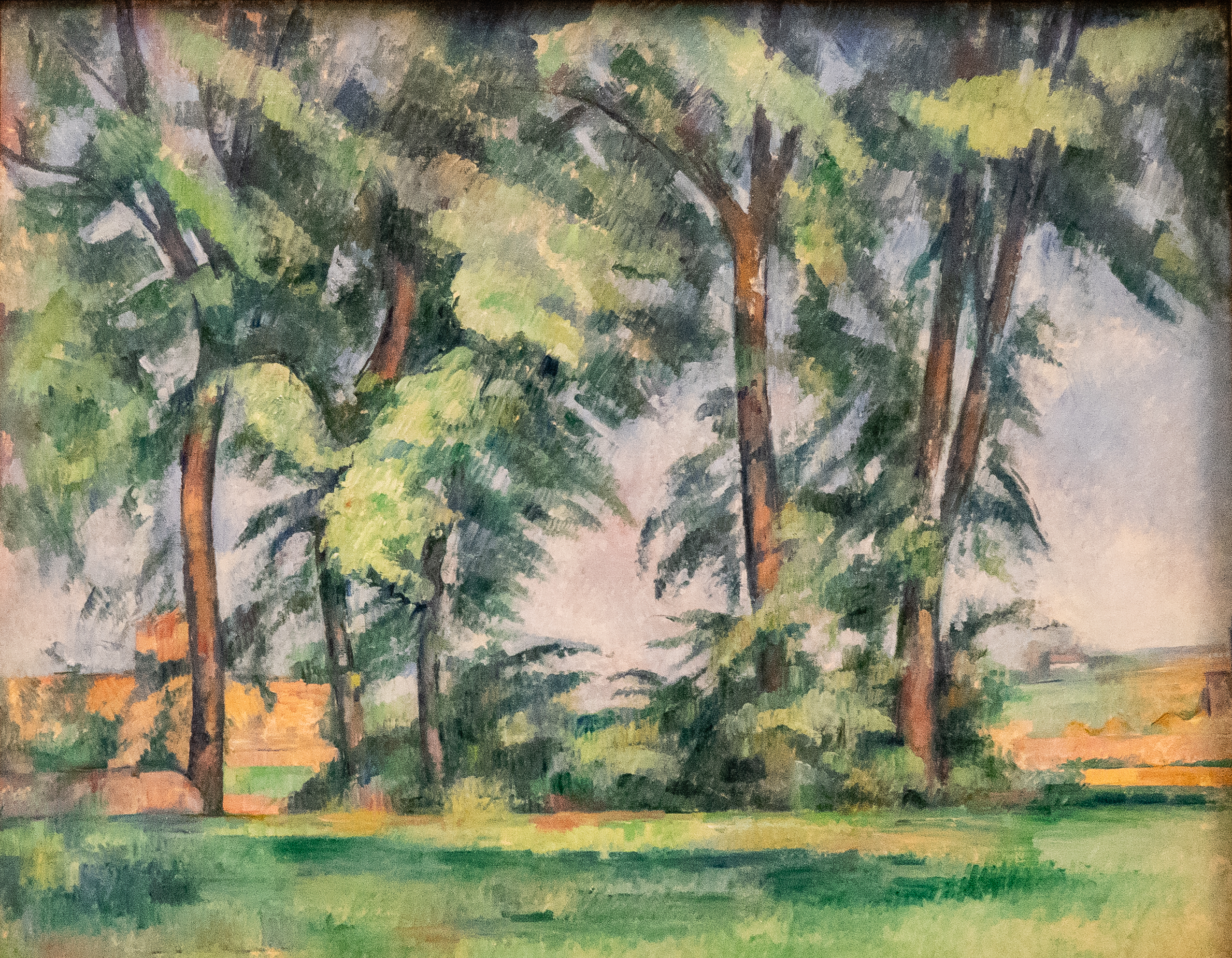
During 1871-1882, Cezanne travelled frequently between Auvers, Pontoise, Valhermeil in the ile-de-France region, l’Estaque, Aix and Marseille, and began his “Impressionist” period.
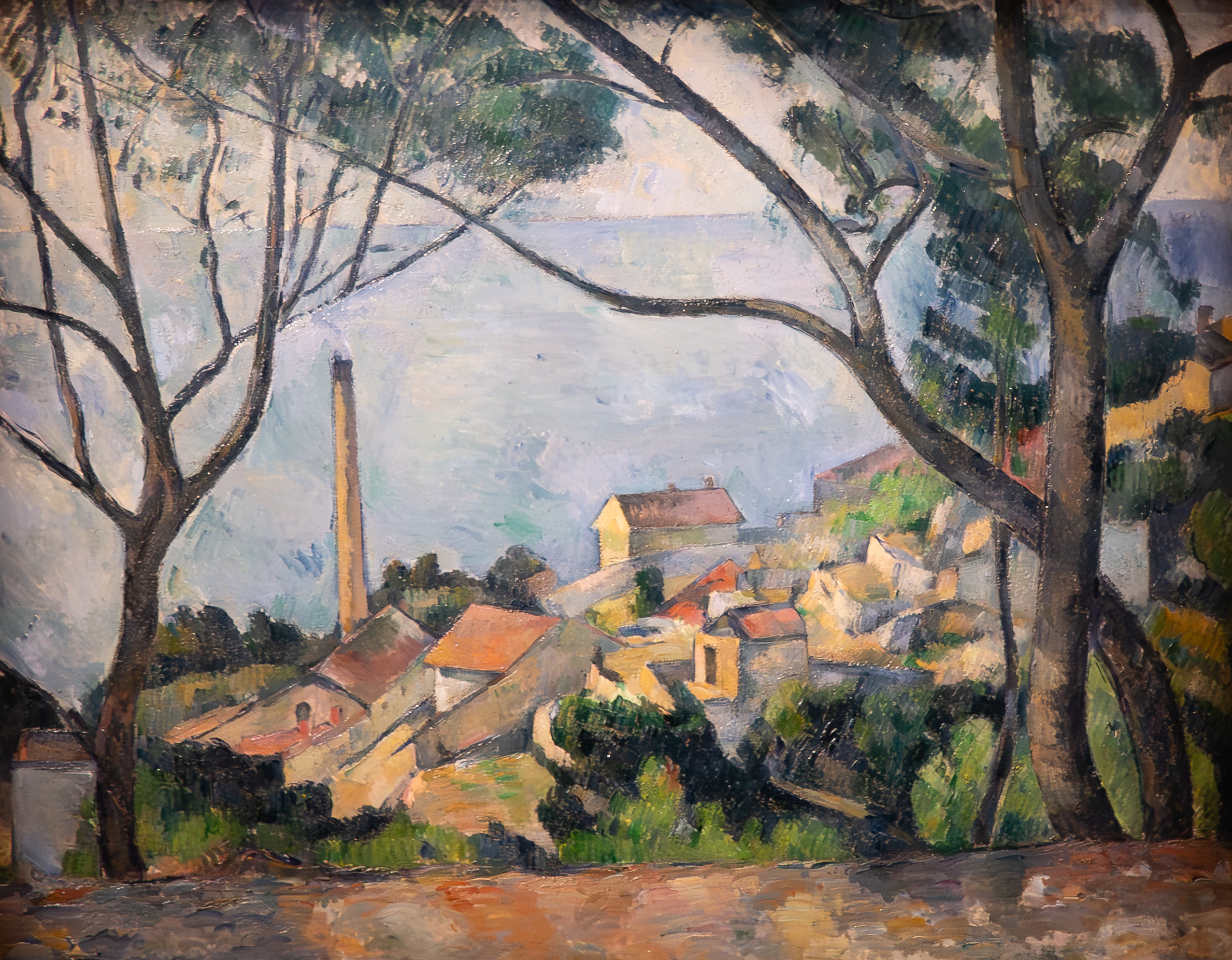
In 1874, he participated in the first independent Impressionist exhibition in the studio pf the photographer Nader on Boulevard de Capucines in Paris, along with 30 or so other young painters, like Monet and Degas.
La Mer à l’Estaque 1878-1879
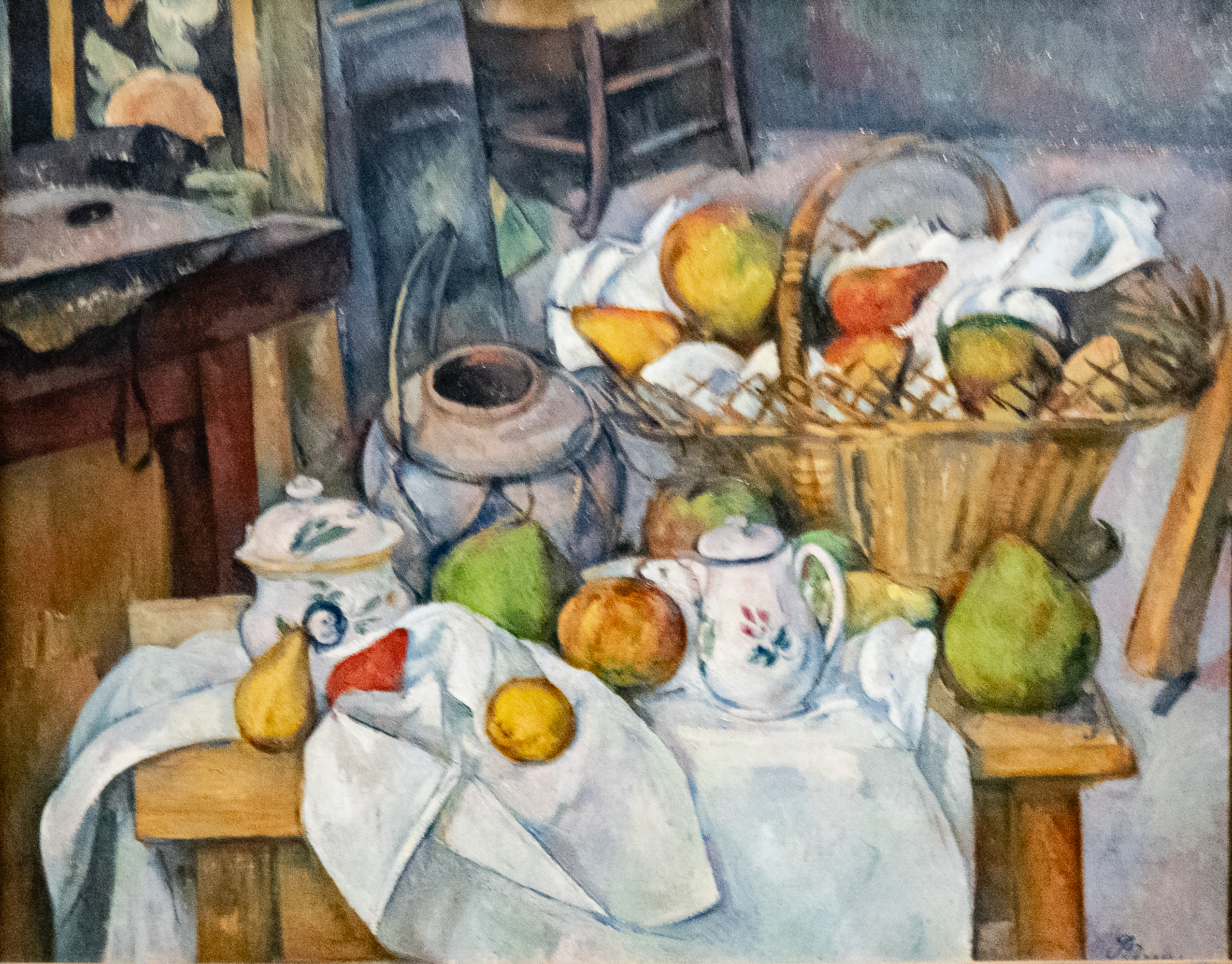
Cezanne experimented with still life painting around the late 1880’s. He distorted dimensions, ignored the classical laws of perspective and reinvented how light falls on objects.
La Table du Cuisine 1888-1890
During 1882-1891, the Jas de Bouffan became central to his life again.
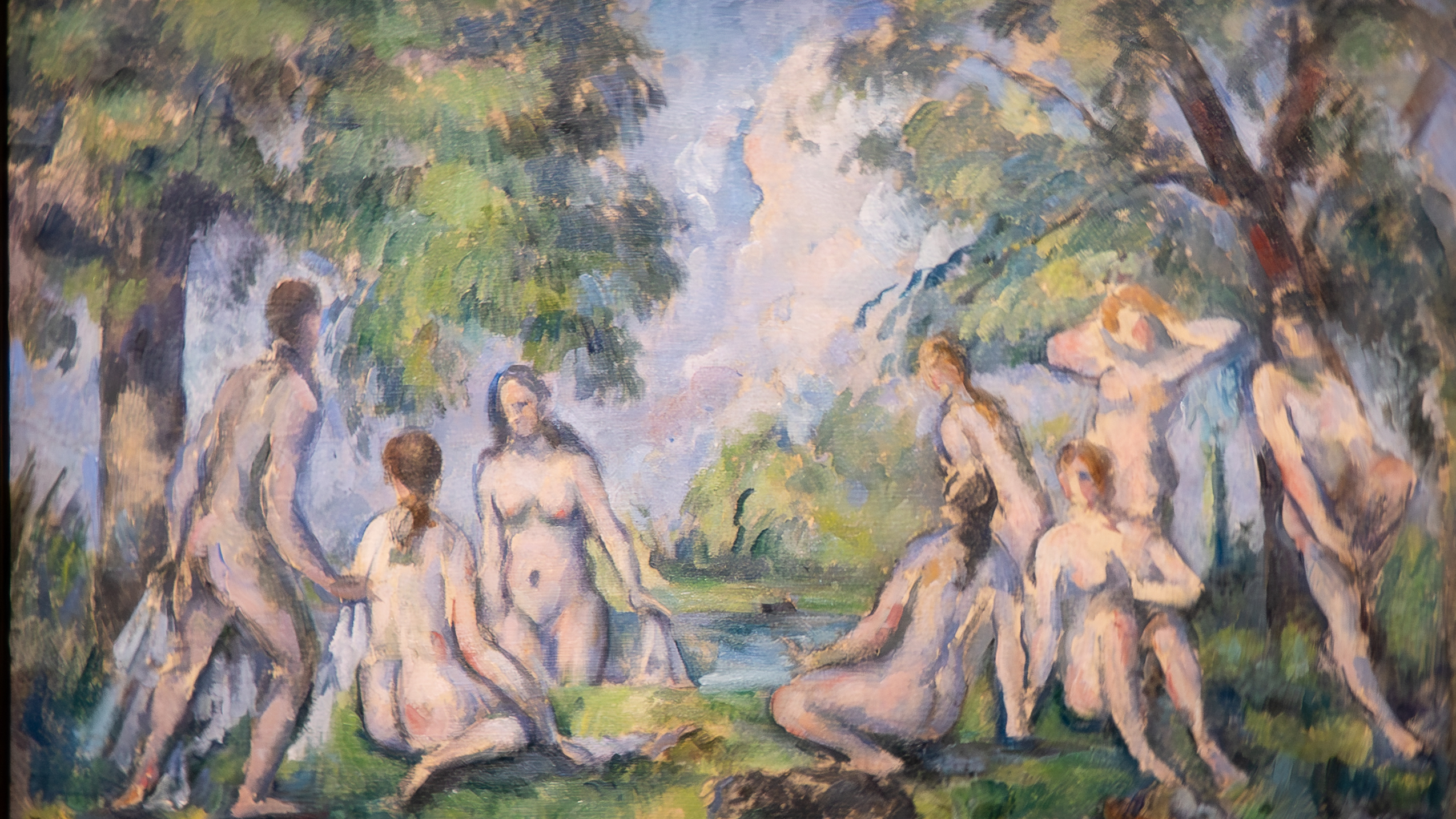
The image of women bathing beneath trees in a meadow preoccupied Cezanne as he made at least 30 small sketches that never left his studio.
Baigneuses et baigneurs 1899-1904
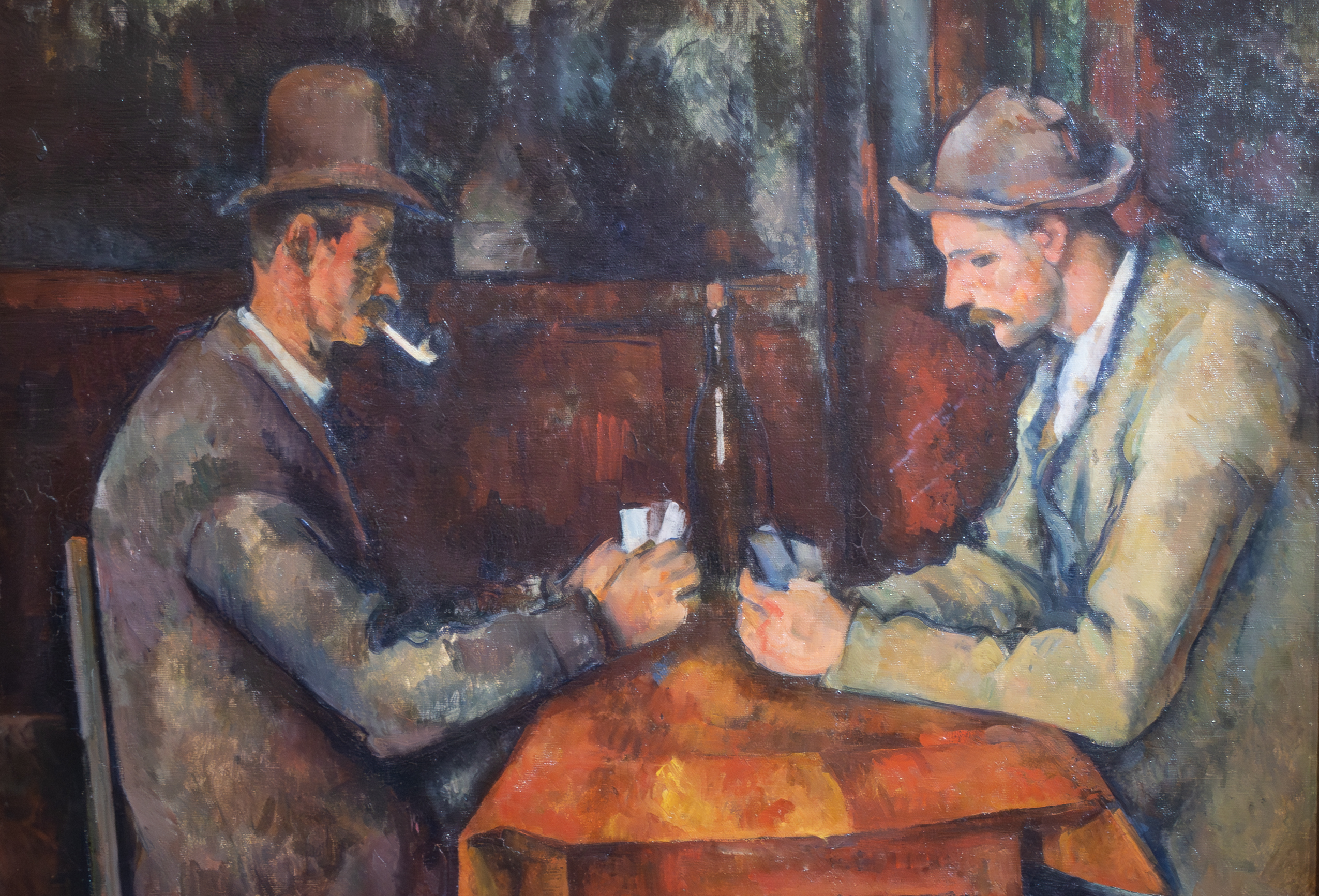
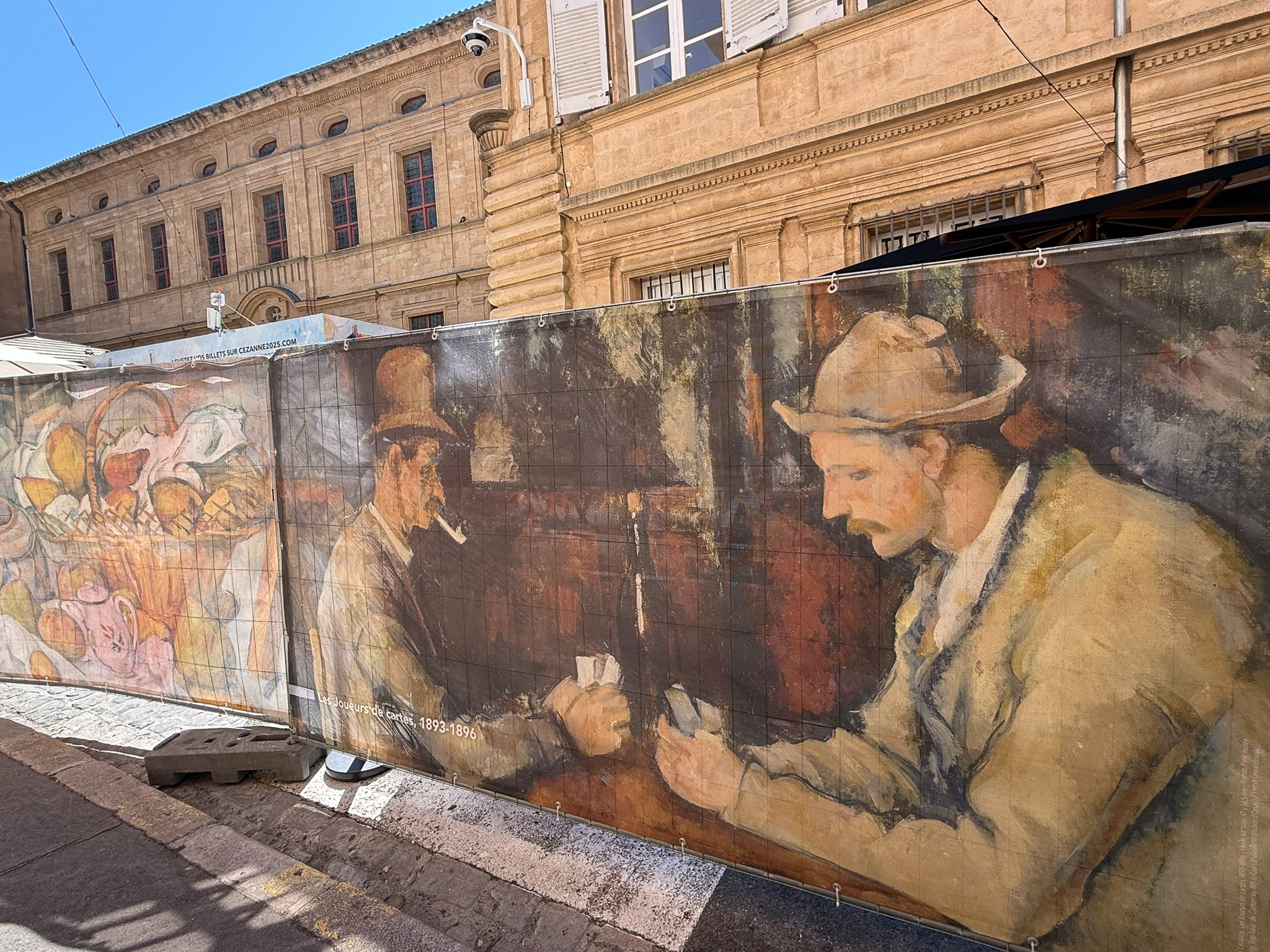
Although he spent time staying with Renoir and Zola, Cezanne preferred the local peasants to Parisian society figures. We saw the famous “The Card Players” which is normally displayed at the Musee d’Orsay in Paris.
Les Joueurs de Cartes 1893-1896
Cezanne sold Jas de Bouffan in 1899 after his mother died. He built a studio at Les Lauves in the hills north of Aix. It was also opened to the public this year.
Cezanne was caught by a storm while painting near Les Lauves, developed pneumonia and died a week later in October 1906.
An Online Catalogue Raisonné under the Direction of Société Paul Cezanne can be found here. The catalogue is divided into three sections: Paintings, Watercolors & Drawings and Sketchbooks. The first two sections are subdivided by groups or themes; the sketchbooks are treated separately, each with its own master number and individual sheets linked to it. This is an excellent source if one’s interested in Cezanne’s works.