

Bat Eater and Other Names for Cora Zeng is a pandemic-era, body-horror ghost story that uses New York’s Chinatown as its backdrop. It blends crime-scene gore with Chinese funerary lore (Hungry Ghost Festival) to indict xenophobia and political apathy.
I picked up the book out of curiosity; Zeng is a familiar surname. It’s the first novel I’ve read that is set during the COVID pandemic. While it’s a brutal, depressing story, there are bright spots and laughs. Overall, this was an enjoyable read.

Play this while browsing.
Warning: spoilers below.
I liked how the book opens on Cora’s dramatic loss due to a hate crime, which establishes the tone immediately.
The photos below are licensable and were downloaded from WikiCommons.
April 2020
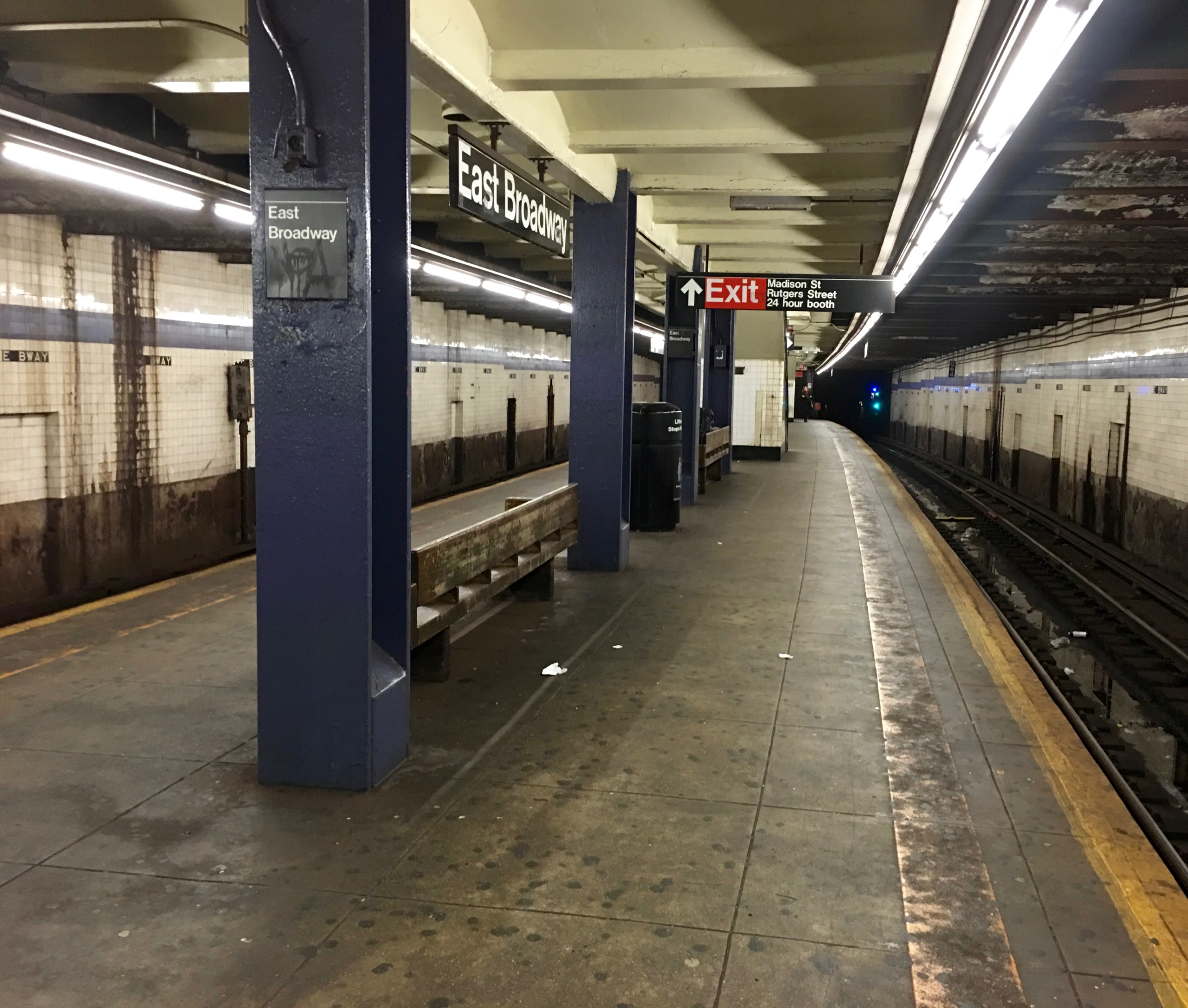
East Broadway station bleeds when it rains, water rushing down from cracks in the secret darkness of the ceiling. Someone should probably fix that, but it’s the end of the world, and New York has bigger problems than a soggy train station that no one should be inside of anyway.
Cora—a Chinese–Caucasian crime-scene cleaner—works in a city rattled by murders of Asian women, where dead bats were found at every scene. She is a stoic conformist, “not a hero” by self-image, yet capable of acting despite her grief, delusions and fear. Throughout, Cora compares herself to her half-sister Delilah, revealing persistent insecurity about being of mixed heritage. She also faces another kind of identity pressure: men’s attitudes toward the “pretty doll” Asian-female stereotype.
The supporting cast represents other Chinese-American experiences. Her two coworkers feel lived-in and their eventual fates carry weight. Yifei is a likable, pragmatic survivor whose backstory taps China’s one-child policy and the abandonment of baby girls—predictable, but thematically functional. Harvey, an American-born Chinese man who is generally oblivious, contrasts with Yifei and serves as a quiet foil.
Yifei’s apartment is a tower.
She lives in Confucius Plaza, the redbrick beast growing out of Chinatown’s spine, guarded by a bronze Confucius’s statute that must be at least fifteen feet tall but somehow looks like a tiny pawn before the great behemoth of the apartment complex.

When the “dead bats” signature later became a copycat meme, it did not feel like a twist since racism had been shown to be a online contagion. This development recalls Trump’s habit of calling COVID-19 the “China virus” in 2020. This isn’t a serial-killer story, although it looks like one at the start. When it became apparent that the police deliberately dragged out the investigation to shield a political campaign—it is a plot point that feels plausible.
I also like the tension between Cora’s skepticism and the book’s view of ritual as moral currency—the belief in tended versus starving ghosts. I didn’t love that the persisting ghost isn’t Cora’s sister (the emotional charge dips), but it’s consistent with the lore. The connection between the beginning and the end is mixed but serviceable: Cora ought to believe and observe the rituals despite her identity doubts, and by the close she does.
Cora reaches the gates of Gracie Mansion, the mayor’s residence. A police car is parked outside, and the ghosts climb over it, swathing it in darkness as Cora breezes past it, past the iron fences with perfectly trimmed shrubbery, perfectly cultivated ivy, tiny garden lights in soft circles of white.

My main complaint is the prose around Cora’s granular, back-and-forth reasoning when facing a situation. It’s meaningful but can bog down a scene’s momentum. The pace also sagged a bit during the trio’s search for human remains in the subway tunnel. But these issues did not diminish my enjoyment of the layering of ideas in the book.
Spoiler-free from here
To wrap up: the grisly detail has a purpose beyond spectacle; this ghost story reflects America in the early 2020s, when Asians could be collectively scapegoated for an infectious disease, and face violence and systemic bias. The characters in the book dwell on the questions of ancestral ethnicity and gender stereotype, and the tie between supernatural tradition and moral duty. The result is a sharp, compelling portrait of multi-ethnic America.
Recommendable.
Leave a Reply