

Arashiyama 嵐山 and its Sagano Bamboo Grove 嵯峨野 竹林 is one of Kyoto’s most beloved sightseeing spots.
This post concludes our guide to an alternative walking tour of Arashiyama via the historic Atago-Kaido pilgrimage road (愛宕古道). This route reverses the typical tourist path, leading you through a series of striking temples before arriving at the Sagano Bamboo Grove from the less-crowded side for a much more tranquil visit. Read Part 1 here.
Enjoy a tune while browsing.
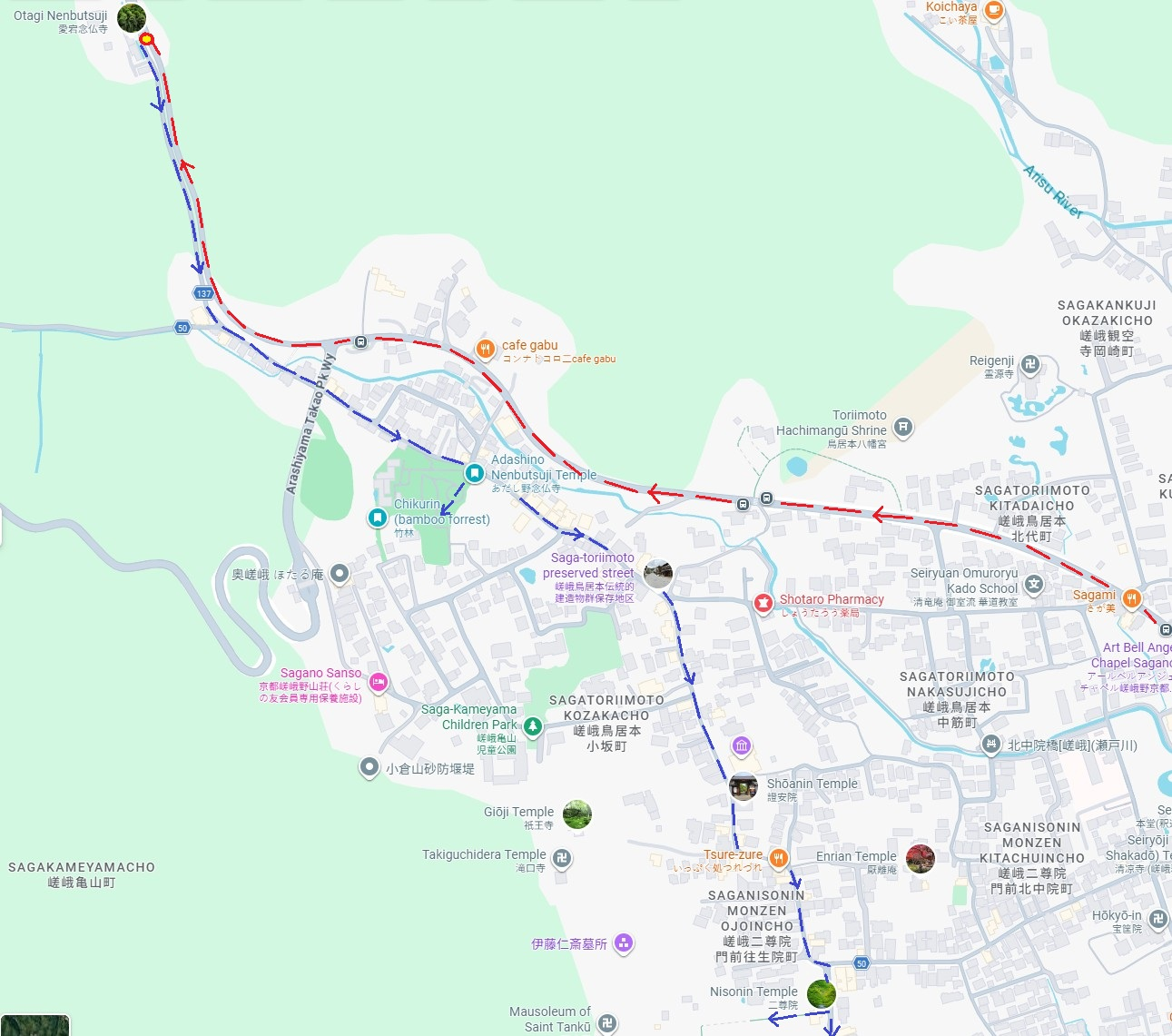
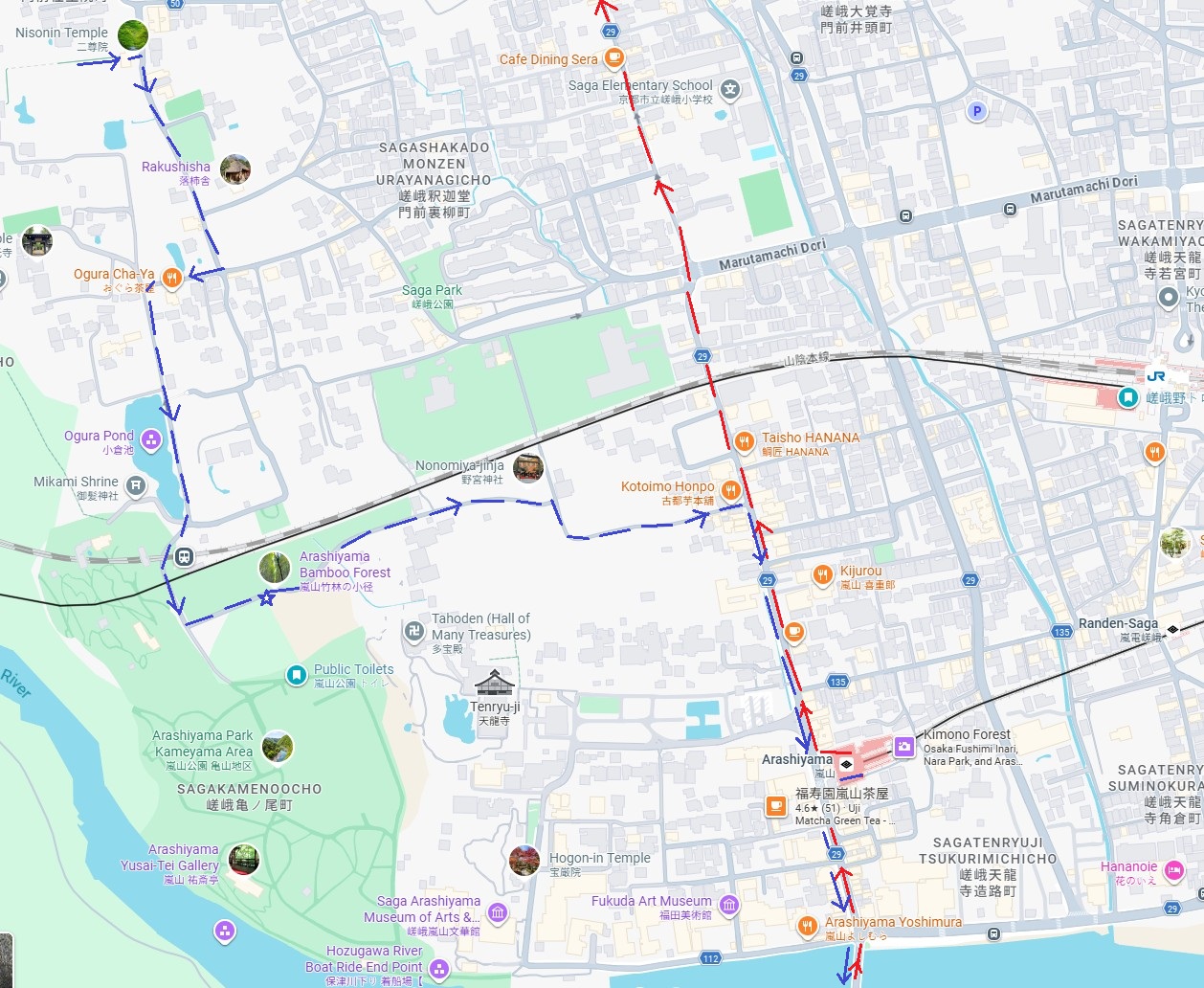
Map 1
Blue indicates walking route from start to Adashino Nenbutsu-ji and then to Nison-In
Red indicates bus route from center of Arashiyama to the start of the walk
Click to see larger map.
After leaving Adashino Nenbutsu-ji あだし野念仏寺, we continue strolling downhill on the ancient Atago-Kaido road 愛宕古道 which is lined by preserved traditional buildings typical of the Meiji era (1868–1912).
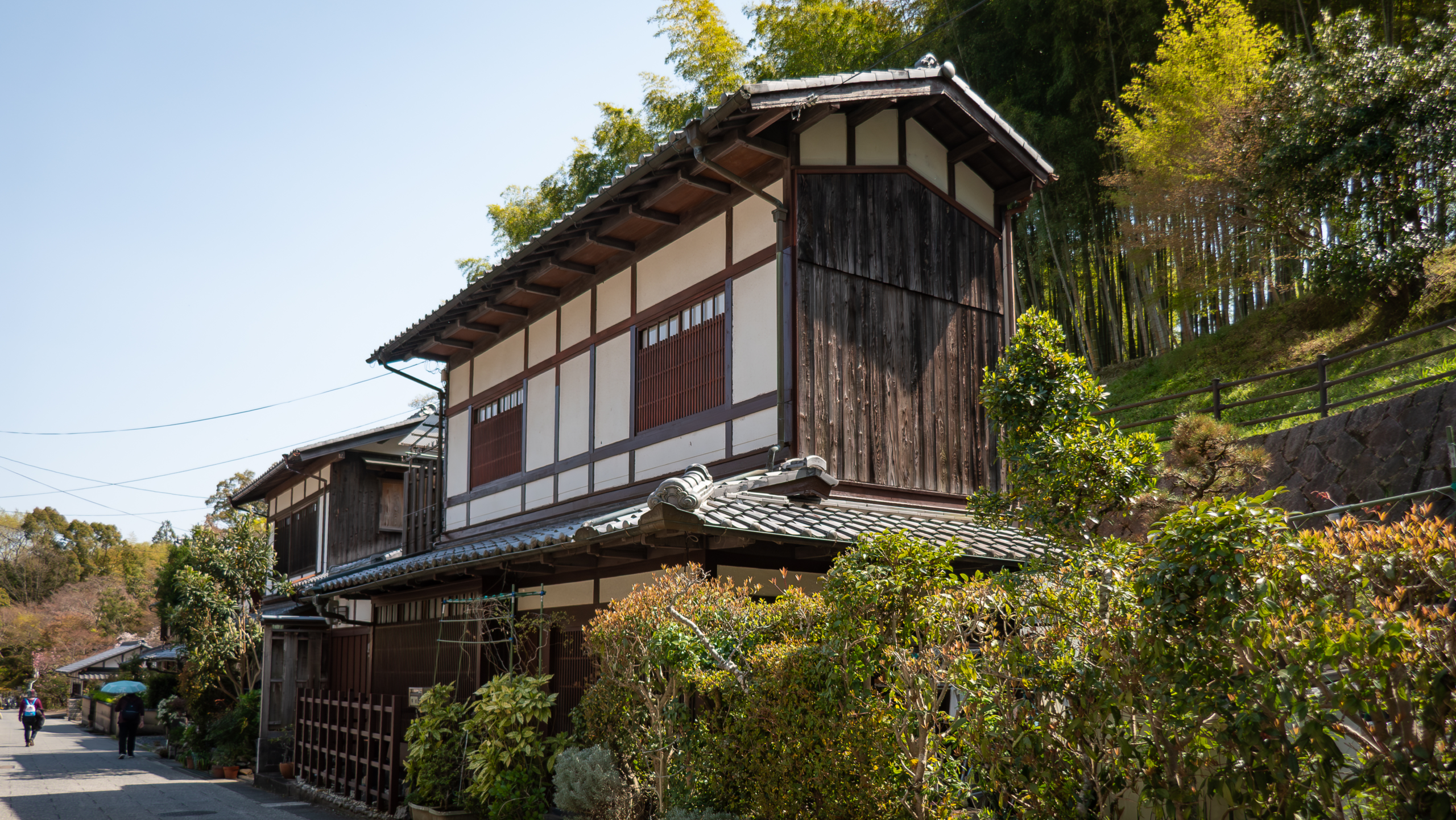
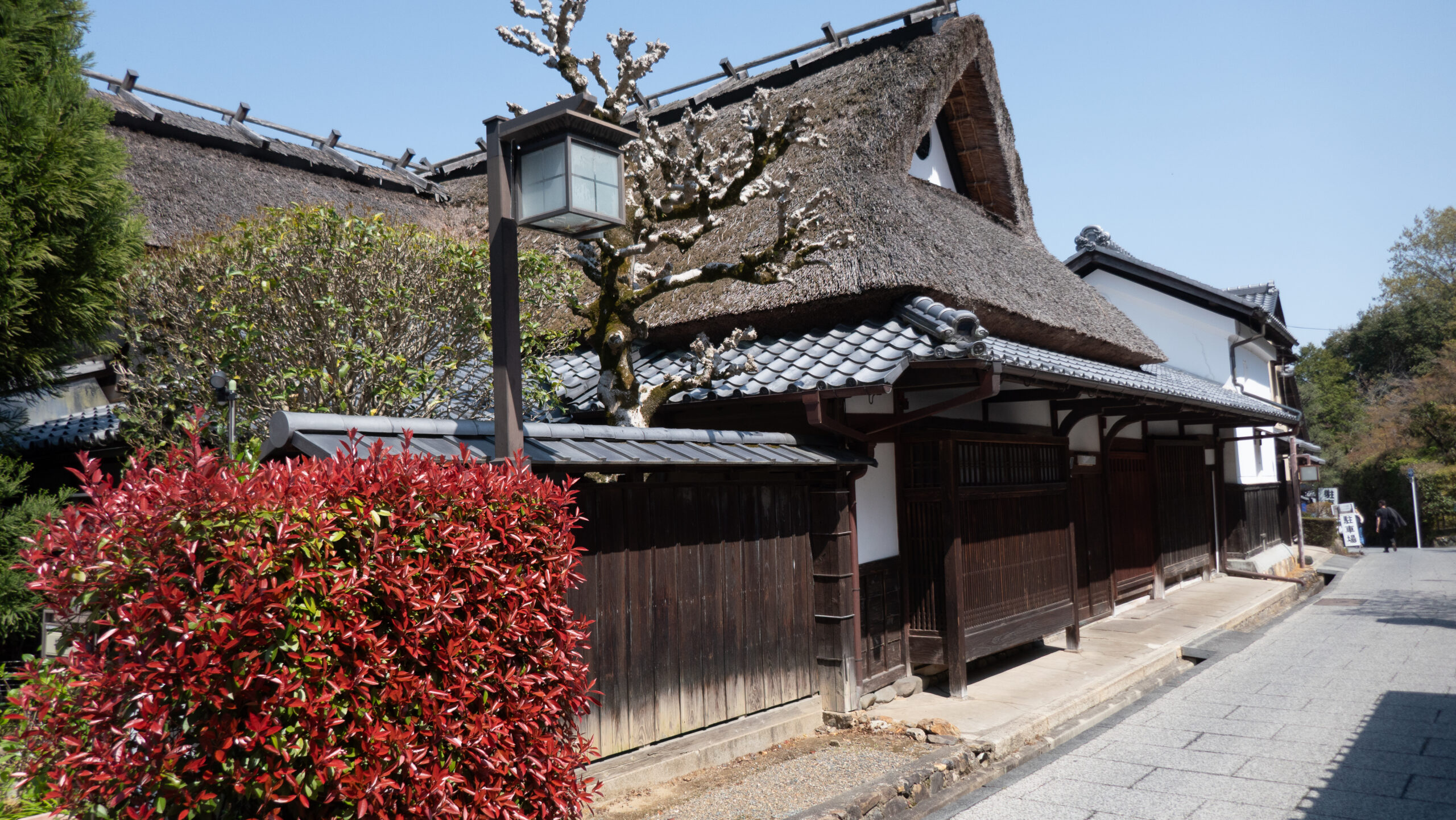
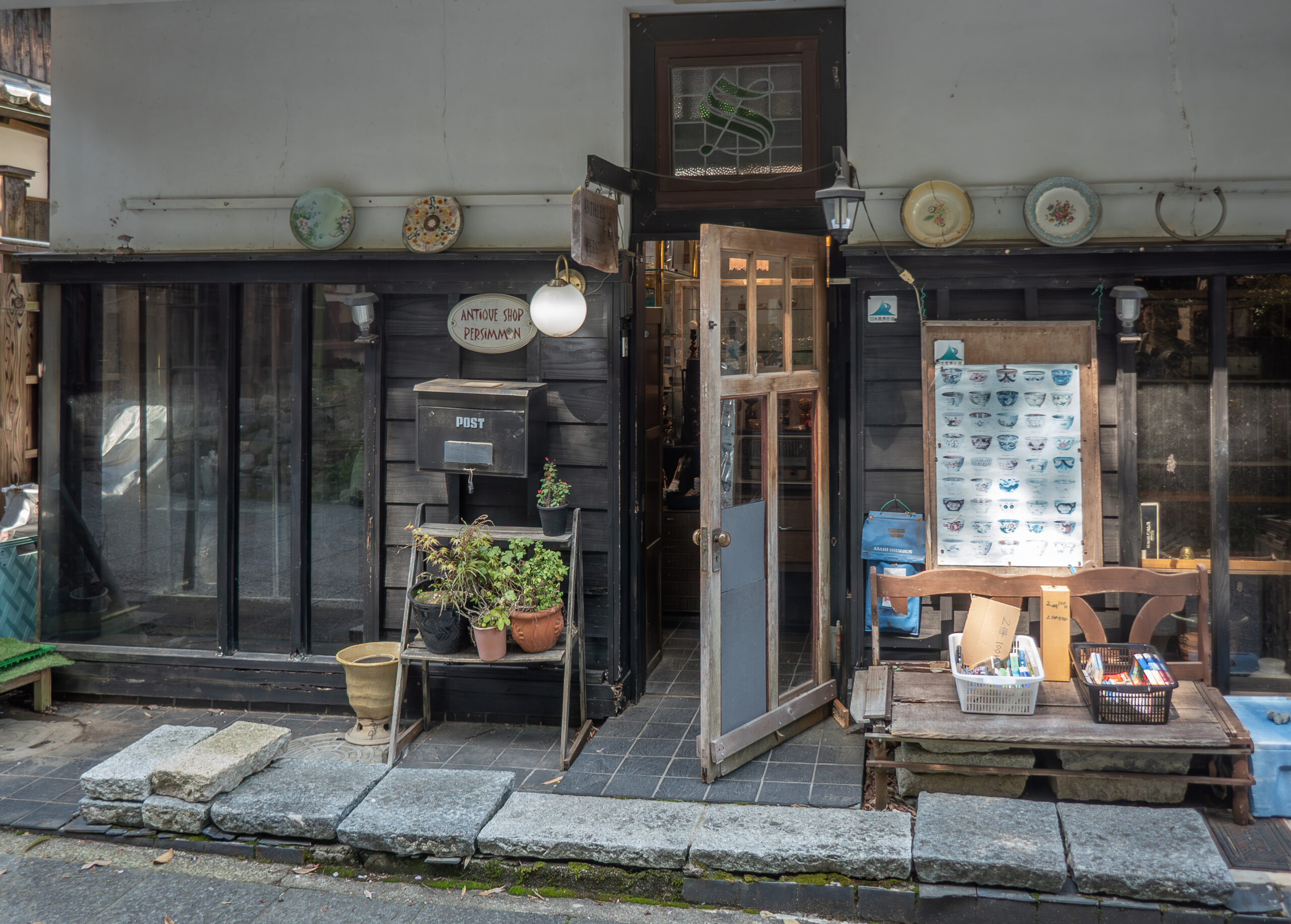
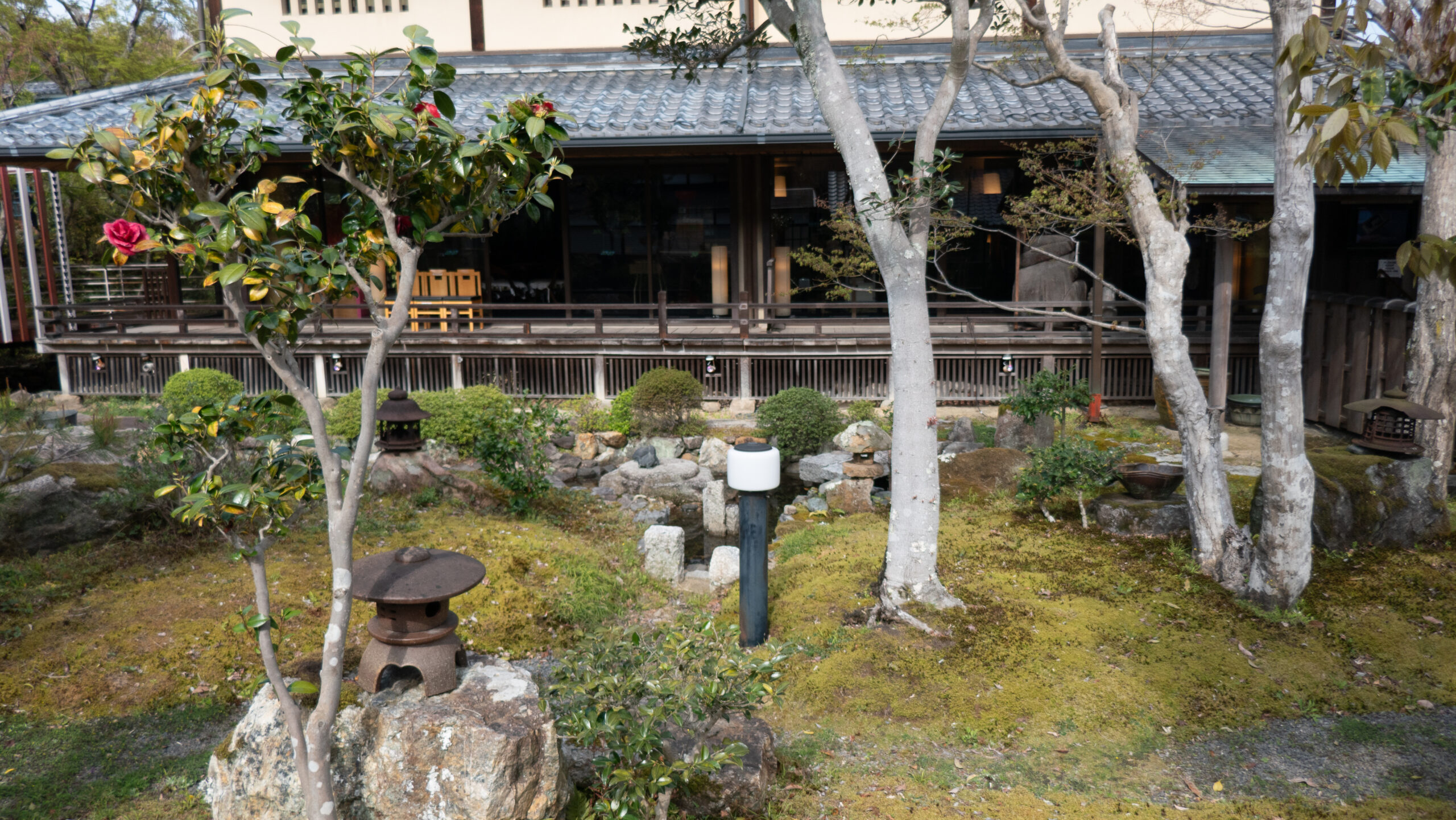
Interspersed among homes are small shops selling potteries, bamboo products and tea houses. The Kyoto Japanese Folk Dolls Museum 博物館さがの人形の家 is here.
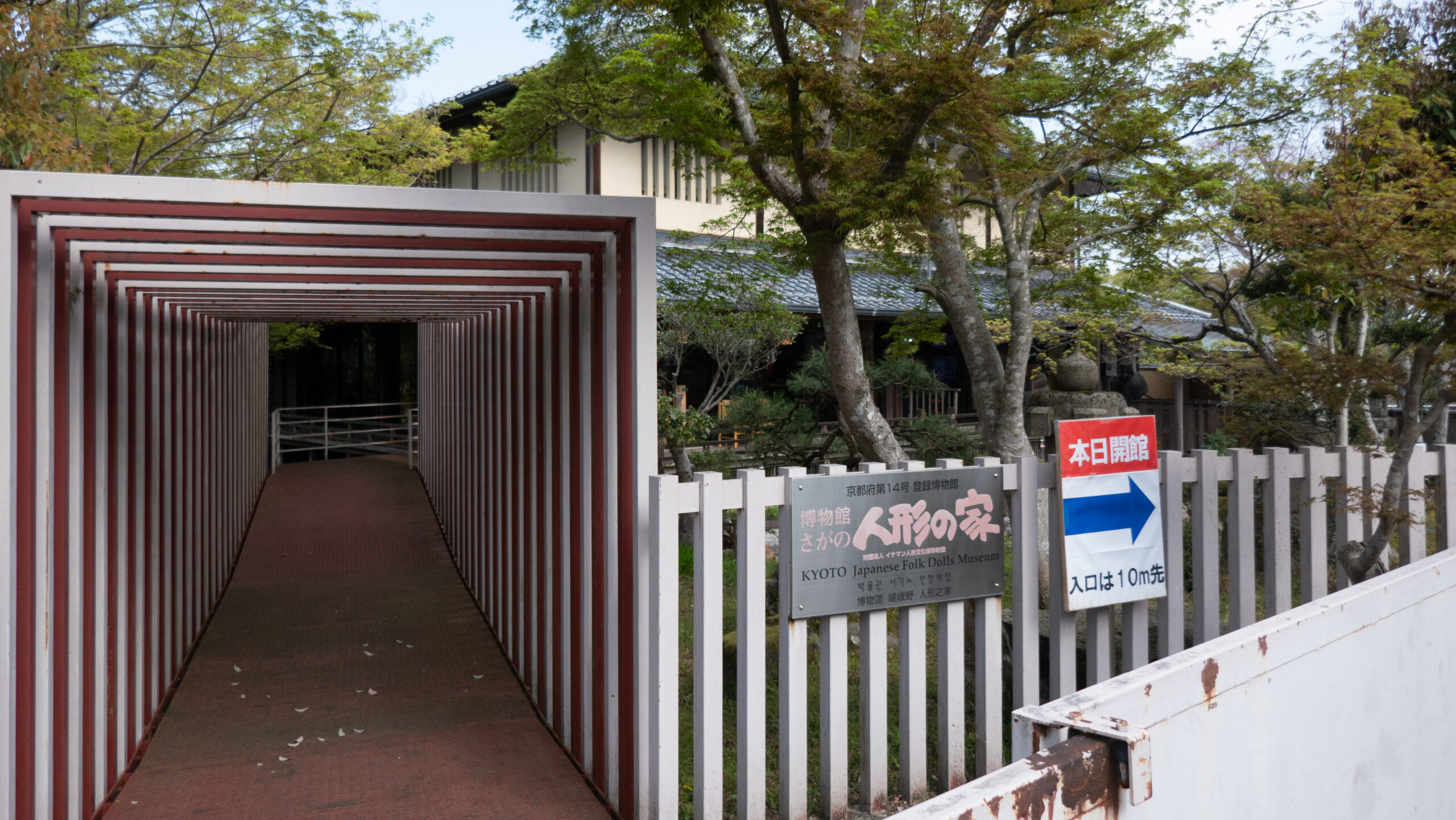
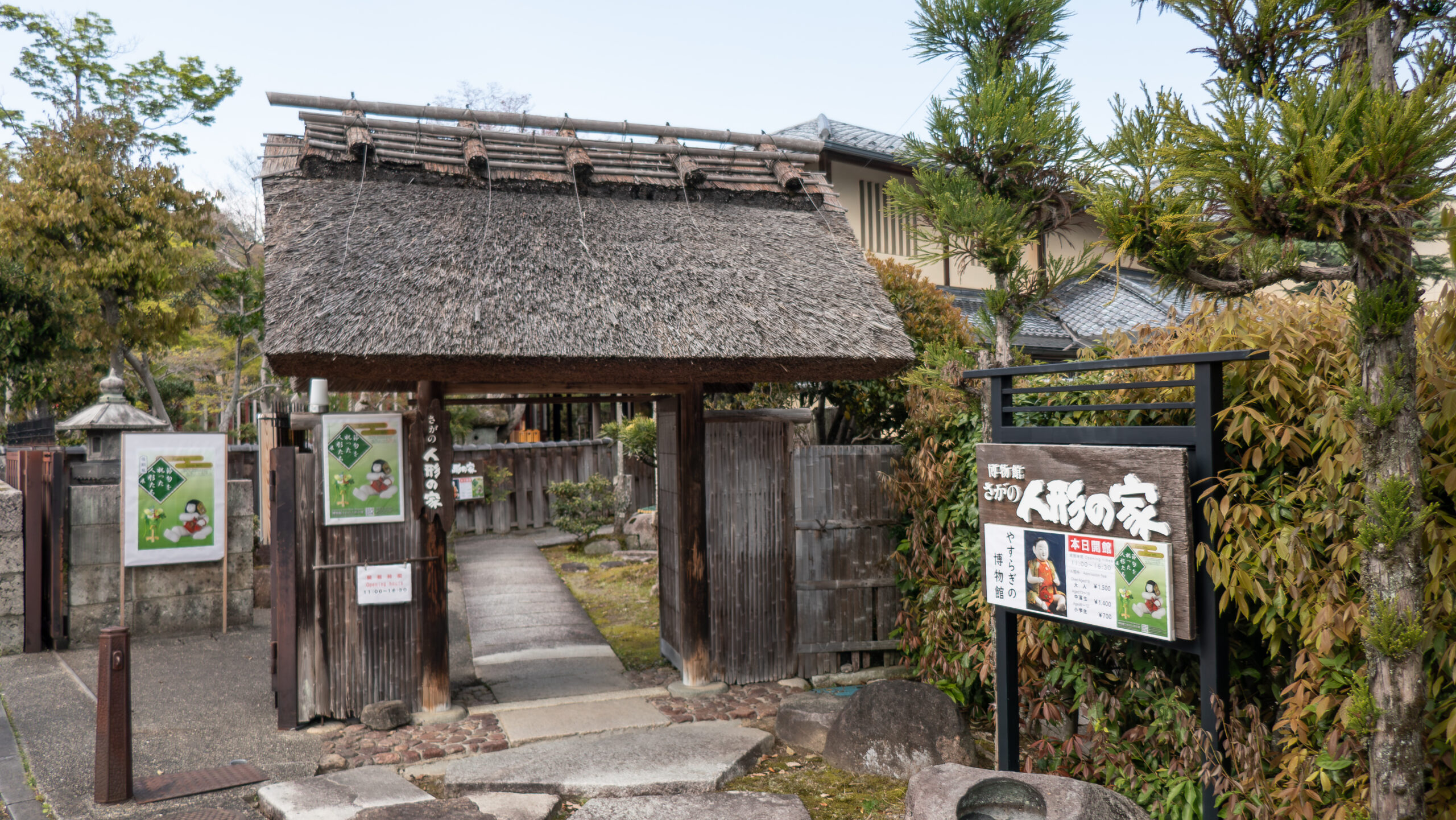
There are many temples in this area. As we continue strolling downhill, we pass a side street that leads to a notable temple, Gio-ji 祇王寺. But we are not stopping here.
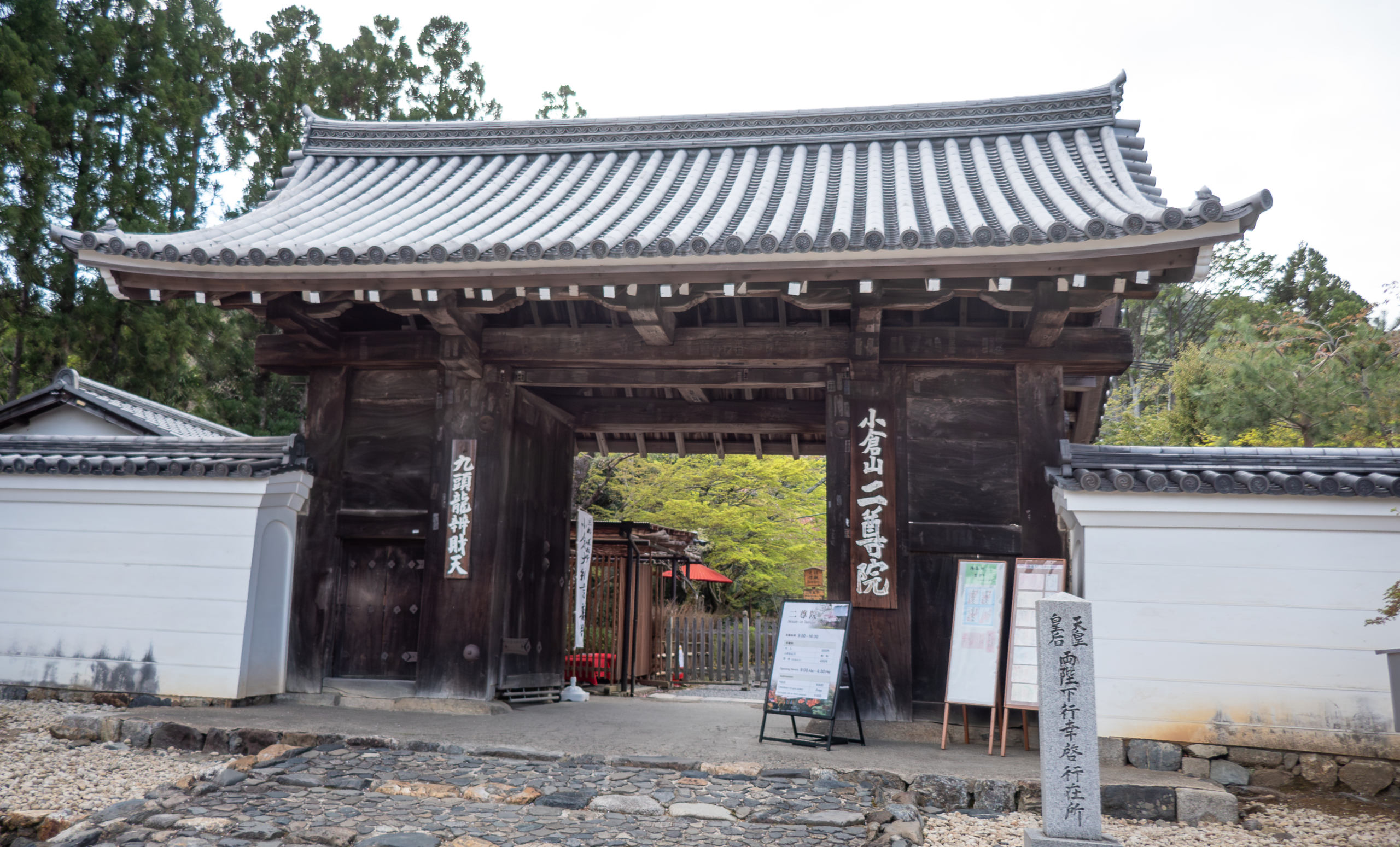
A little further down, the road forks. Veer right, and you will come straight to the entrance of Nison-in Temple (二尊院), our second stop. Keep in mind there is a small admission fee to enter.
After the main gate, there is a 200-meter long approach named Momiji-no-bab 紅葉の馬場 (Maple Runway).
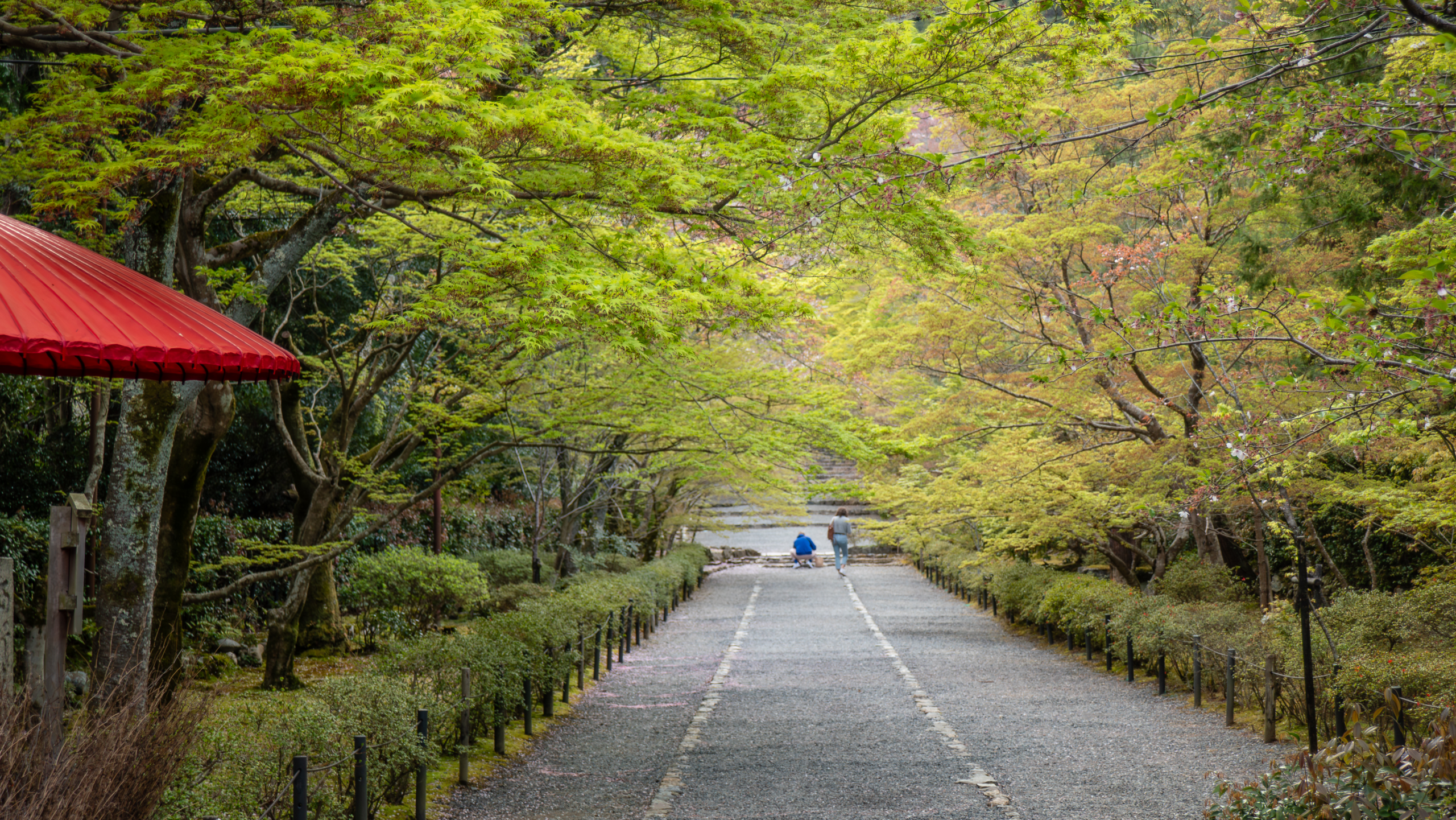
The approach is lined with maple and cherry trees that form a natural tunnel. Although our visit took place during the cherry blossom season, the view is generally considered most breathtaking during the peak of autumn.
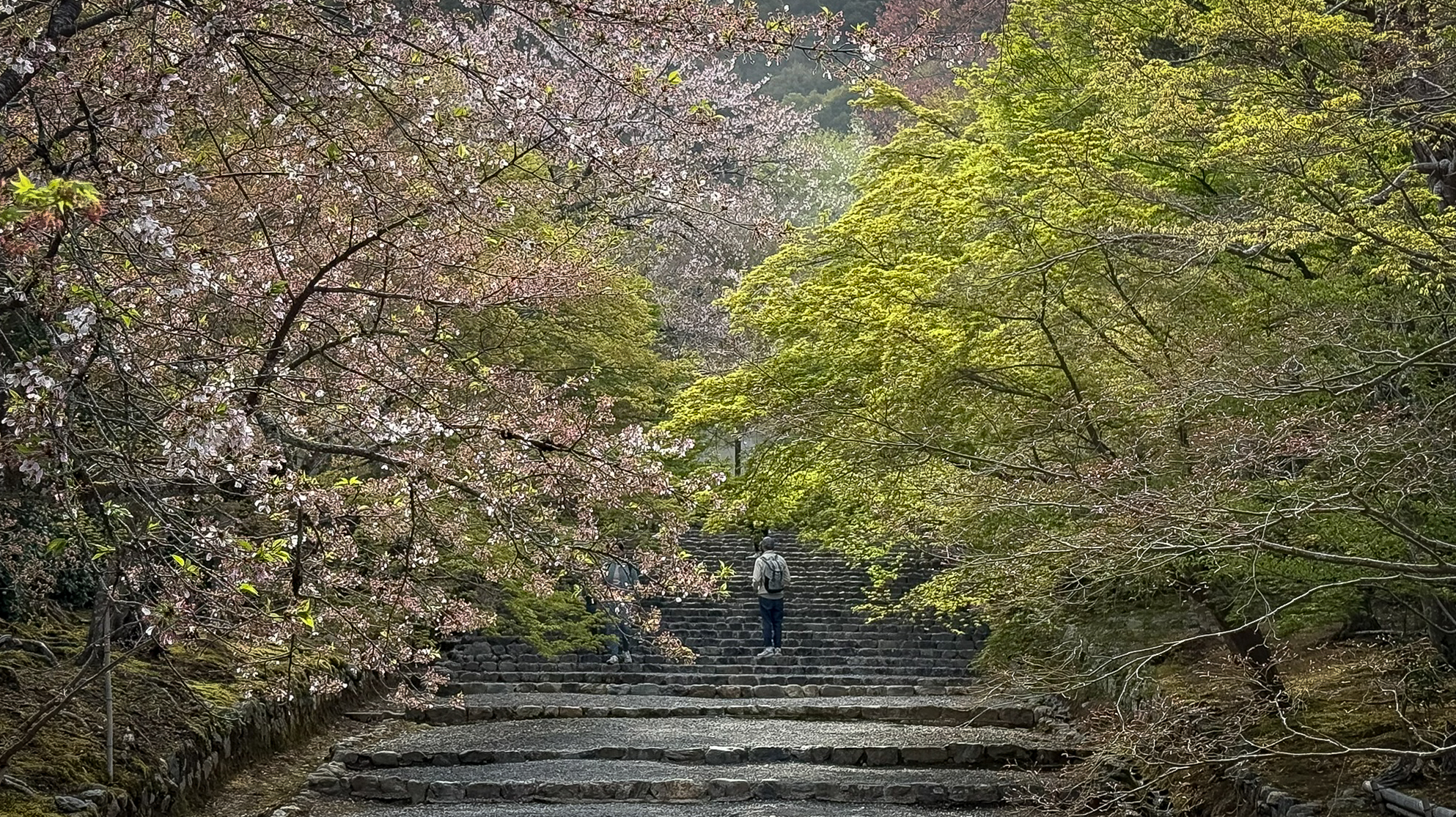
The Imperial Envoy Gate 勅使門 leads to the main hall. Previously this gate was only ever opened for the messengers of the emperor, but today it is open for anyone visiting the temple to walk through.

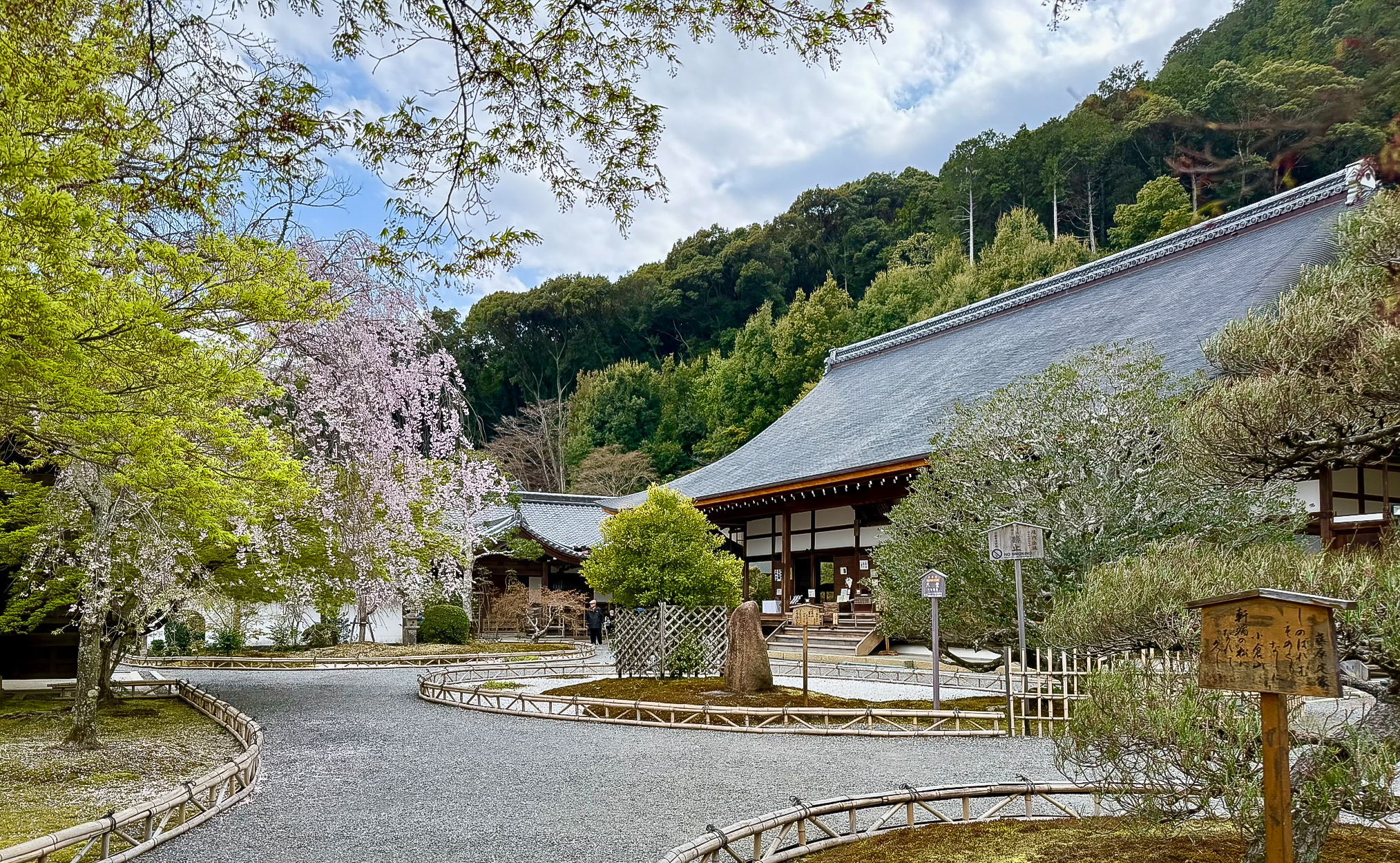
Courtyard of the main hall (Hondo) and the central entrance to the Hondo. The weathered green and gold calligraphic plaque, inscribed with the temple’s name, “二尊院” (Nison-in) was gifted by Emperor Go-Nara in 1521 to commemorate the hall’s reconstruction after the devastating Ōnin War.
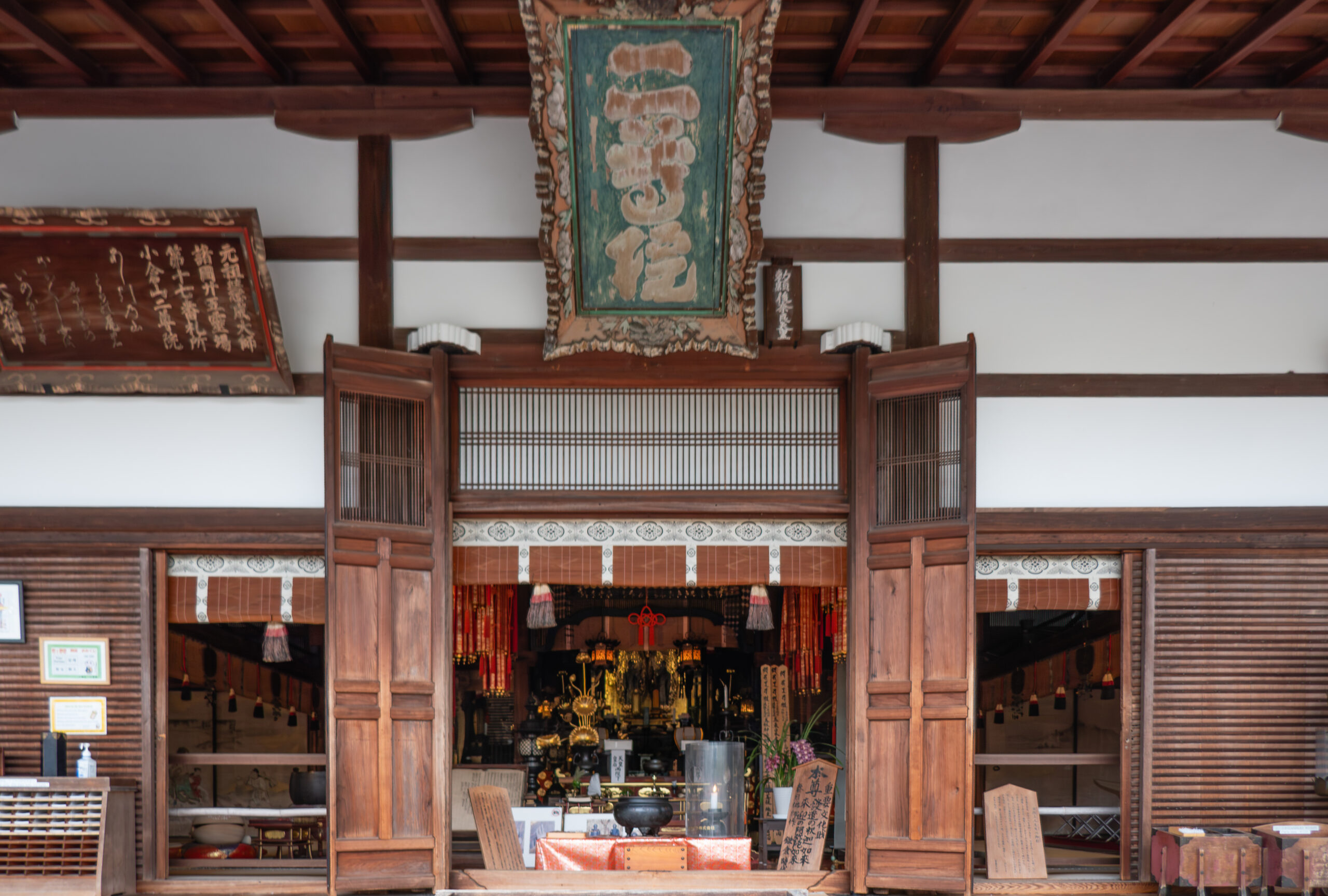
Deep within the dimly lit sanctuary of the Hondo stand the twin principal images of the temple, designated as Important Cultural Properties of Japan.

On the right stands Shaka Nyorai 釈迦如来, representing the sender of souls departing this world, while Amida Nyorai 阿弥陀如来 stands on the left, symbolizing the compassionate welcome into the Pure Land.
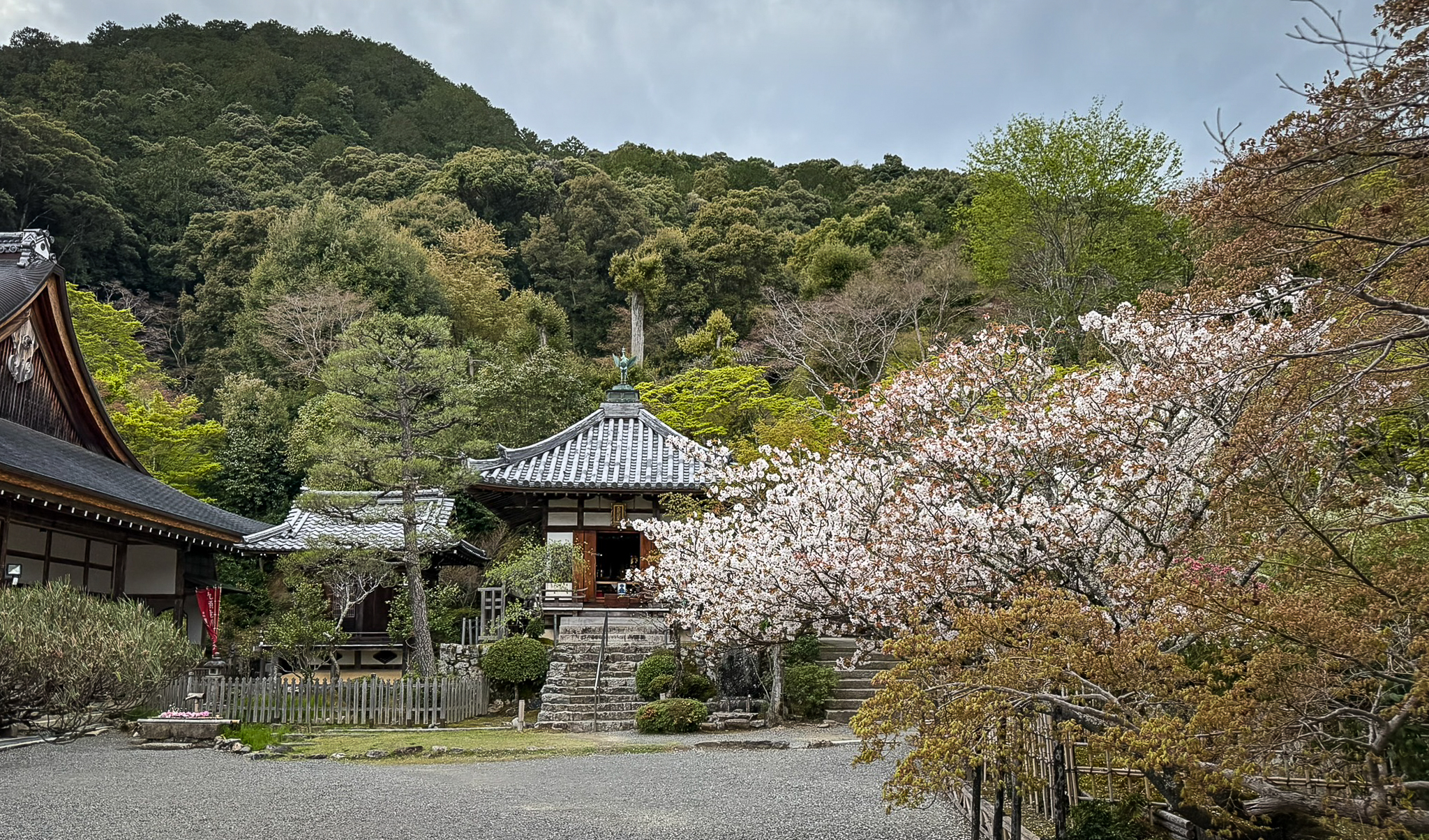
Benten-do (弁天堂 — Hall of Benzaiten) with a bronze phoenix finial on its roof.
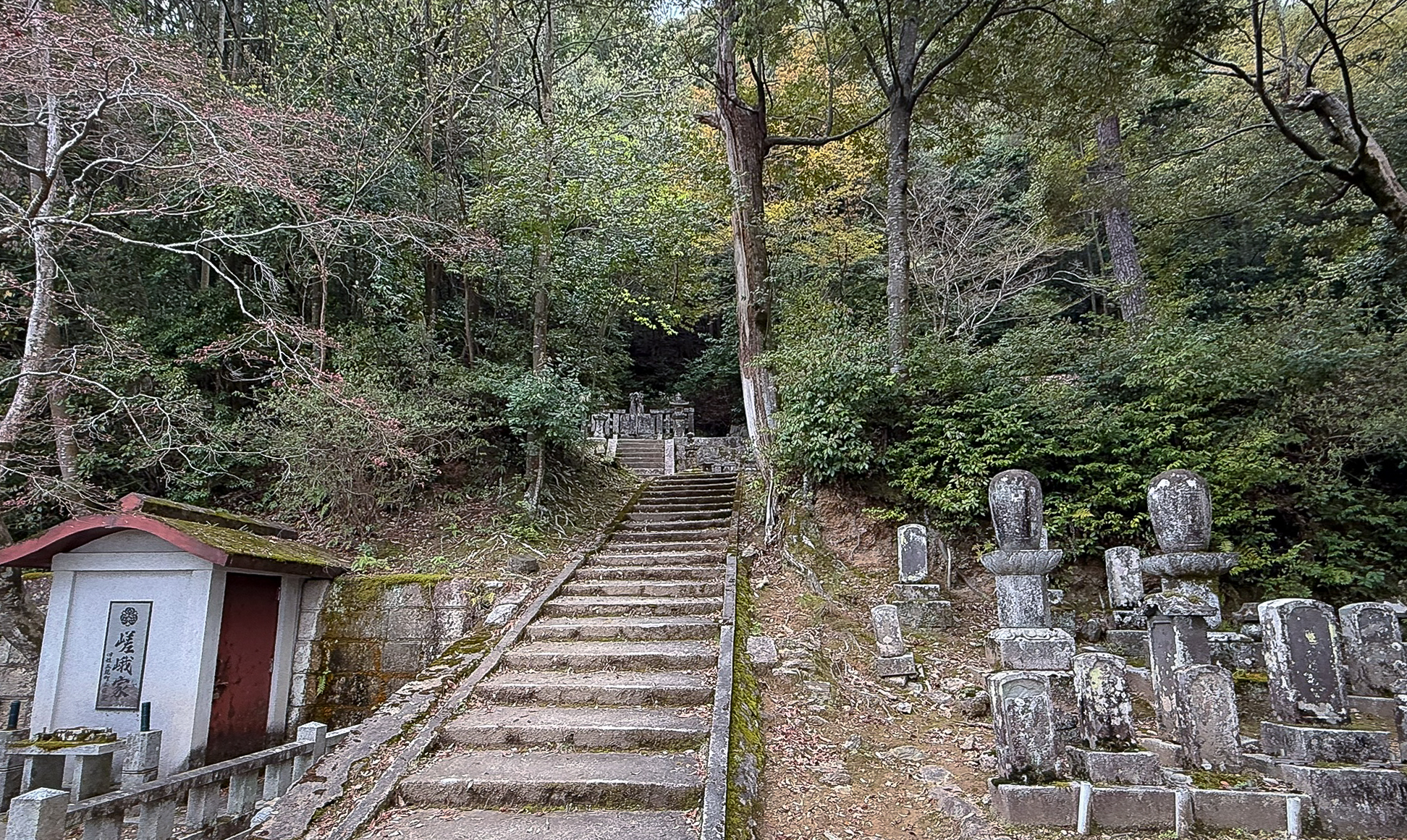
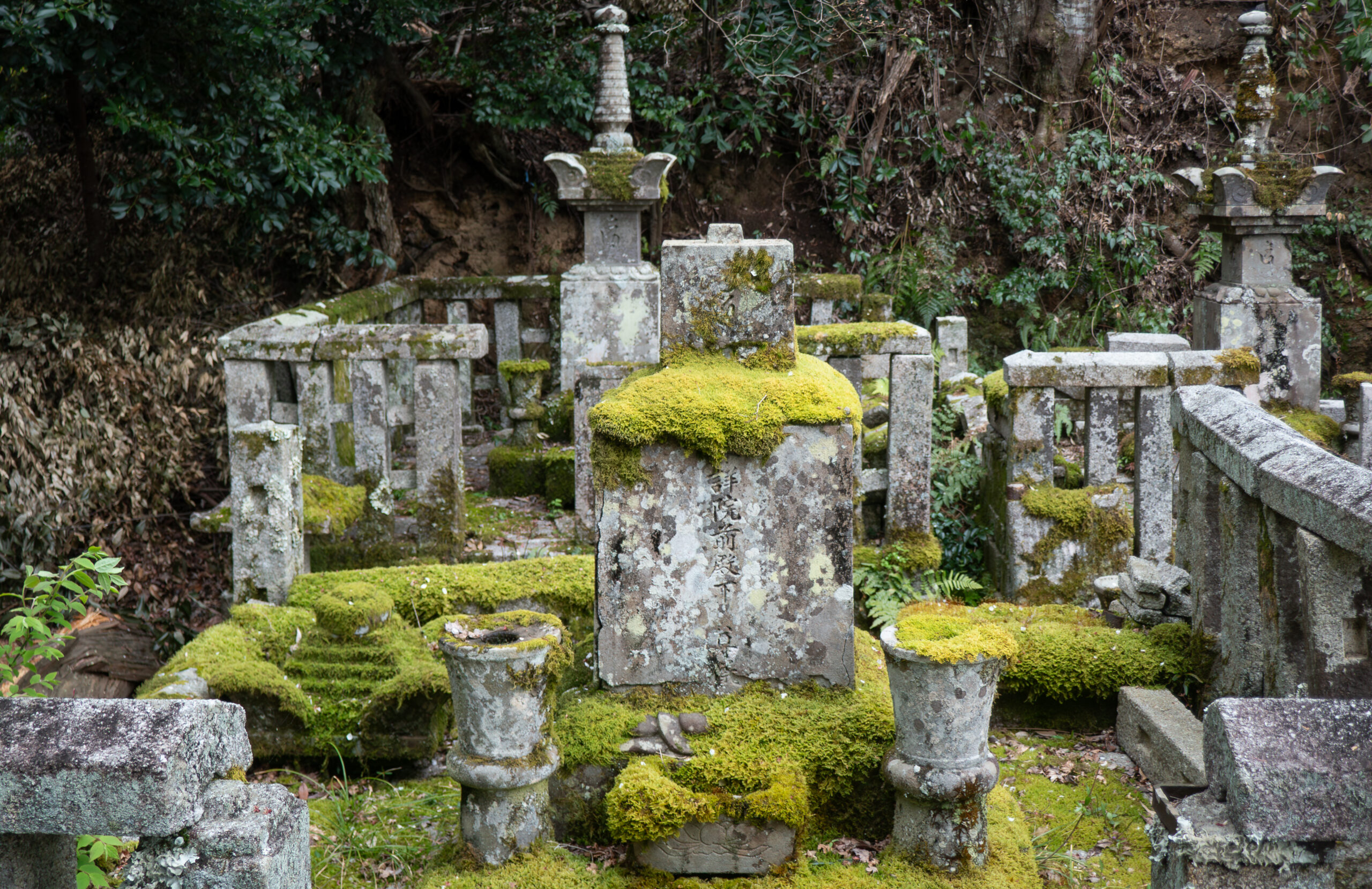
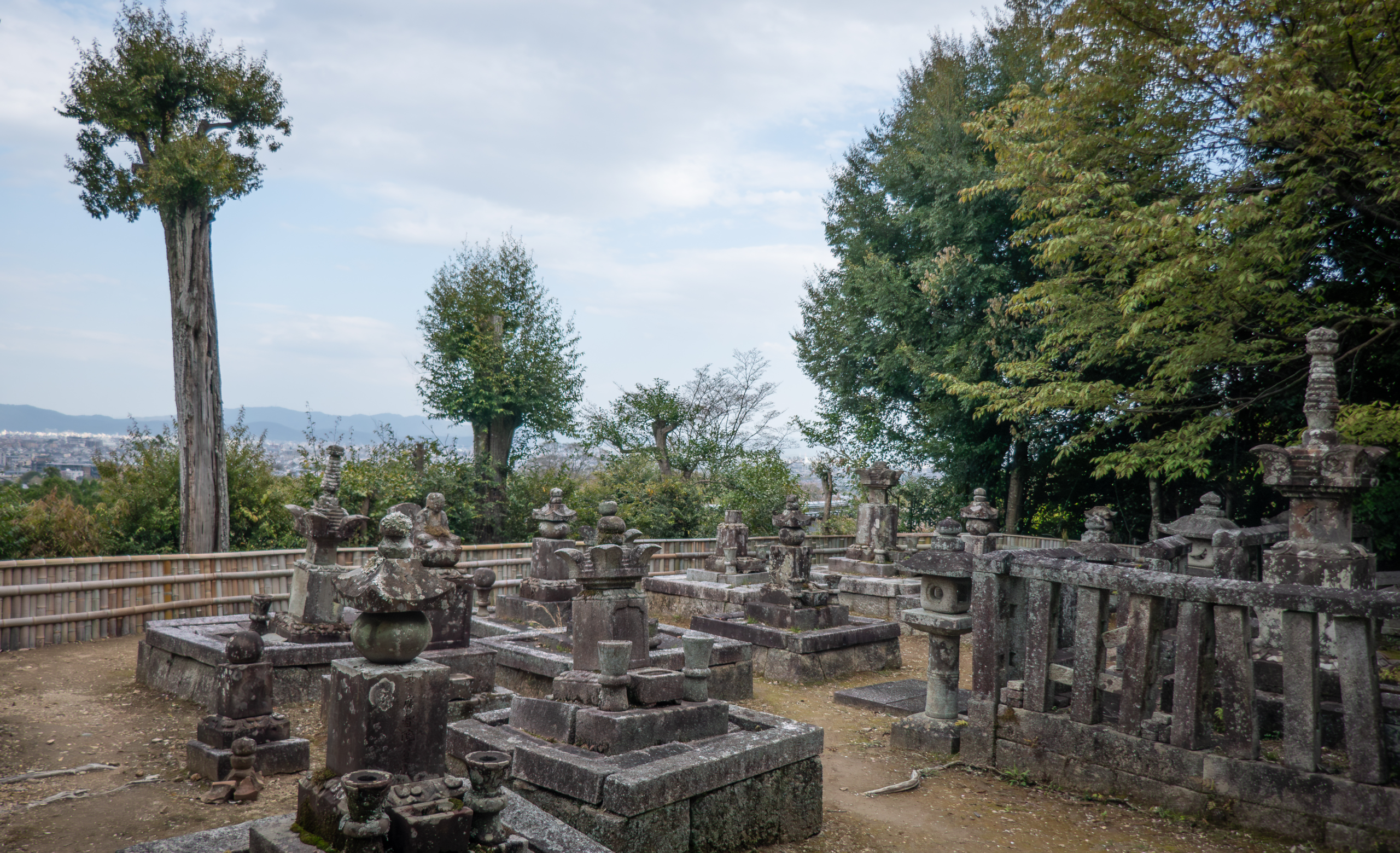
Situated on a terrace within the temple grounds on Mount Ogura, this historic plot contains weathered stone graves and commemorative stupas. The cemetery offers a silent, contemplative viewpoint over the distant Kyoto in the valley below.
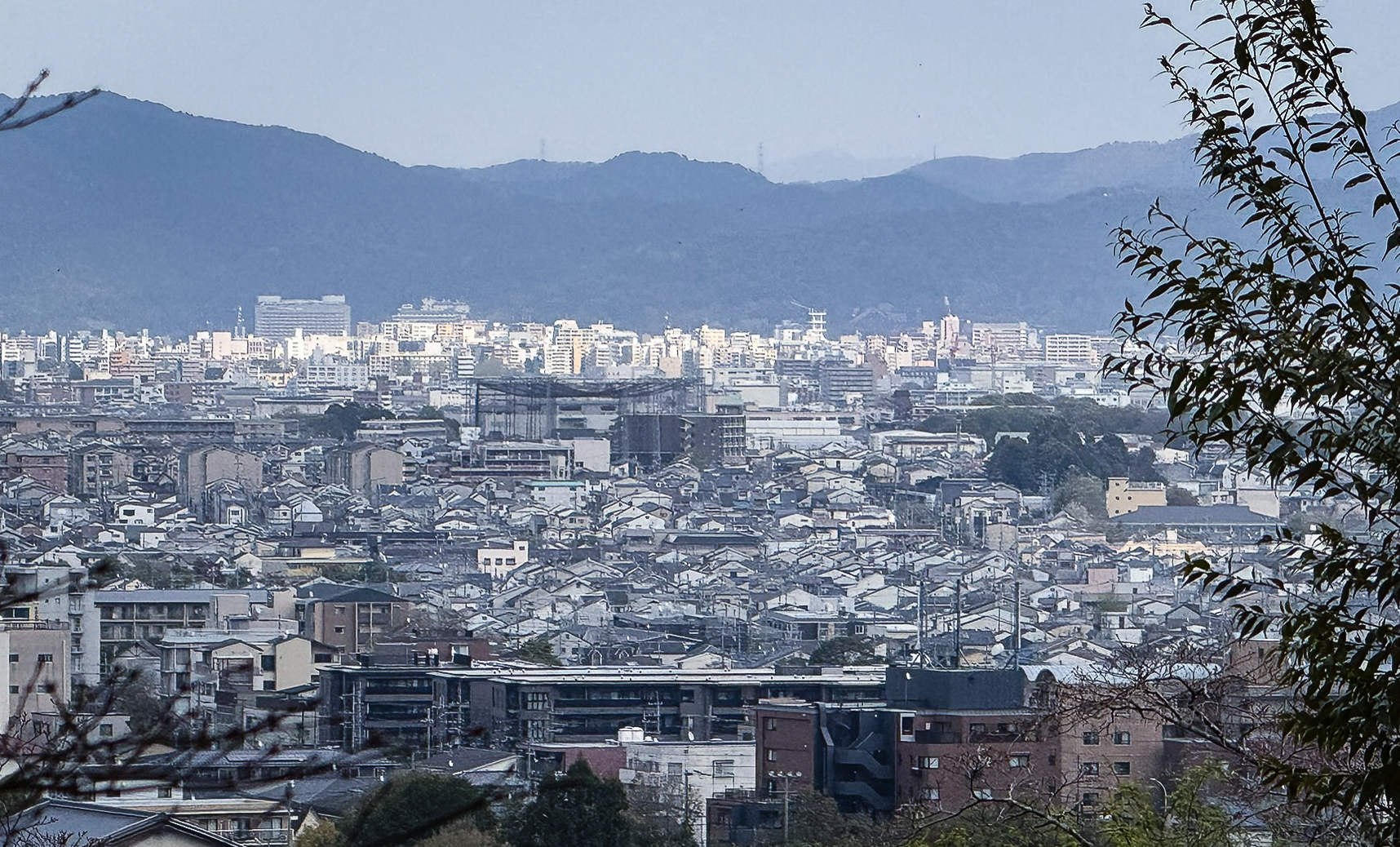
Retrace your footstep back to Momiji-no-bab and exit Nison-in. Continue down the street and make first a right turn and then a left turn (see Map 2).
Map 2
Blue line: Walking route from Nison-in through the bamboo forest to the train stations.
Red line: Bus route from the train stations to the starting point of the walk.
Click image for larger map.
As you continue, Ogura Pond 小倉池 will appear on your right.
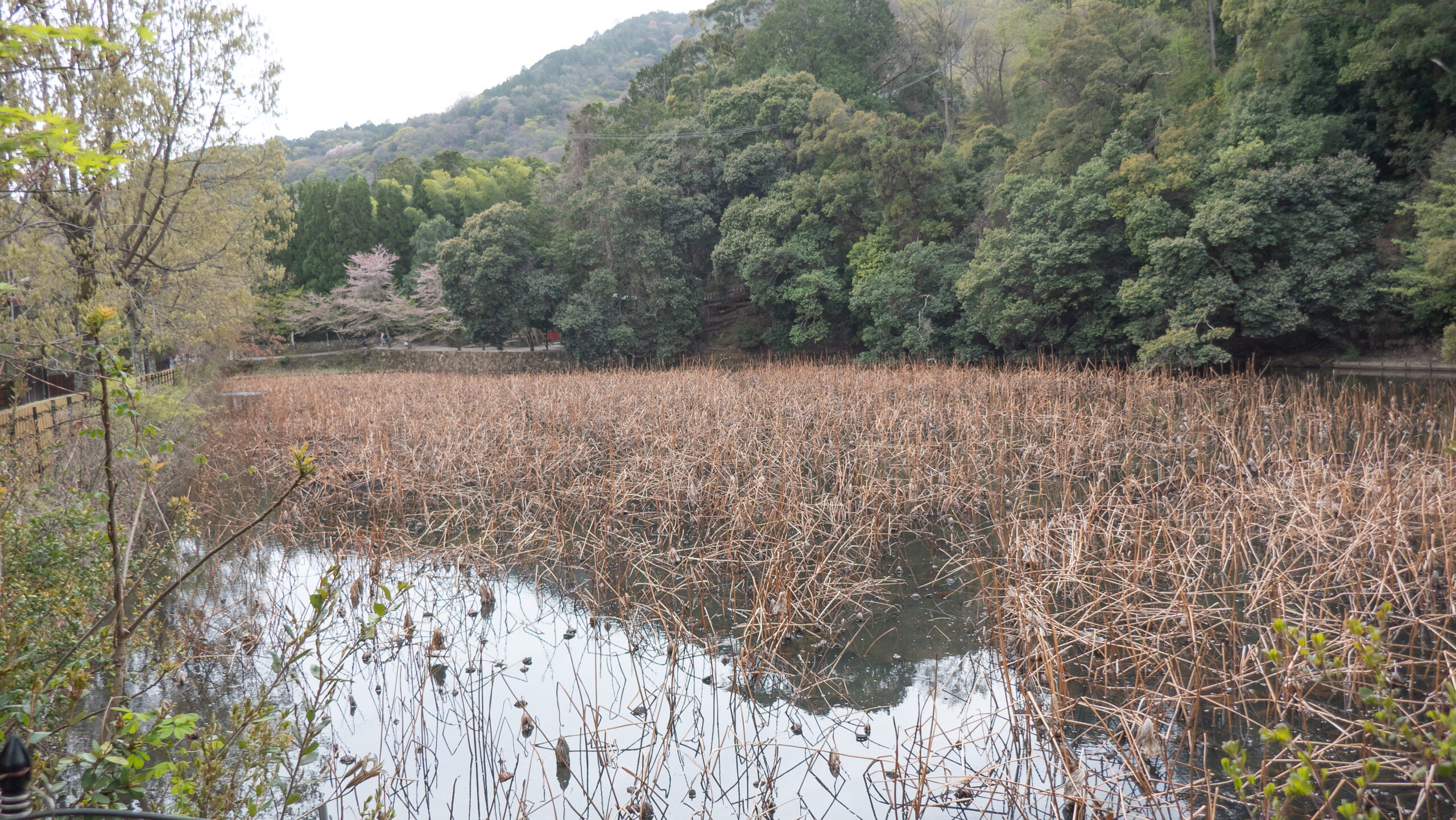
This pond was covered with withered lotus plants embodying the classical Japanese aesthetic of mono no aware 物の哀れ—finding beauty in the melancholic, poetic transitions of seasonal decay. But it will be spectacularly beautiful with big lotus flowers later in the year.
Follow the street, go over a railway track and turn left where you will see the famous bamboo forest.
Path through the Bamboo Forest 竹林の小径.
The towering bamboo from both sides form a monumental canopy.
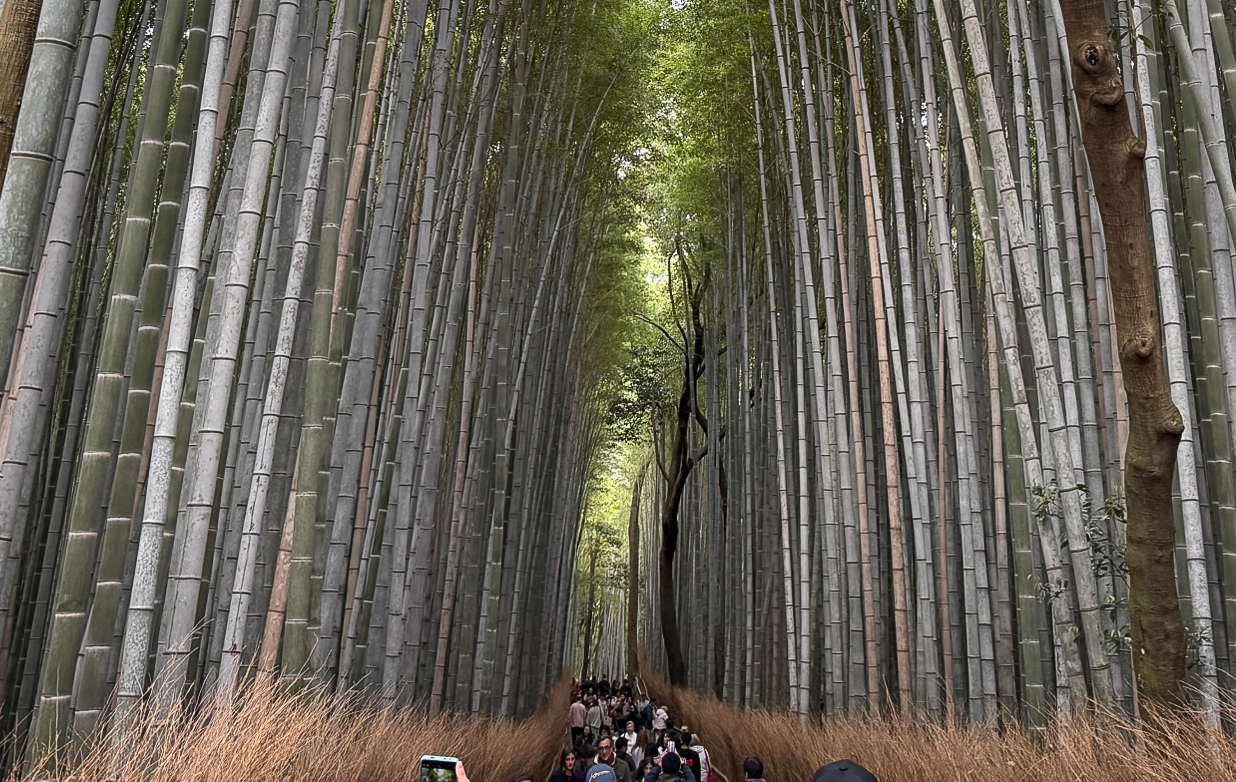
Rejoining the masses. follow the path until you reach Nonomiya-jinja (野宮神社). From here, you have two choices. Turning left at the shrine leads to a smaller, less impressive bamboo grove where stalks only grow on one side of the trail. Turning right will lead to the main road (Route 29).
Turn right again and follow the crowd on the main road to the Randen Arashiyama train station. Alternatively, stay on the main road and cross the Togetsukyō Bridge (渡月橋) to reach the Hankyu Arashiyama Station on the other side of the river. Both train lines connect directly to central Kyoto.
Hope you find this alternative route useful and let you see more of the temples in the area. You can find Part 1 of this 2-part series here.
Leave a Reply