

We were heading to Venice for the Biennale last year and wanted to arrive by sea on this occasion. Piran, Slovenia, seemed the perfect launch point as it perches on a narrow peninsula jutting into the Adriatic Sea, and sits almost directly across from Venice. We flew into Ljubljana, the capital of Slovenia, spent several days there, and then continued overland to Piran on the coast.

Getting to Piran took some work: with no rail link. We rode a regional bus from Ljubljana to Portorož (full of resort hotels and beaches), switched to a local bus for Piran, then walked along the waterfront to our lodging in the old town.
The location of our lodgings was perfect as our rooms overlook the town’s main square – Tartini Square (Tartinijev trg). The square was once the inner harbor, which was later filled in; and now serves as the main civic space. The square is ringed by Venetian-style houses, the town hall, and Tartini’s statue in the centre. The view below is from our living room.

Enjoy some music by the Piran-born Baroque violin virtuoso and composer, Giuseppe Tartini (1692–1770). His statue dominates Tartini Square; unveiled in the 1890s for the 200th anniversary of his birth. Tartini’s birthplace (Casa Tartini) is still on the square and functions as a cultural venue/museum.
Click on the images to view them at a higher resolution.
Piran grew on a rocky peninsula of Istria; sea salt was the backbone of the local economy since the 9th century. From the late Middle Ages until 1797, Piran belonged to the Republic of Venice who controlled the salt monopoly and used it to solidify its economic power in the Adriatic region.

Between the World Wars, Piran’s population was mostly Italian. After WWII, it was assigned to Yugoslavia, with an Italian minority remaining. Since 1991 it has been part of Slovenia’s short Adriatic coast adjacent to Croatia, and the town is officially bilingual (Slovene/Italian).


While we were there, we saw the arrival from Austria a group of musicians who vacationed and performed together.
Then we witnessed the hoisting of pirate flags and the Neptune’s (Maritime) Baptism – Pomorski / Neptunov krst. Apparently, the maritime secondary school in Portorož (GEPŠ) “hands over” its new first-year students to the sea god Neptune in a big initiation ritual held in Portorož and Piran. Dressed as pirates, the students participated in a procession from the school to Tartini Square.

Church of St George & bell tower: Hilltop church modeled on San Giorgio Maggiore in Venice; separate campanile visually echoes St Mark’s.
We walked uphill to the church which offered a bird’s eye view of the town on one side and the bay to the east on the other, with a view of the medieval/Venetian town walls in the back.


We were surprised to see Piran in the recent action/comedy movie The Union starring Mark Wahlberg and Halle Berry.
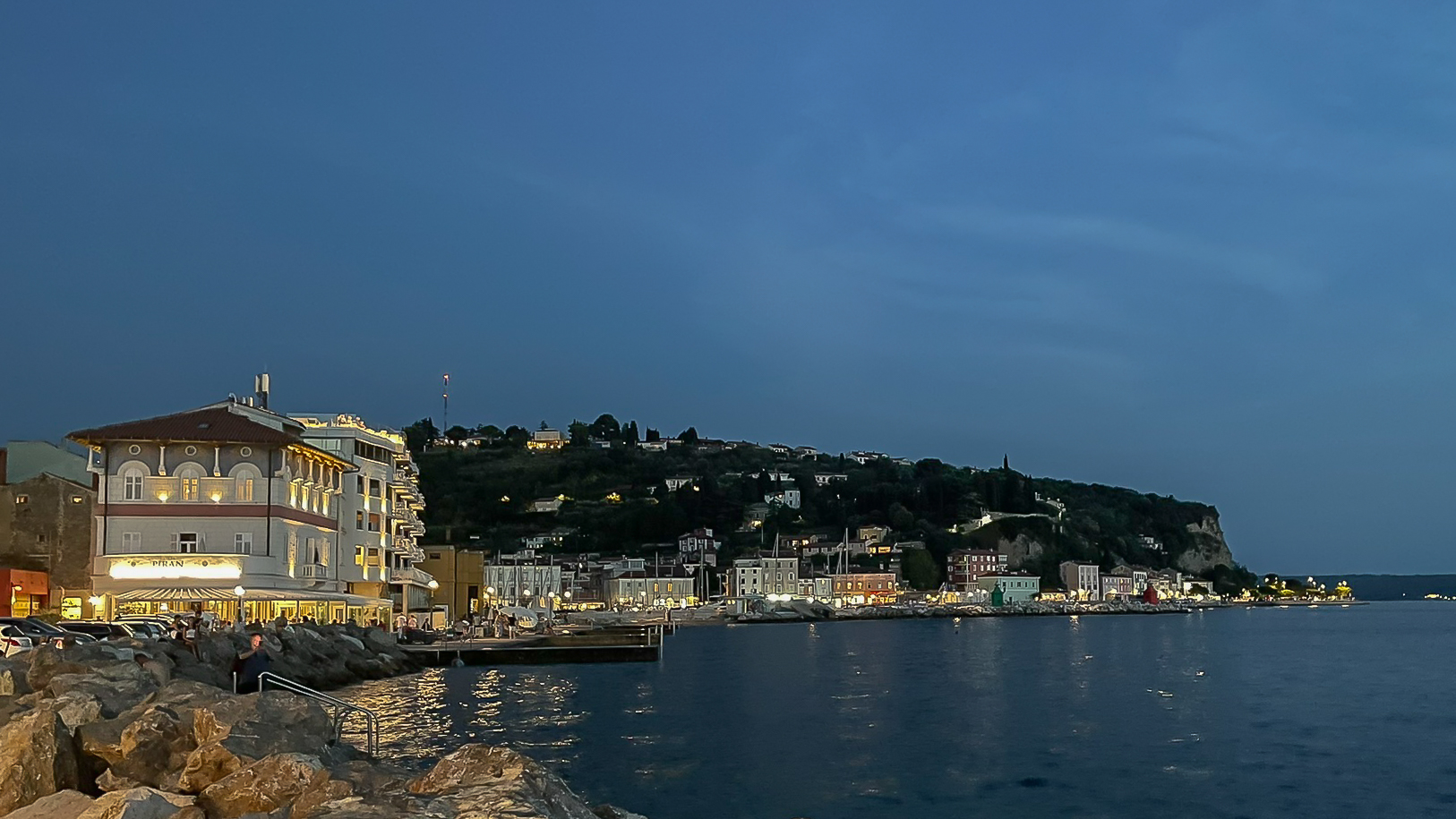
The final climactic sequence plays out in Tartini Square, with James Bond-style motorcycle chases through the narrow lanes in town and car chases in the surrounding countryside. The scenery looks fantastic.
Although there were still hordes of tourists in Piran in September, there was only a single weekly Piran-to-Venice ferry, promoted as a “Venice day trip” to Slovenians and Croatians. We joined the locals on this journey.


The embarkation point was not clearly signposted. The instruction we found online was to go the side of the pier with the red lighthouse. The port entrance is flanked on each side respectively by a green and a red lighthouse.
It was rather chaotic on the day of travel because passengers with luggage just haphazardly lined up by the waterfront. And the ferry came with passengers already on board that it picked up from Croatian coastal towns like Poreč and Rovinj.
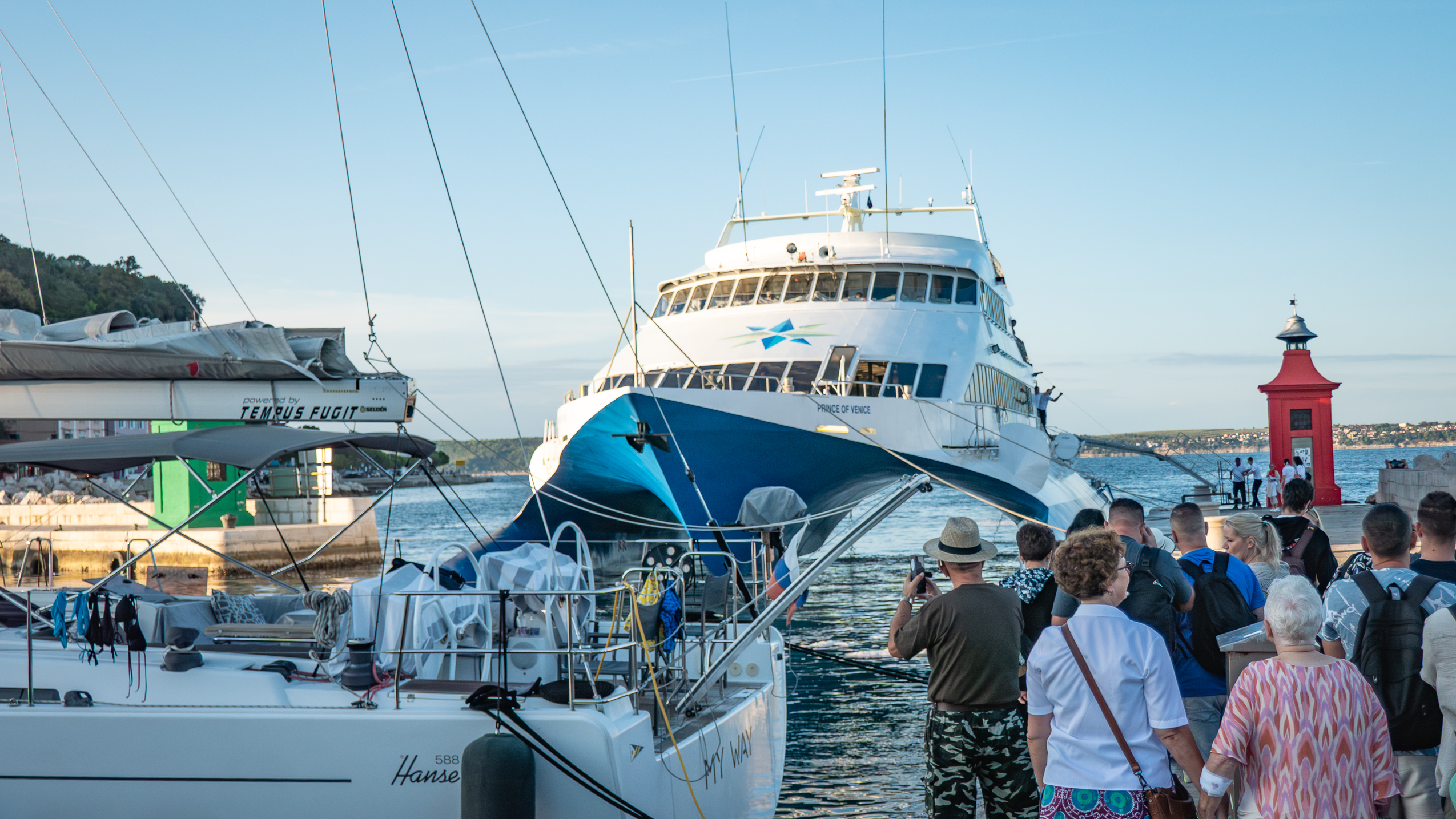
The ferry is a modern hydrofoil, a double-decker which completed the crossing in under 3 hours. The sailing was smooth and the overall experience in the upper deck was very good. Below are views of the entrance of the lagoon of Venice.
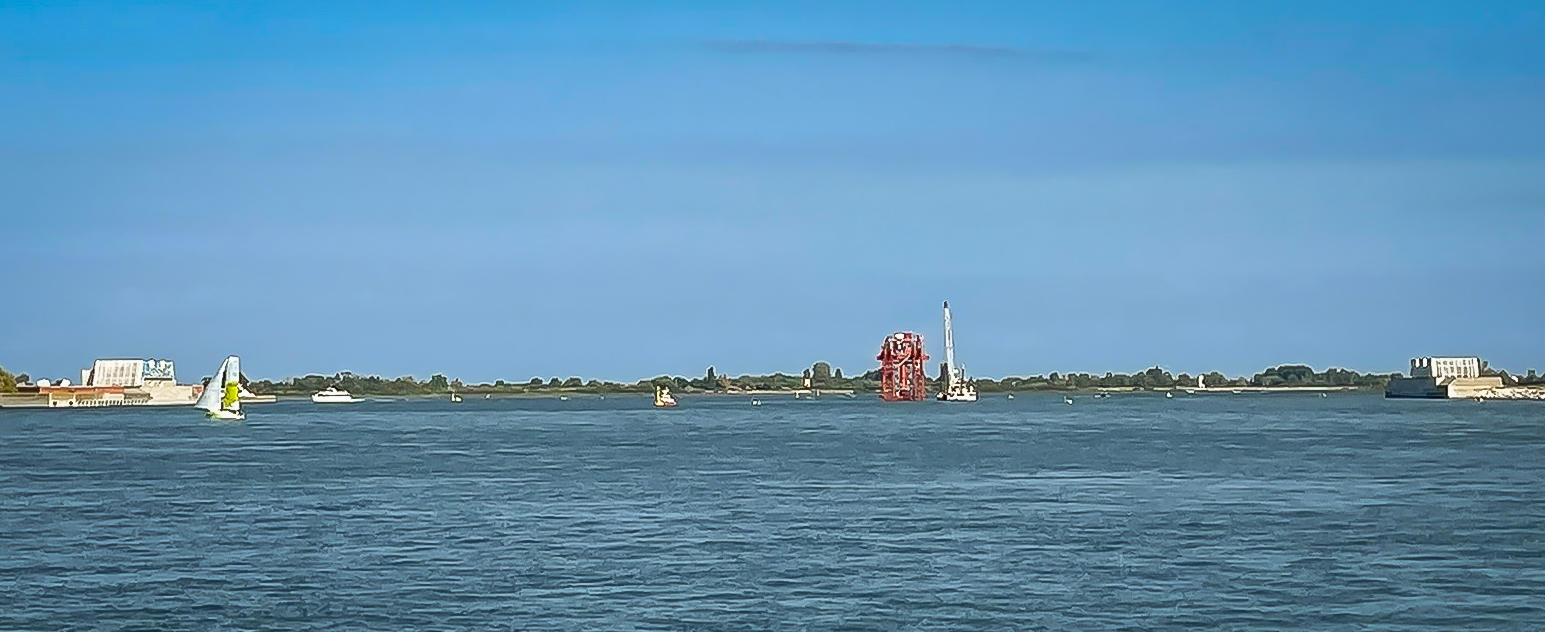
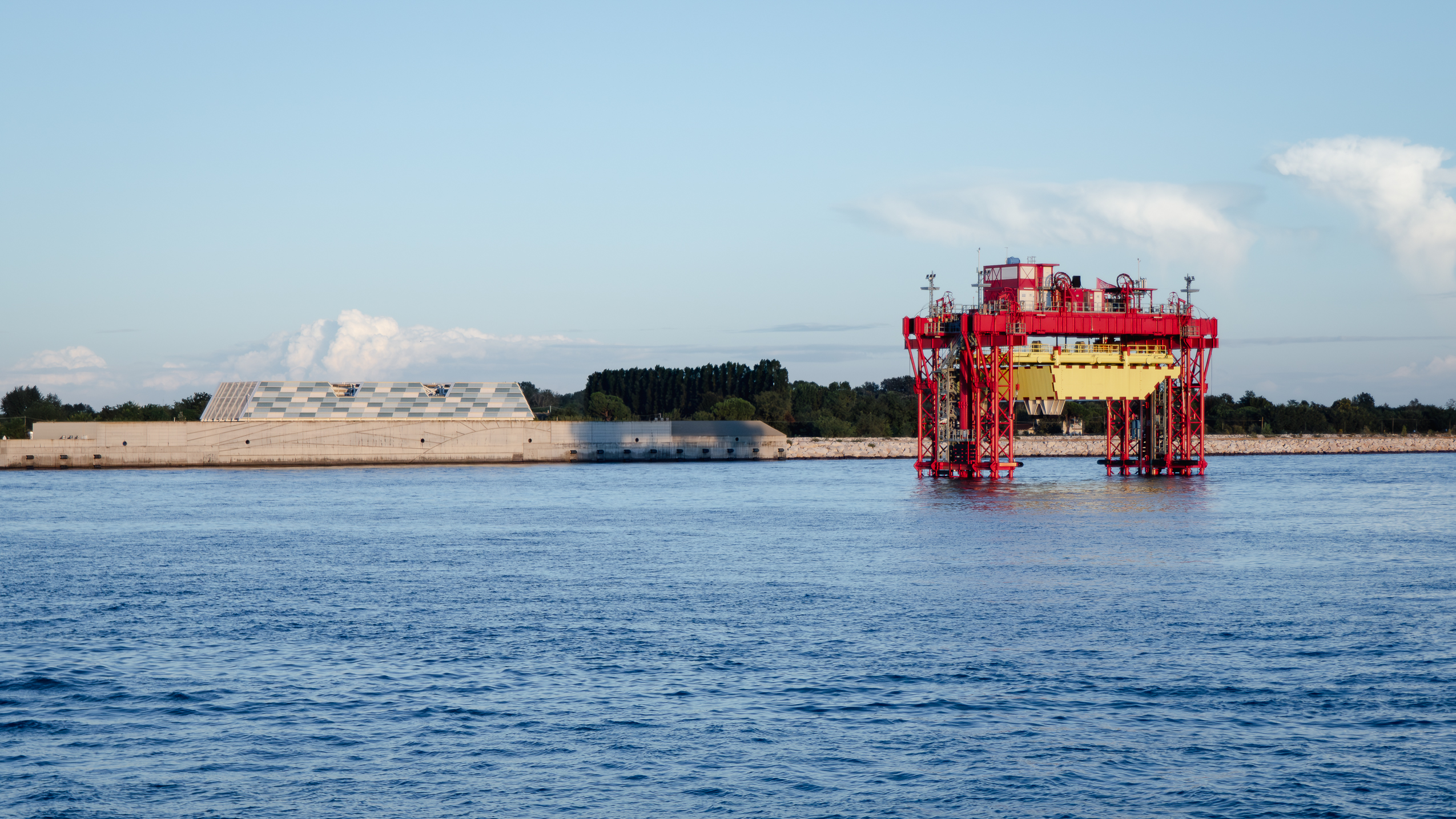
As a novelty, we can recommend entering Venice via this cross-border maritime route during June to September, but it is essential to double-check the schedule of the sailings.
We have already posted a series of posts covering our visit to the Venice Biennale, click here to view the series.