

On our visit to Hong Kong, we visited M+, Hong Kong’s flagship museum of 20th–21st century visual culture—art, design/architecture, and moving image situated on West Kowloon Cultural Waterfront. We found enthralling a mural within the design/architecture gallery – “In the Air, On the Ground, Under the Sea” which rewards slow looking and has become a crowd-magnet.
We invite you to browse leisurely; a little music pairs nicely while you browse.
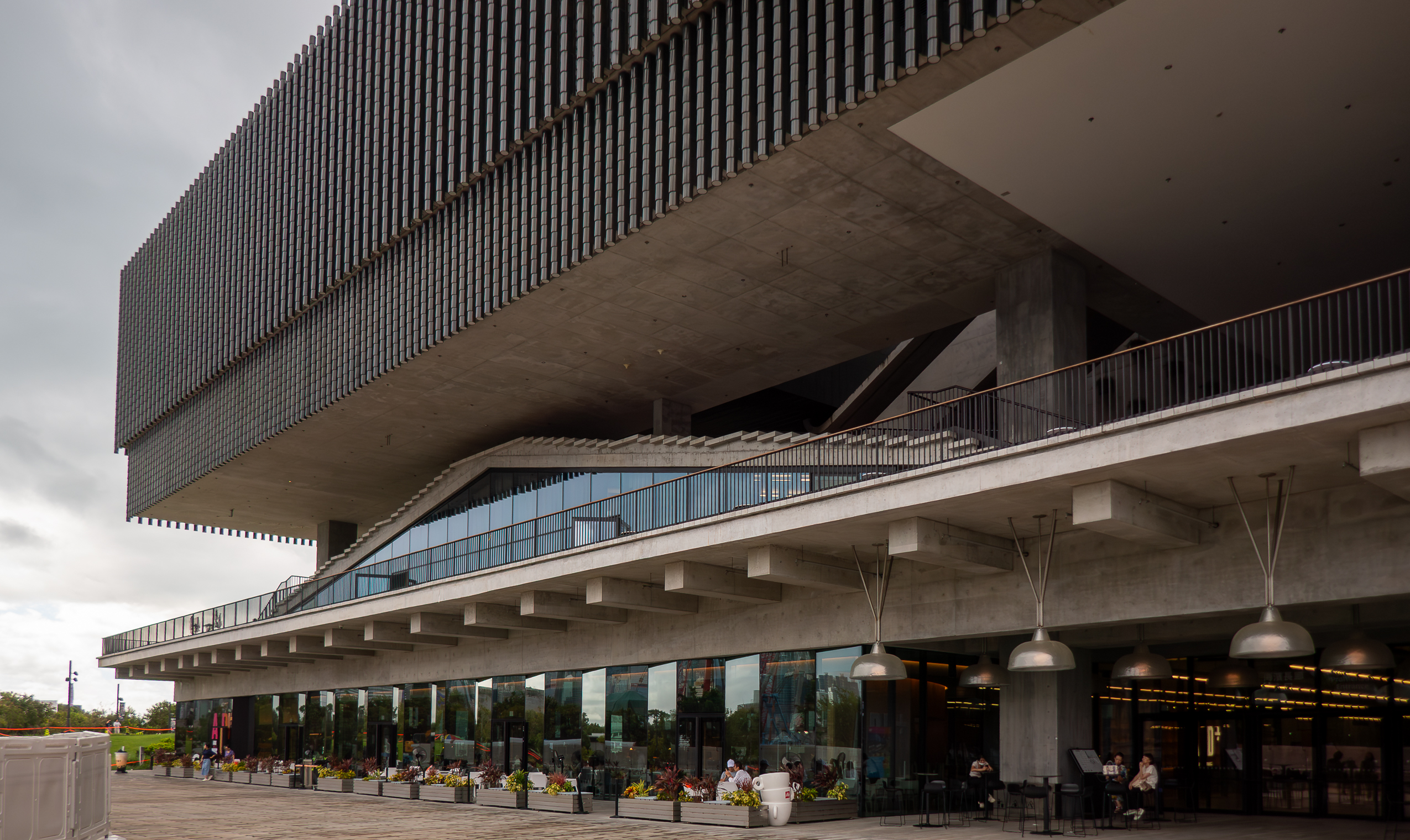
M+ opened in November 2021. The inverted-T building by Herzog & de Meuron) has 33 galleries and the stem of the T acts as a giant harbor-facing LED façade.
The mural is a triptych of digital drawings by Drawing Architecture Studio (DAS). It was commissioned by M+ in connection with its 20,000-item Archigram Archive acquired in 2019.
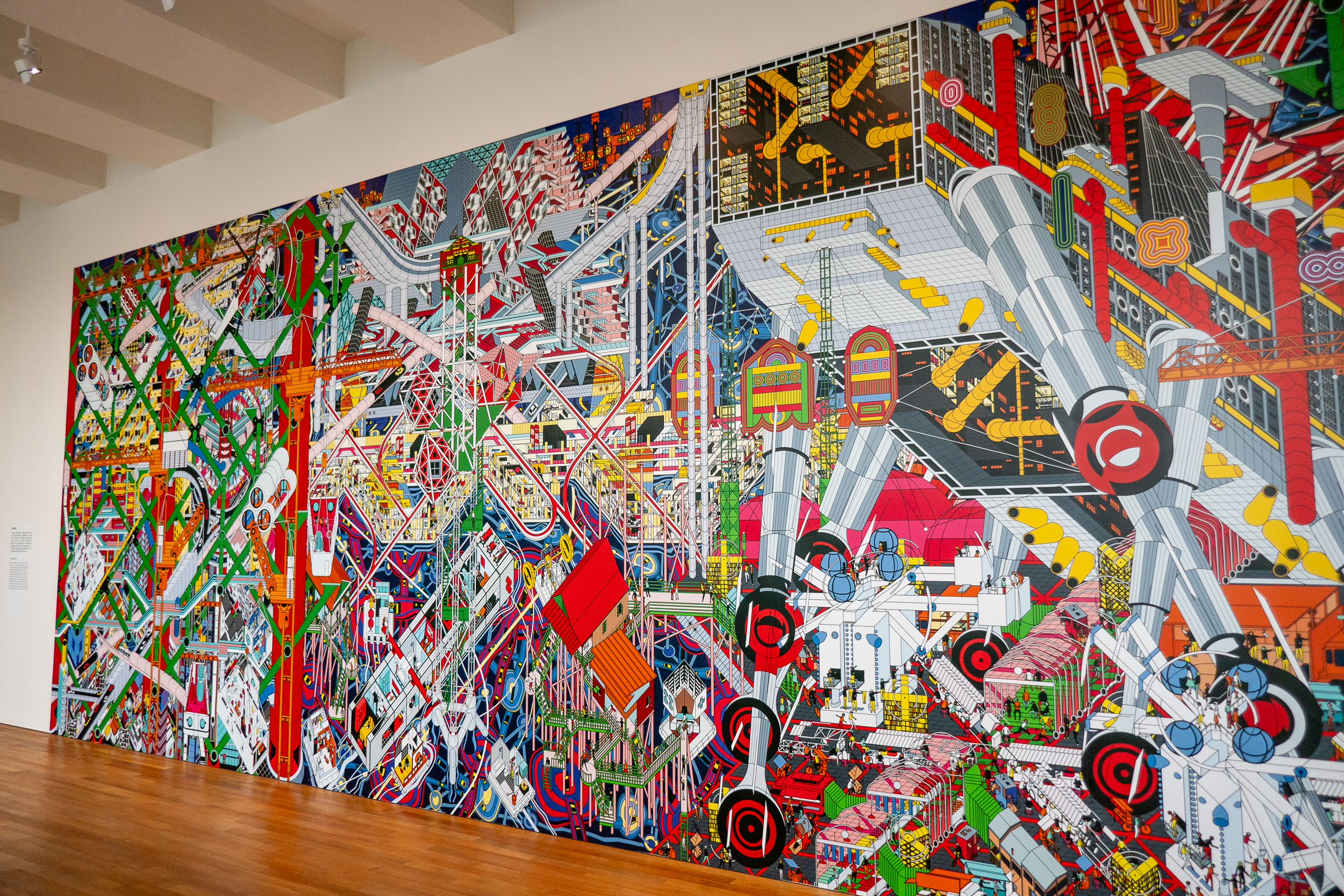
Archigram was a 1960s London collective that made speculative drawings of Plug-in City, Walking City, and Instant City, etc. with pop graphics and kit-of-parts urbanism. Their playful, idea-first vibe resonates strongly in Asia and is the mural’s backbone and a key thread in M+’s collection.
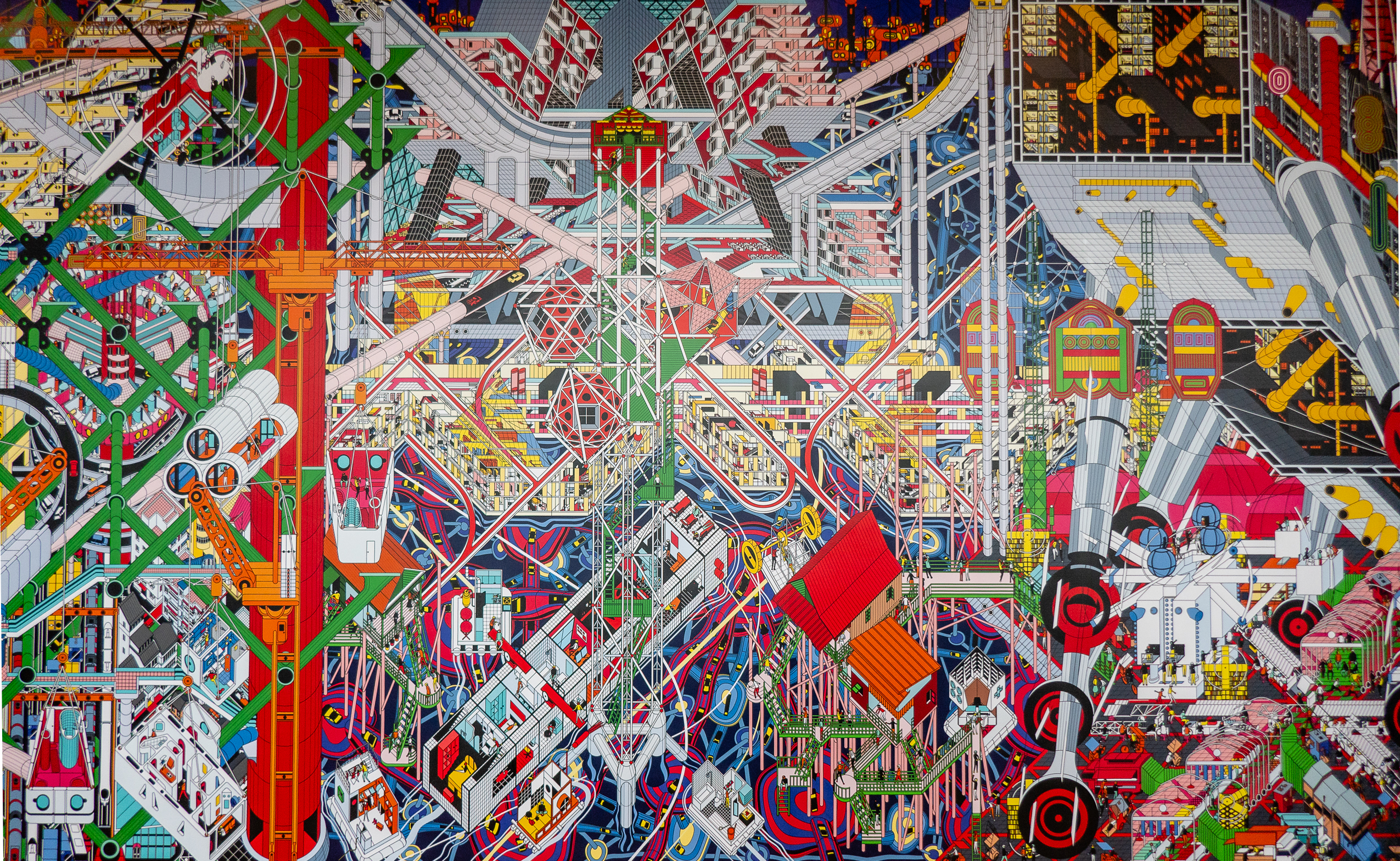
The panoramic mural combines multiple city scales and eras into one dense yet legible axonometric projection.
Click on the image below to see a zoom-able version at super-high resolution.
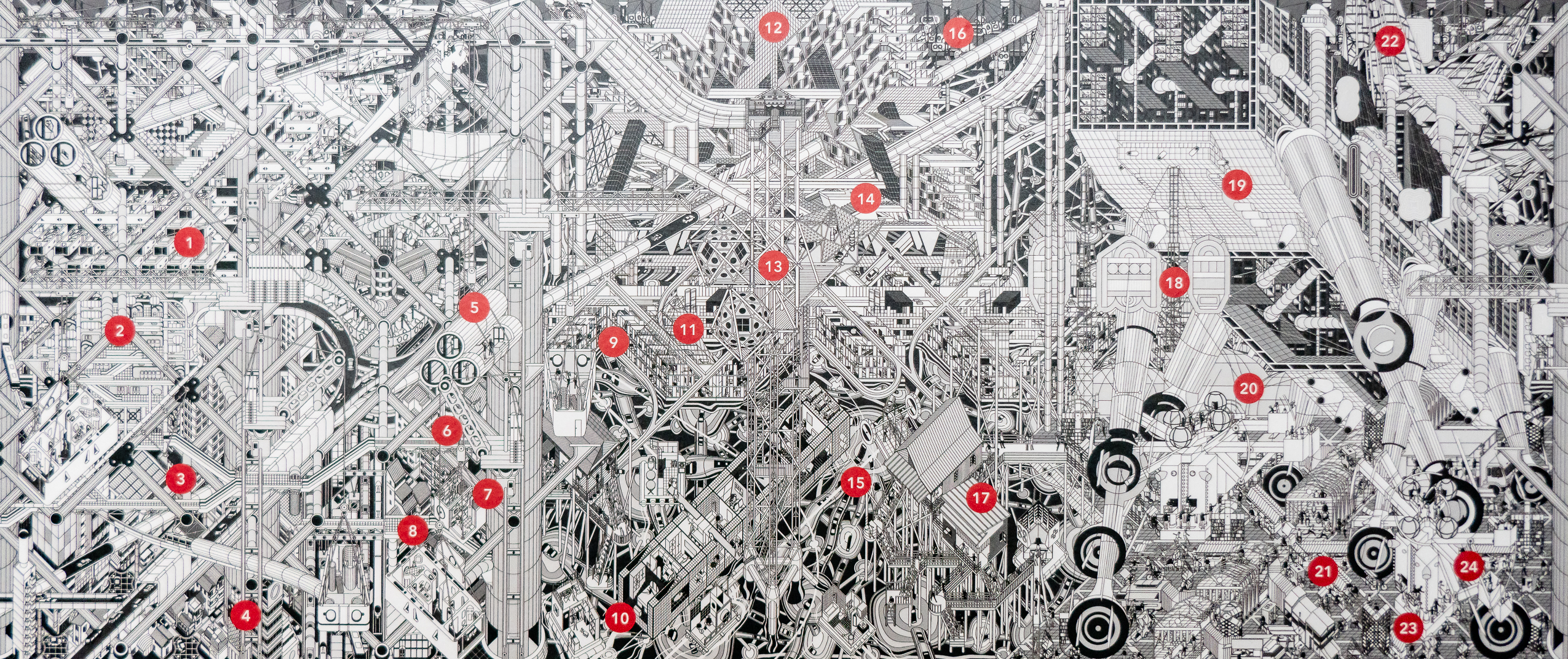
For example, using a legend, you may be able to match 23 (multiple buildings) and 24 to the graphics in the mural.
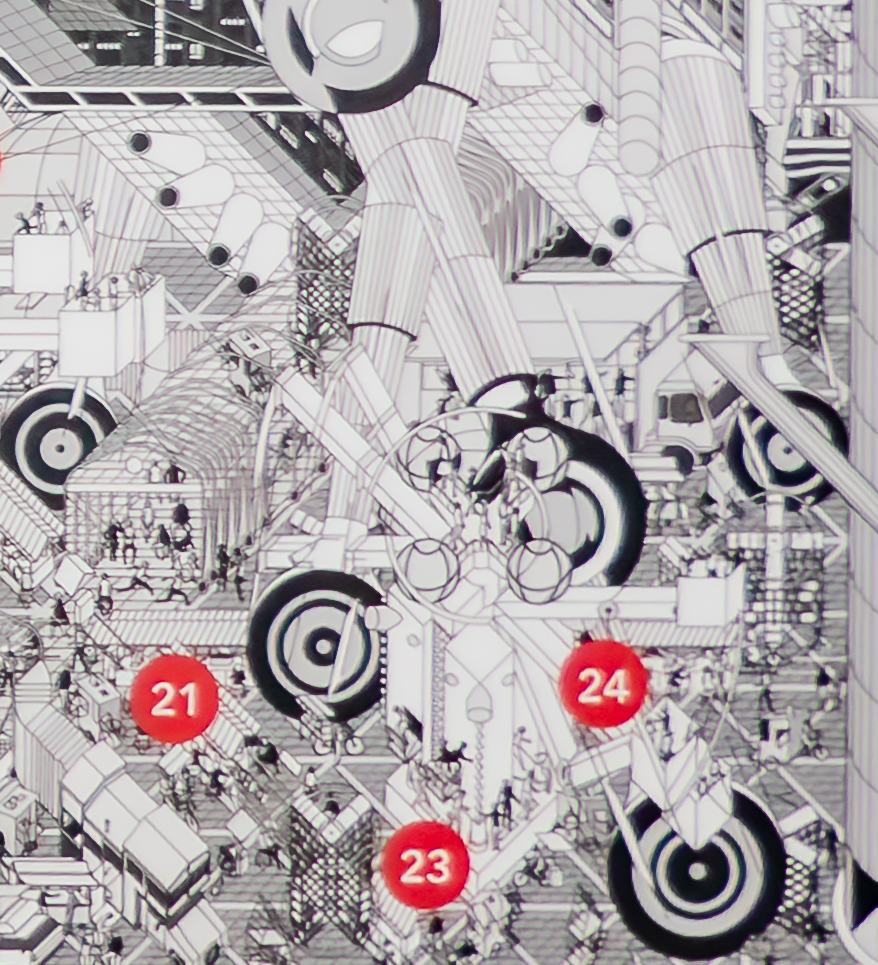
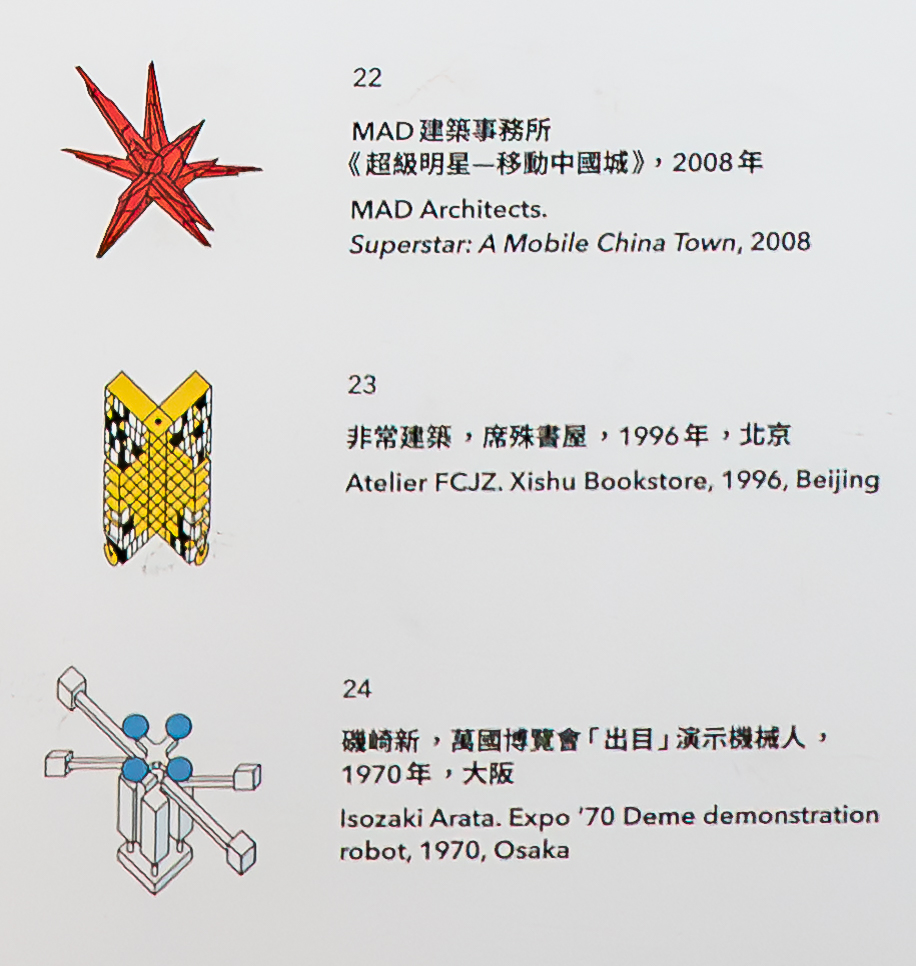
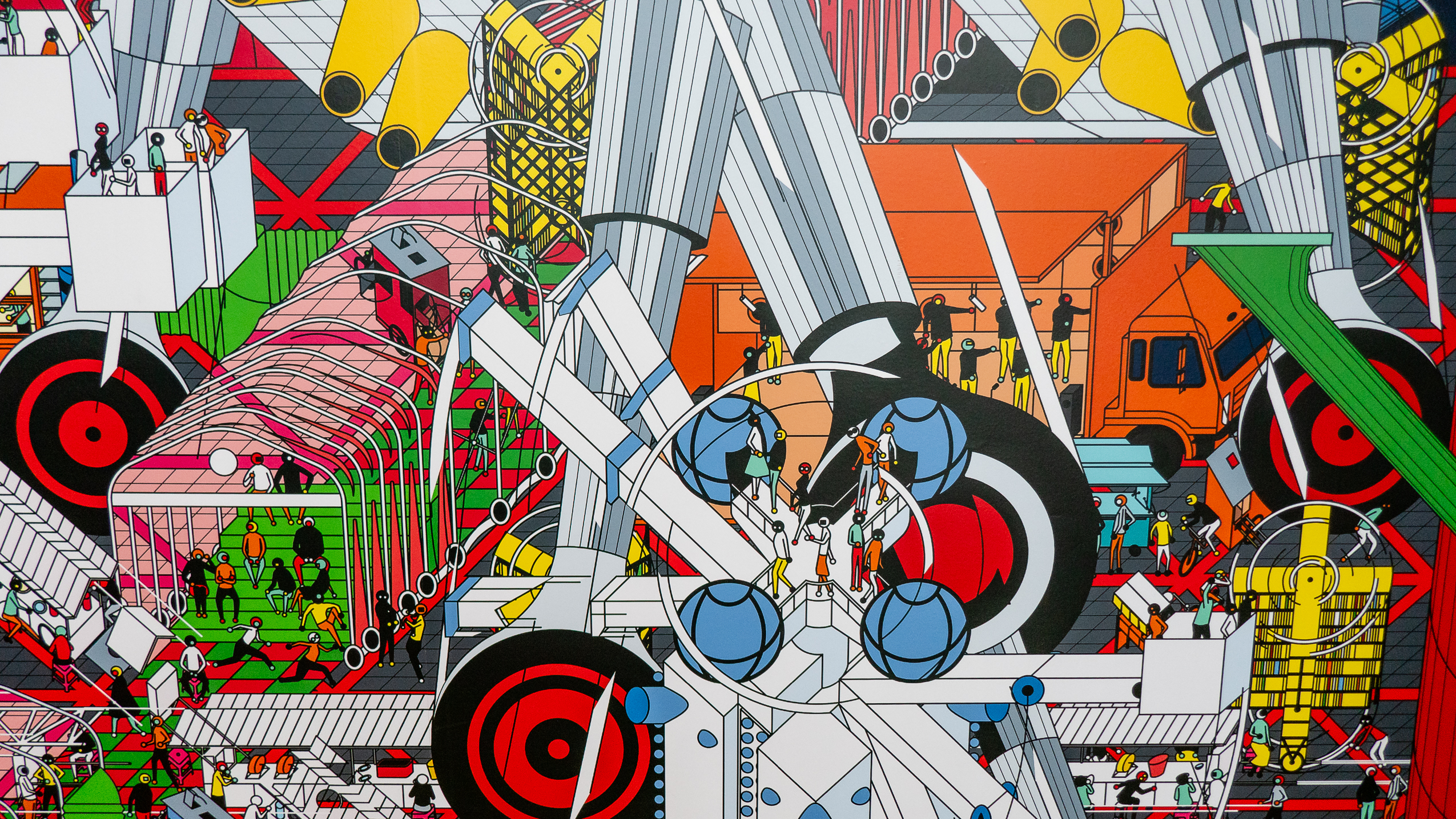
DAS also titles the triptych Walking, Plugging, and Floating. “Plugging” overlays Archigram’s Plug-in City logics with Arata Isozaki’s Cities in the Air.
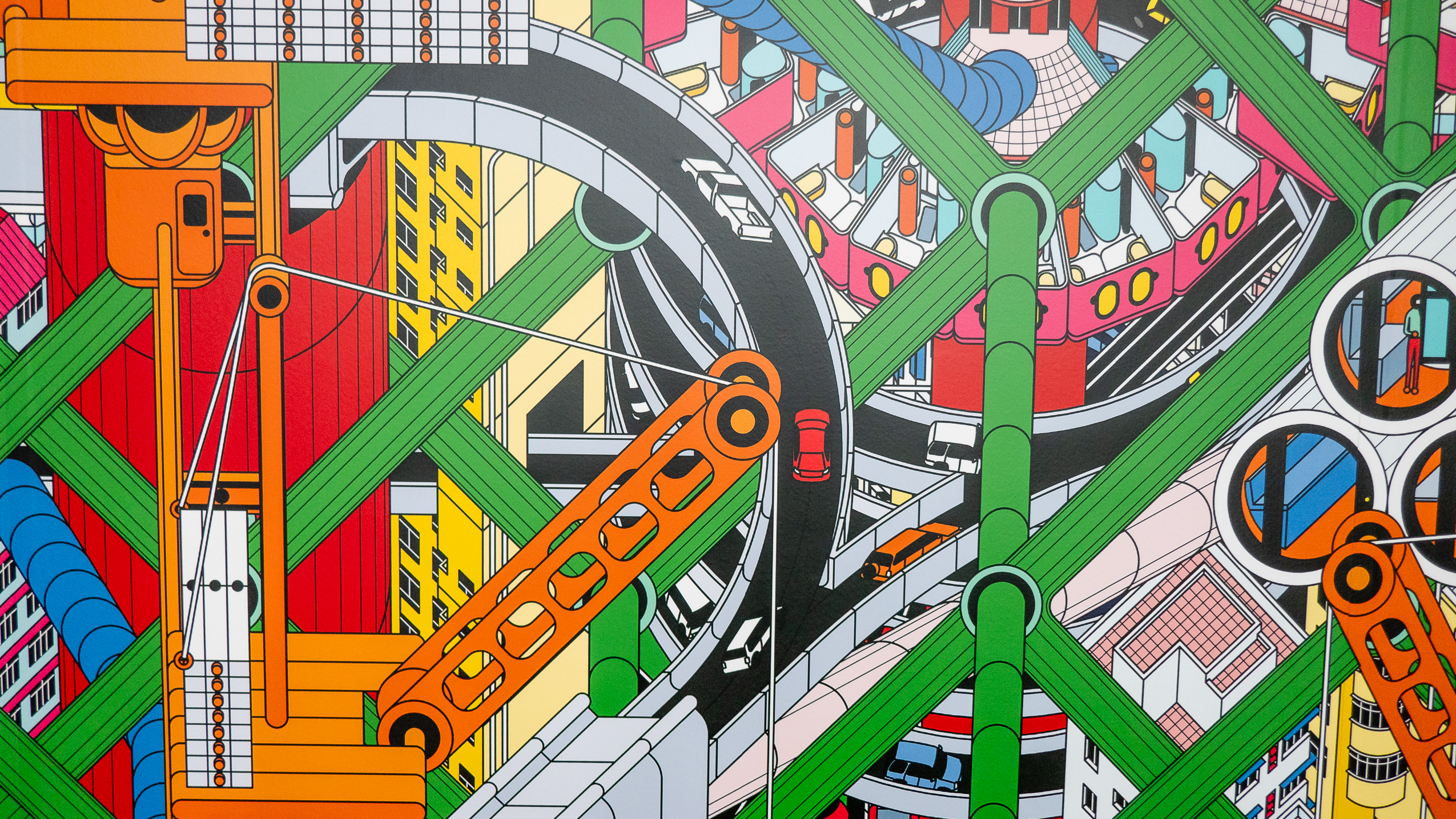
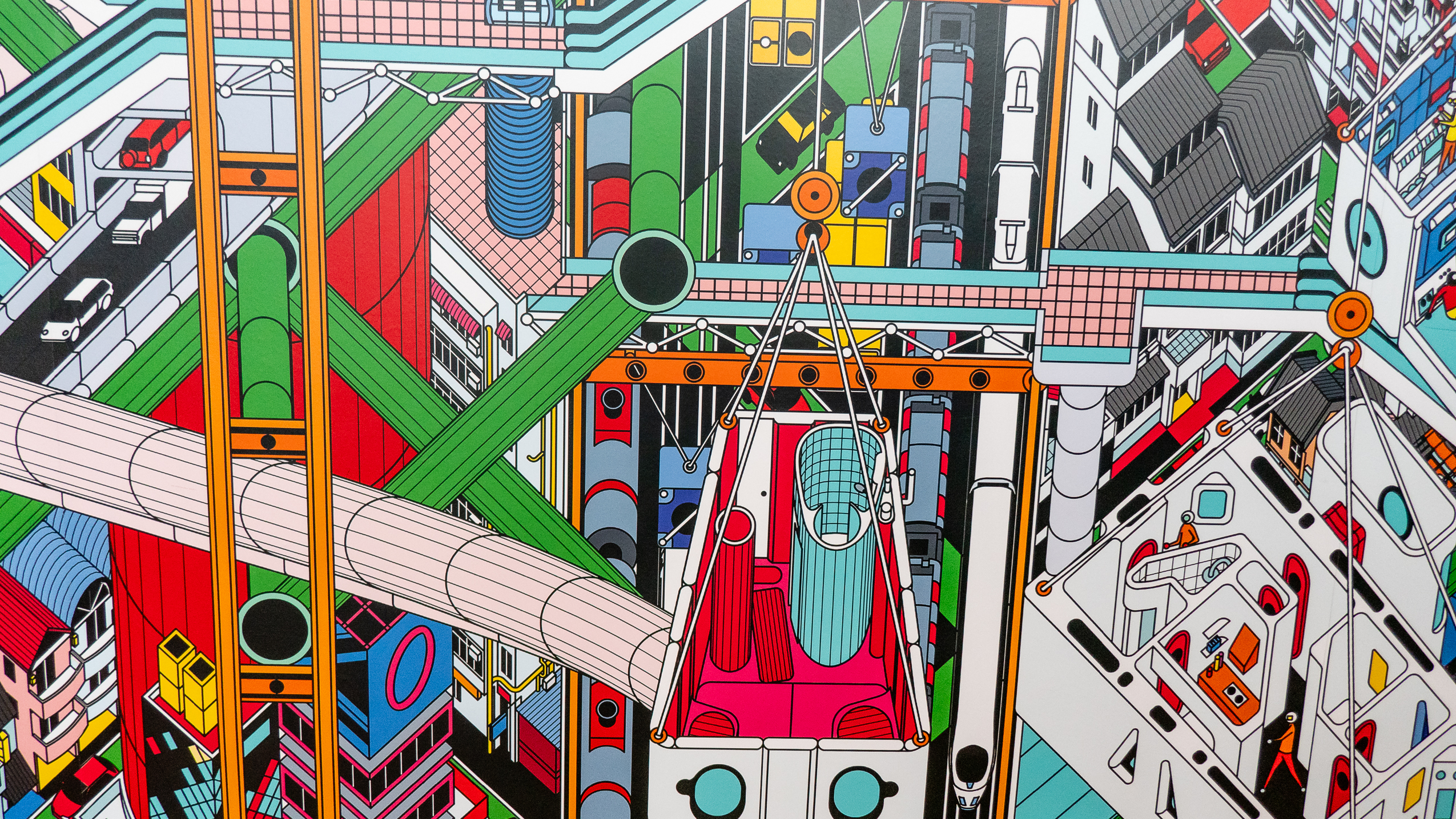
“Walking” riffs on Archigram’s ambulatory urbanism; “Floating” assembles seaborne habitats alongside vernacular structures across the Asian region.
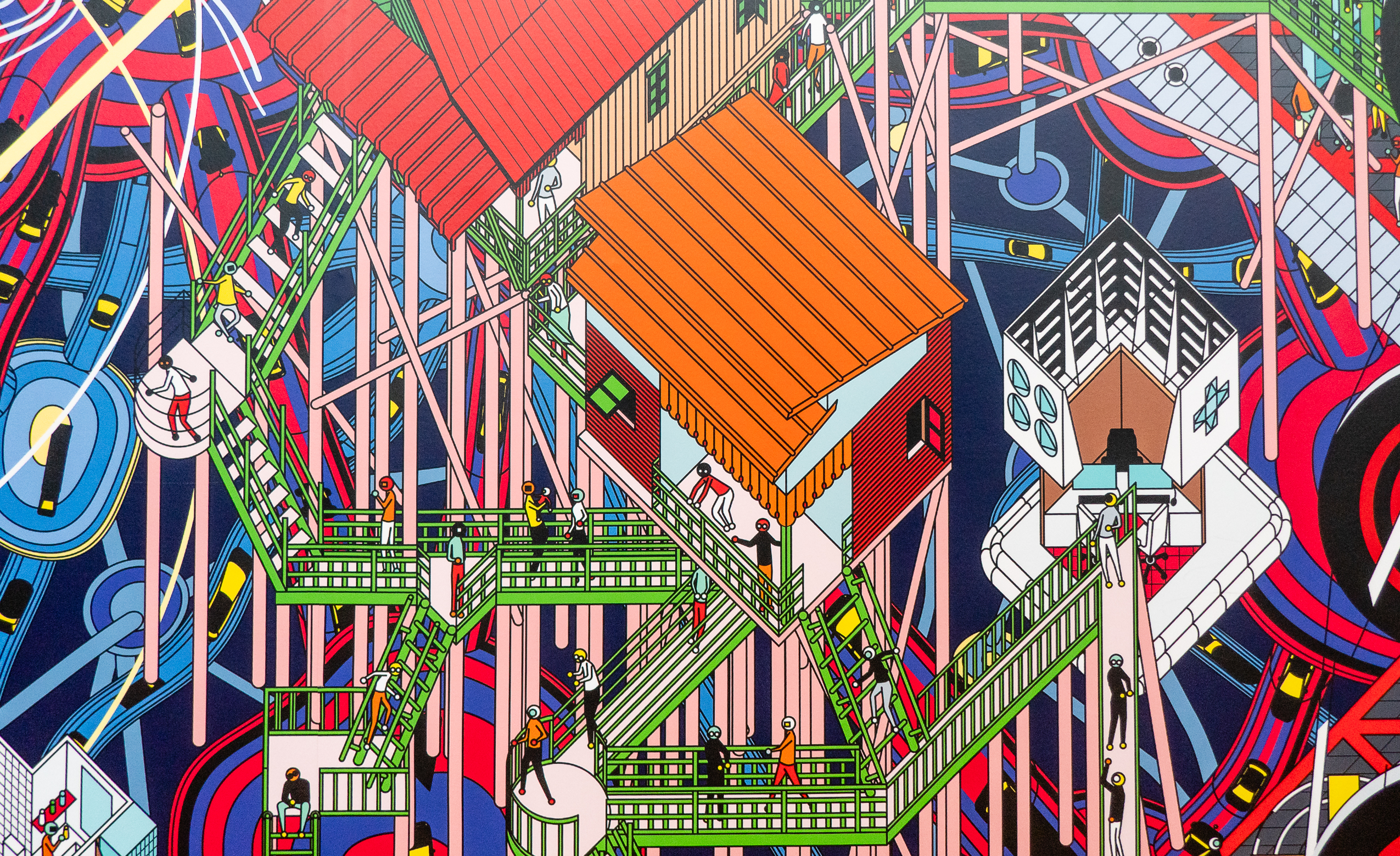
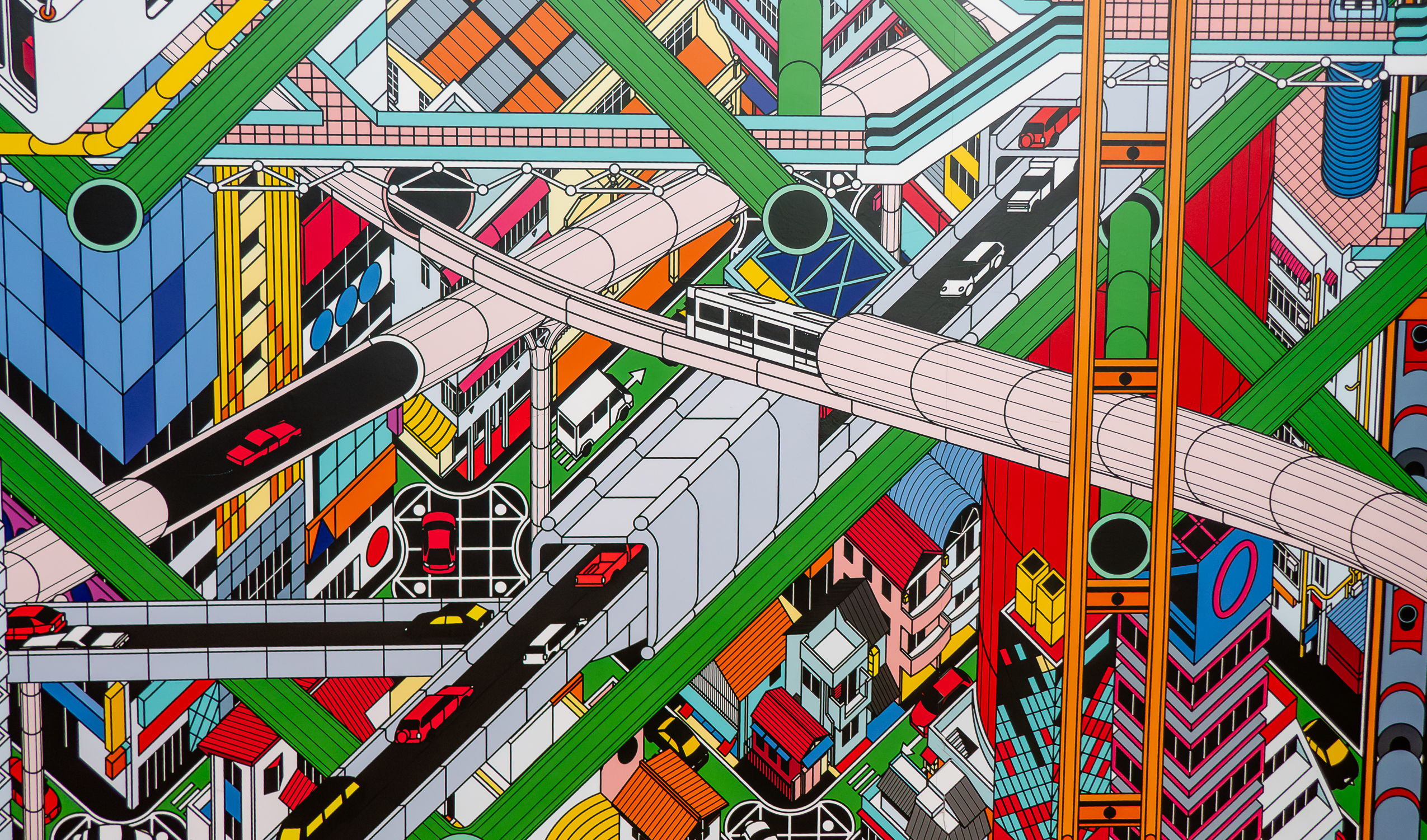
Formally, the drawings use Archigram’s clear-line graphic language—high-saturation color, flat comic-style—but rendered via CAD and layered at two contrasting scales (macro 1:200; micro 1:60). That technique lets viewers glide between megacity backdrops, street scenes and living quarters without a fixed perspective.
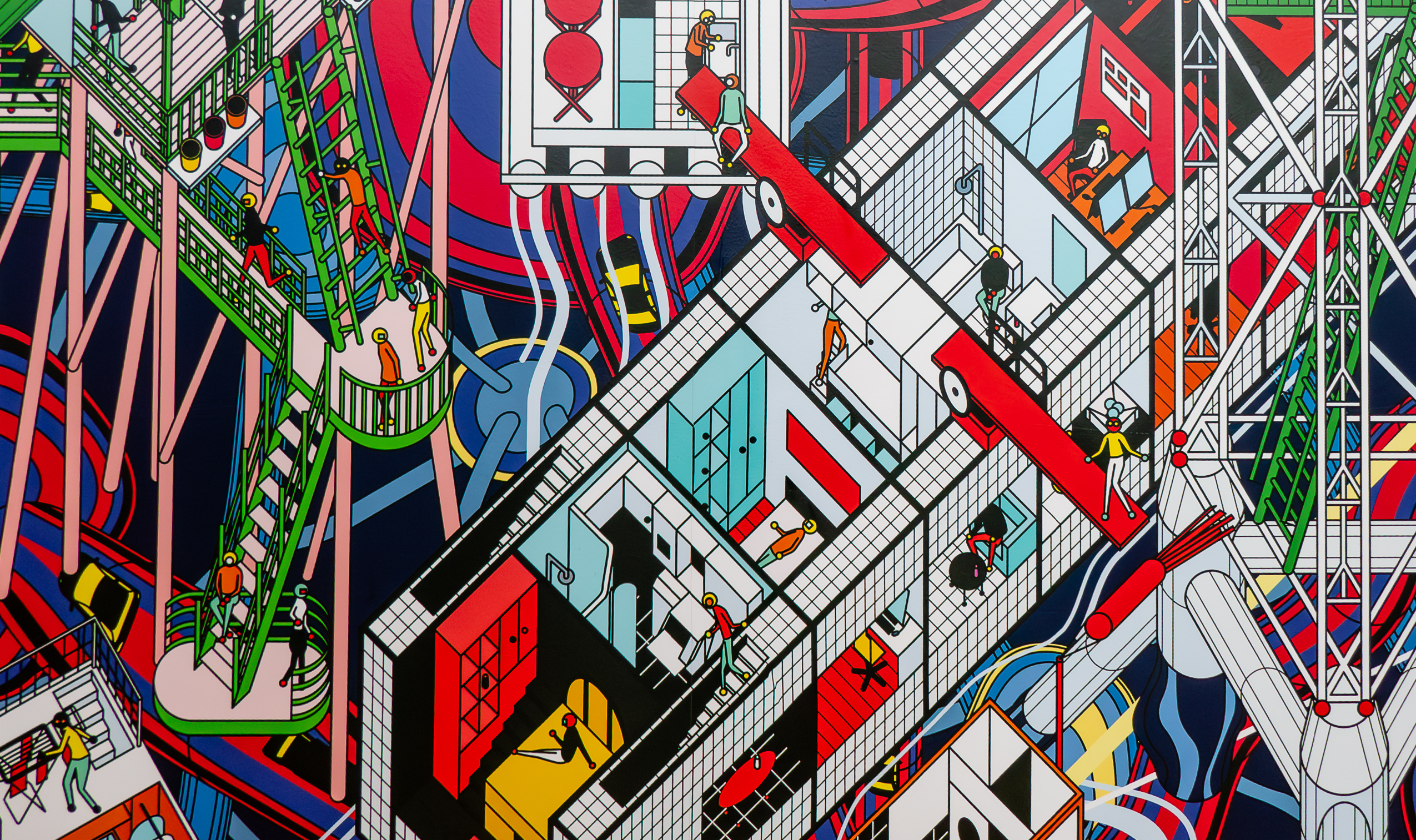
Through this mural, DAS stages a dialogue between Archigram’s fantasies and Asian urban realities. DAS professed that the mural “collapses past and present, fiction and reality, and formal and informal planning. The illustration presents many different architectural projects from around this region.”
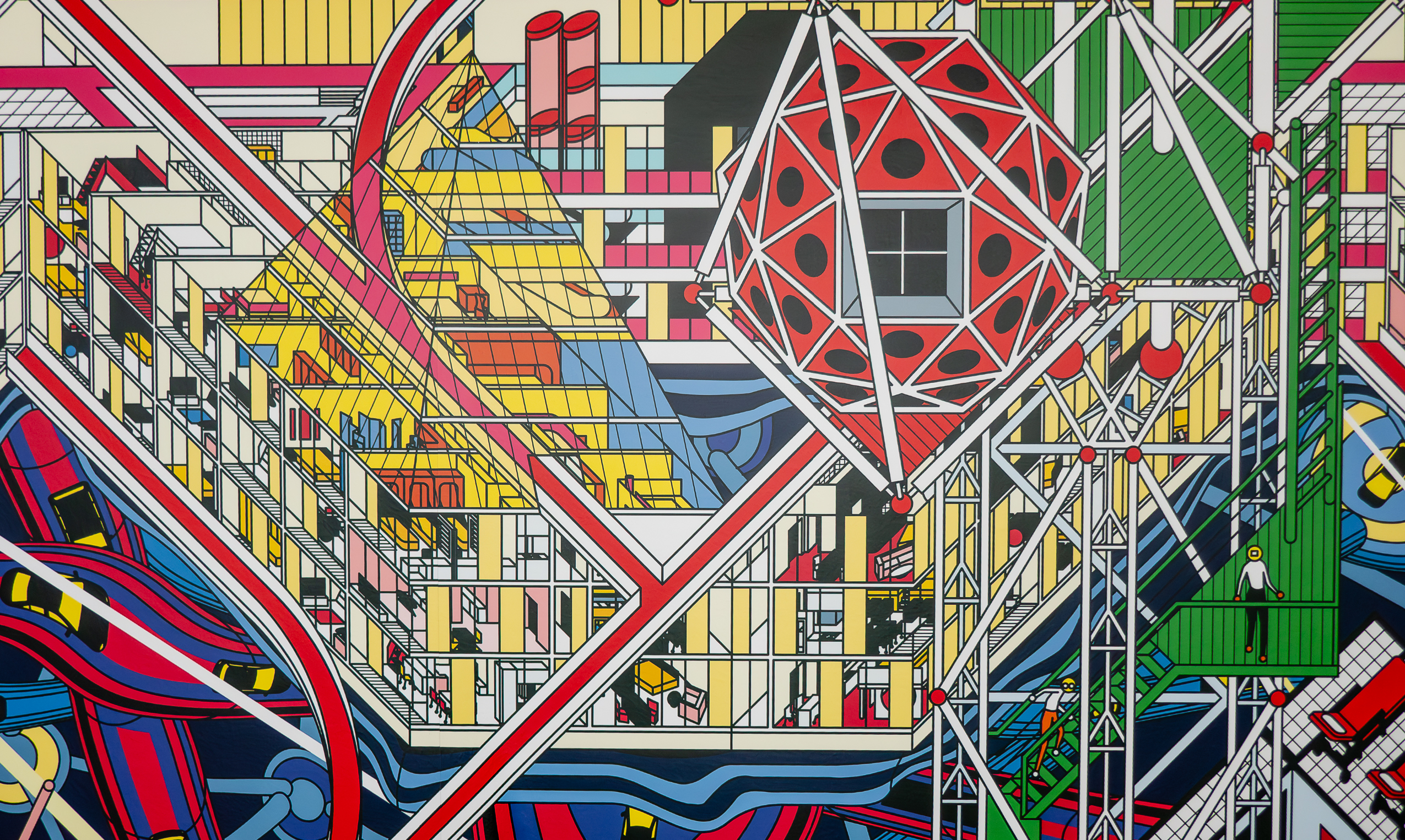
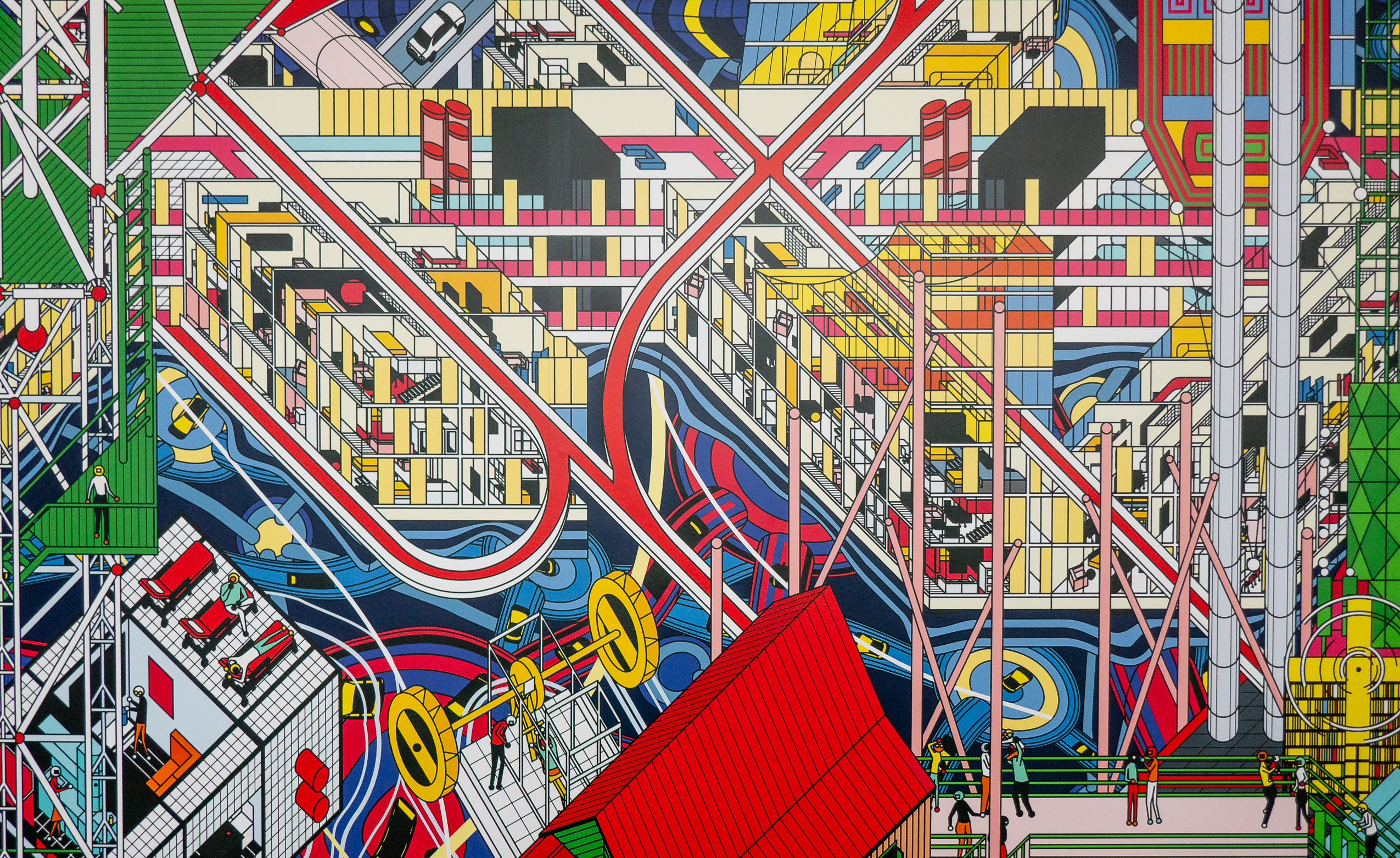
Viewing in the museum the playful graphics and witty juxtapositions of structures and tiny people was simply amusing. But after learning more about the background of the piece, we appreciate the artists’ intricate mapping of ideas, visual languages, and Asian architectural contexts.